


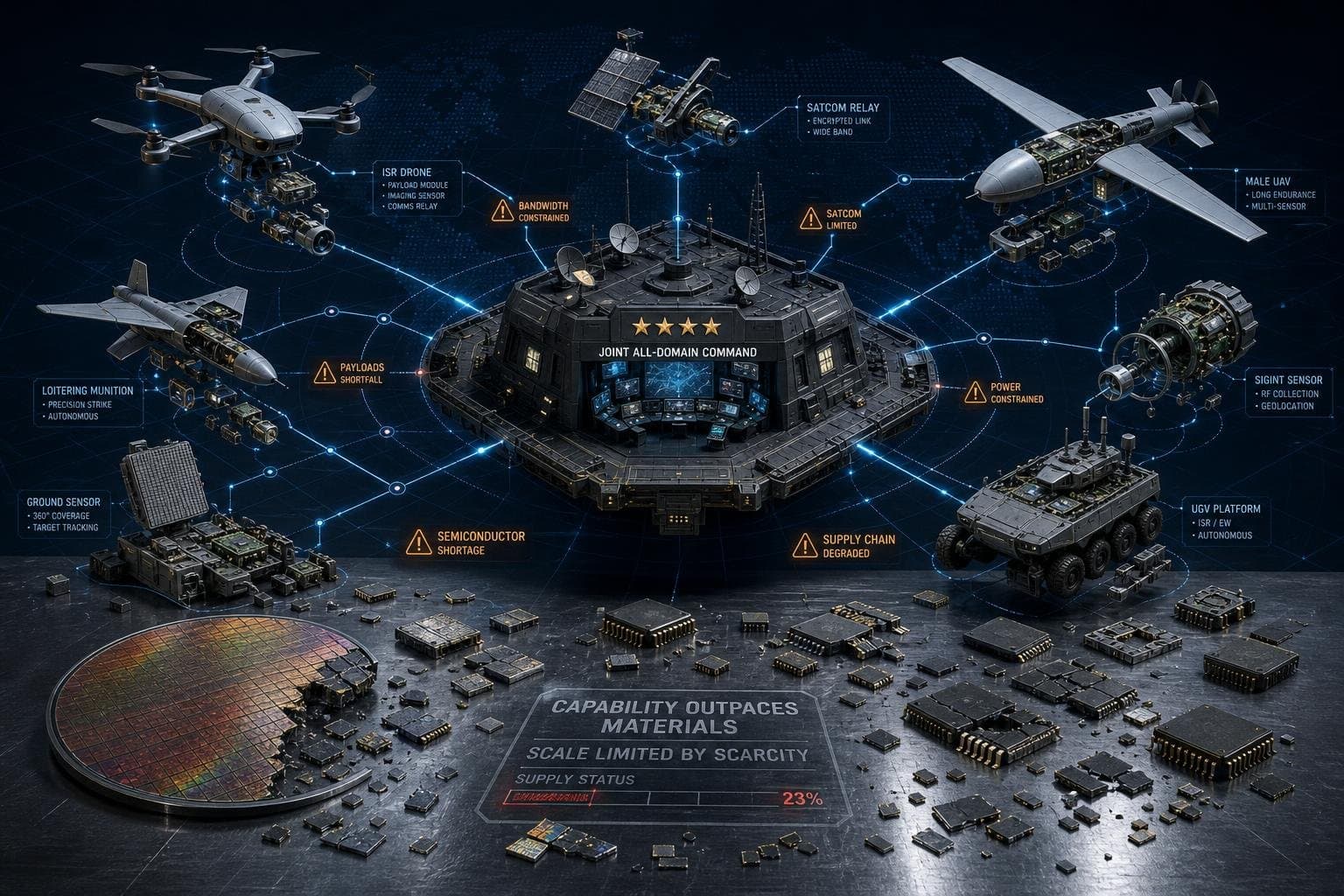

Pete Hegseth stood at Quantico this week and announced something that would have sounded absurd five years ago: a combatant command built entirely around robots. The "Autonomous Warfare Command" — Autowarcom, per Bloomberg — gets four-star, service-like authorities to scale autonomous and robotic systems across overseas operations. That's not a pilot program. That's institutional plumbing built to move drone capability at the speed startups actually operate at, instead of the speed the Pentagon usually does.
The timing matters. The same week, Boeing locked up the Navy's F/A-XX contract at $20 billion for the development phase, per Defense News — effectively cementing its monopoly on sixth-generation fighters across both the Air Force and Navy. One program anchors the old force-projection model: manned, exquisite, decades-long. The other anchors the new one: distributed, autonomous, fast-iterating. Standing up Autowarcom alongside a $20 billion crewed-fighter award tells you the Pentagon isn't choosing between these models. It's running both simultaneously and betting the autonomous side scales faster.
Here's the catch, and it's the same one I keep coming back to: capital is not the bottleneck anymore. A new AIA-Bain study found VC funding into defense has grown tenfold since 2019, per Breaking Defense — but critical minerals, semiconductors, and solid rocket motors remain starved. Meanwhile fresh defense-focused funds keep landing, like Protego Ventures' $125 million close for Israeli defense tech, per TechCrunch. Money is abundant. Components aren't. Autowarcom can authorize all the autonomy it wants — it still needs motors, chips, and minerals that nobody's funding yet.