


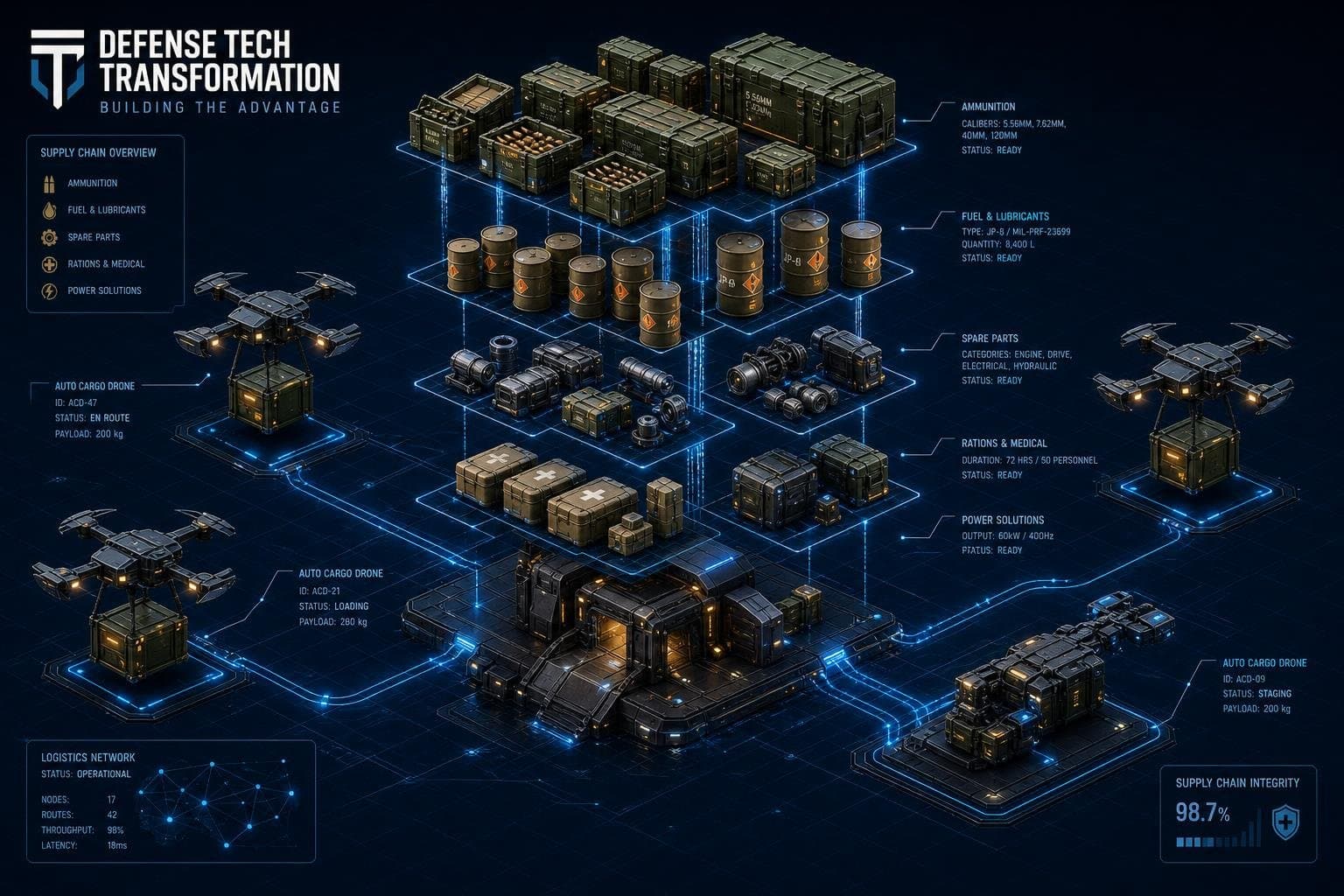

Everyone in defense tech wants to build the drone. Almost nobody wants to build the supply chain that feeds it. That's what makes Gallatin AI's $50 million Series A, led by 8VC and Silent Ventures, worth more attention than its size suggests.
CEO Woody Glier's pitch to Axios is almost aggressively unglamorous: most military logistics data still gets generated with "clipboard and pen and paper," he said, and Gallatin's Navigator tool is trying to digitize sustainment planning — figuring out what goes in the autonomous assets, who pulls it off the shelf, who loads it on the tarmac — for units already deployed around the world, including a deal with Fort Hood's III Armored Corps announced this summer. Glier's framing of the real constraint is the one that should stick with investors: "If you had 1,000 autonomous assets — 10,000 — you still have the problem of" moving the payload. That's the gap nobody's capability demo closes.
Compare that to the week's other big autonomy news. Northrop Grumman's YFQ-48A Talon Blue just completed its first fully autonomous flight — taxi, takeoff, maneuvers, landing — chasing the Air Force's goal of 500 autonomous aircraft by 2032, a target that already has Anduril's "Fury" and General Atomics' "Vengeance" under production contract. Meanwhile Palladyne AI's pitch via Breaking Defense draws a sharp distinction between genuine autonomy — machines making real-time decisions — and mere waypoint-following dressed up as autonomy. Fine distinction, important one. But every one of these systems still needs fuel, parts, and ammunition delivered to the right place under fire, and that problem gets zero airtime at conferences.
The capital is noticing the split even if the headlines aren't. PitchBook data reported by Axios shows defense tech investment broadening beyond hardware into software as the sector matures — dealmaking is concentrating even as early-stage activity slows. Gallatin, which has now raised $70 million total, fits that pattern precisely: a software layer underneath the hardware boom, not another entrant into it.
The investor logic here isn't about which company makes the flashiest demo video. It's about which one gets stuck in the mud when the autonomous fleet actually needs resupply under fire. Watch whether Gallatin's Fort Hood deployment turns into a program of record — that's the signal that logistics software stops being an afterthought and starts being its own category.