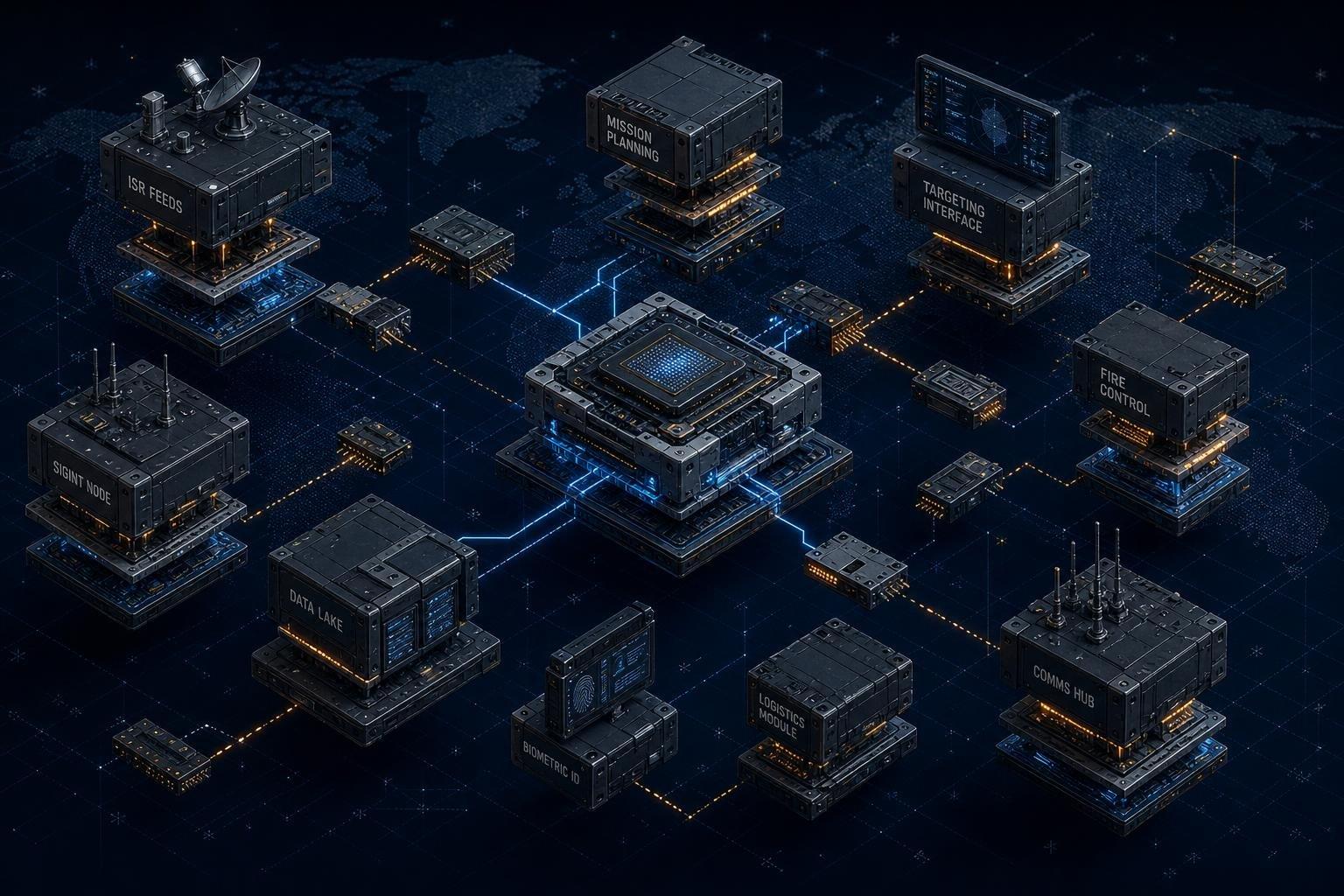

Being indispensable is supposed to be the goal. Palantir built its position in Western defense by making itself the platform nobody could easily replace — the system Ukraine leans on for targeting data, the system the Pentagon folded into its own operations through the Maven Smart System. This month showed what happens on the other side of that success: allies start looking for the exit, and adversaries start treating your employees like infrastructure worth surveilling.
Dependence Looks Different From the Buyer's Seat
Reuters reported that European defense ministries are actively shopping for alternatives to Palantir, worried about long-term reliance on a single American vendor for the software that now sits at the center of military decision-making — threat identification, targeting recommendations, the whole chain. Germany has already narrowed a shortlist of non-Palantir options, according to a person familiar with the matter cited by Reuters, even though those alternatives reportedly won't match Palantir's capabilities and are expected to deliver only about 80% of what's needed within a year. That's a remarkable trade European officials are apparently willing to make: less capability in exchange for sovereignty over their own data.
The Netherlands is making a similar bet on a longer runway. Dutch arms procurement minister Derk Boswijk told Reuters his country wants a European alternative within two years, even while continuing to use Palantir software in the interim, and expects to need a mix of Dutch and other European providers to get there. Boswijk's framing is telling: "We have a lot of knowledge in Europe when it comes to AI and decision-making. But it's very fragmented, and that is the problem" (Reuters). Fragmentation is exactly the condition that let Palantir consolidate share in the first place — a single, coherent platform beats a dozen specialized ones when speed matters on a battlefield.
France is the furthest along on an alternative path. Defense News reported that Paris is developing a sovereign AI-enabled platform called Arcadia, with deputy procurement chief Alexandre Lahousse targeting contract awards by year's end and a fielded version by mid-2027. Germany's Helsing, meanwhile, unveiled its own military intelligence software, Clarity, aimed at the same threat-sifting and targeting job Palantir already does at scale.
The Moat Is Also a Target
None of this is really about software quality. It's about what happens when one company becomes synonymous with an entire capability category. The same week Europe's hedging became public, Bloomberg reported that US prosecutors charged a Russian national, Igor D'iu, with acting as a foreign agent who allegedly used physical surveillance, electronic tracking, and phony identification to gather information on Palantir employees. You don't run an espionage operation against a mid-tier contractor's HR department. You run it against the company whose software is reportedly wired into Ukrainian targeting and Pentagon operations alike. Scale creates leverage, but leverage cuts both ways — it also makes you the obvious place to probe.
There's a quieter signal in this dynamic, too. Axios reported that Valkryn, a new defense-tech testing startup that just emerged from stealth with $17 million, built its team partly from Palantir alumni alongside people from Applied Intuition and SpaceX. Palantir isn't just a vendor at this point — it's a training ground seeding the next generation of defense software founders, the way Google and Microsoft alumni once seeded consumer tech. That's a sign of maturity in the ecosystem, not weakness in the company. But it also means the "Palantir alternative" problem Europe is wrestling with isn't going away just because Arcadia or Clarity ships on schedule. The talent that could build a true peer competitor largely cut its teeth inside Palantir's own walls.
What a Software Prime Actually Owns
The investor lesson here isn't that Palantir is in trouble. Its revenue and reach are still unmatched by anything Europe has queued up, and even skeptical European officials concede their alternatives won't match its capability for years. The lesson is that owning a category this completely creates obligations that don't show up on a cap table: geopolitical scrutiny, espionage exposure, and now a customer base actively engineering ways to need you less. For the startups building underneath that umbrella — the Helsings, the Arcadias, the Valkryns staffing up with Palantir-trained engineers — the opening isn't to out-build Palantir on day one. It's to be the credible "good enough, sovereign, and fast" option the moment a government decides dependence costs more than capability.
Watch whether Germany's shortlist becomes an actual award before its stated FY2027 deployment target, and whether France's Arcadia hits its mid-2027 fielding date. Either outcome will tell you more about where the software-prime market is heading than any new Palantir contract will.