


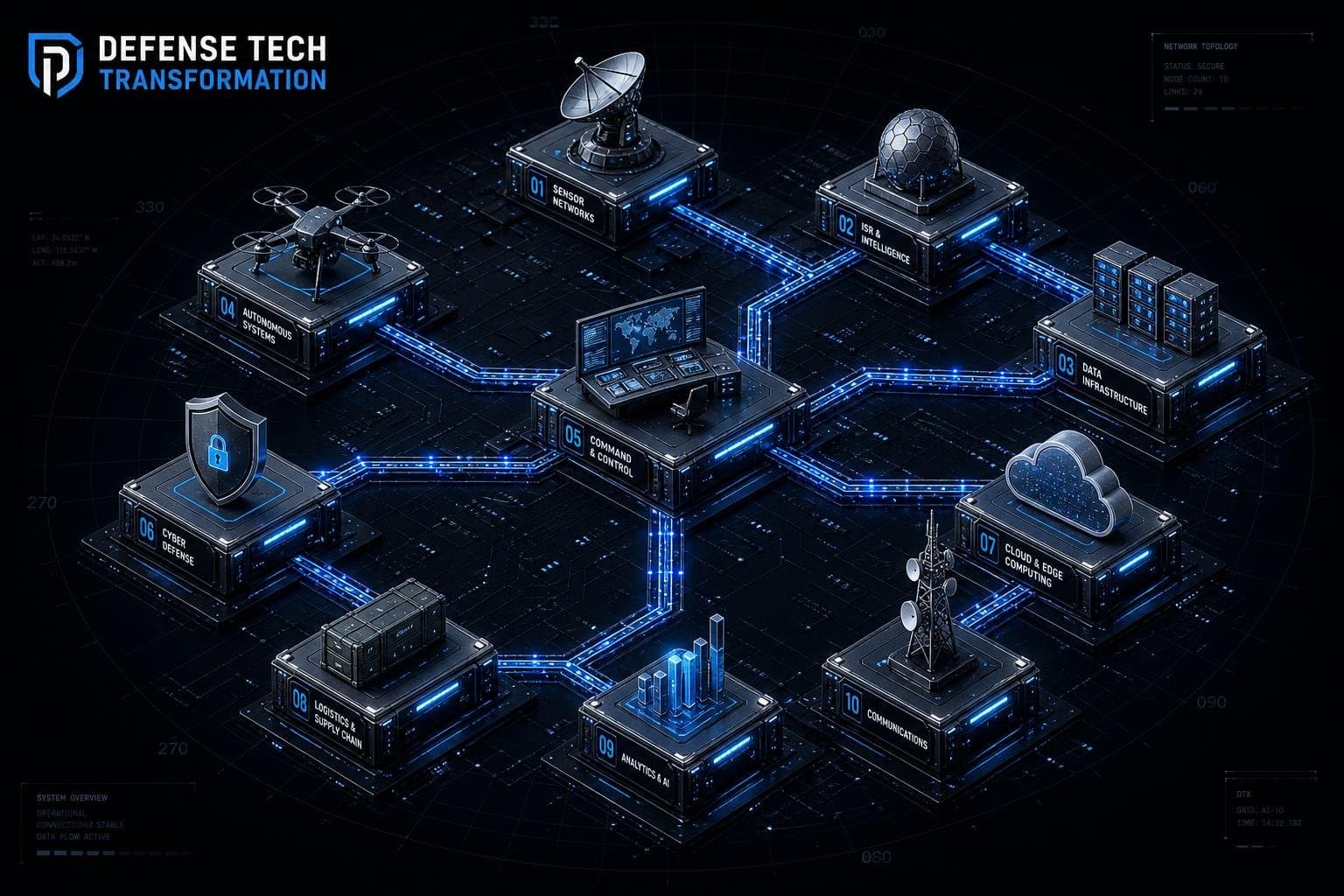

Disruptive just closed a $10 billion fund aimed at AI, defense, and software startups, with plans to deploy roughly $1 billion checks into ten later-stage companies, according to Bloomberg. That fund size doubles the Dallas-based firm's total assets under management and marks a structural shift — Disruptive is moving from deal-by-deal special-purpose vehicles to a single discretionary fund, giving it the flexibility to move fast on later-stage bets rather than shopping each deal to limited partners one at a time.
The check size matters more than the headline number. A billion dollars per company signals this isn't seed-stage spray-and-pray. It's capital meant for companies that have already cleared the hardest part of defense tech — getting a program of record, surviving a government shutdown, proving the technology works outside a demo — and now need scale capital to build manufacturing capacity or win the next tranche of Pentagon contracts.
That capital is arriving as the operational case for new technology keeps getting made in public. At TechNet Indo-Pacific this week, Gen. Xavier Brunson warned that future conflict will be "disaggregated and distributed" with networks "fully under attack," and that any product unable to operate at the edge "is not a product that's going to be able to help the Army fight," per Defense One. Gen. Ronald Clark, also speaking at the conference, tied modernization urgency directly to the 2027 Taiwan deterrence window.
Megafunds like Disruptive's exist because generals are saying this out loud, not despite it. The money is betting that whoever solves distributed, degraded-network operations at scale captures the next decade of defense spending. Watch which of those ten portfolio companies Disruptive names first — that's the tell for where the firm thinks the real capability gap sits.