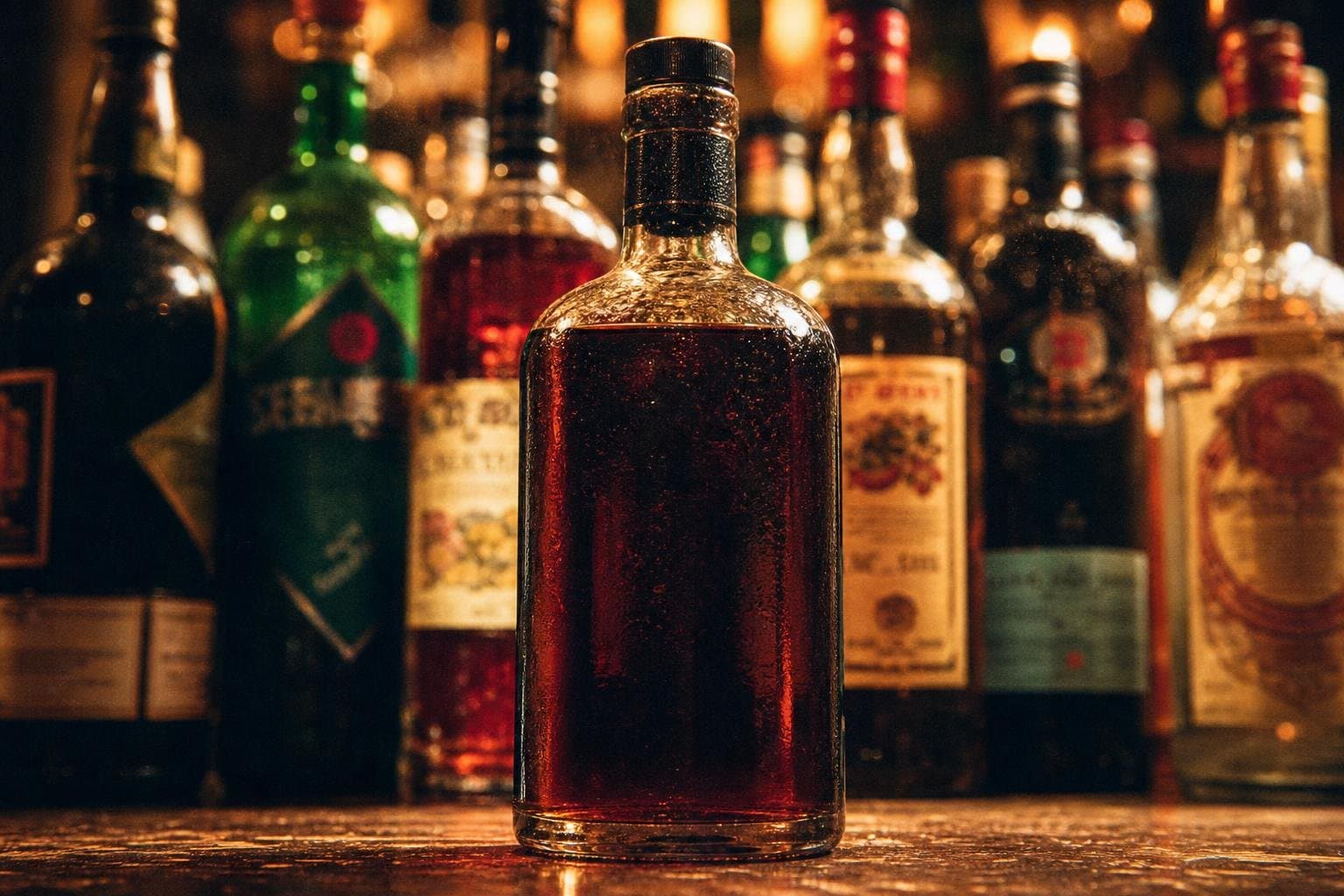

The amaro section at a well-stocked American spirits retailer circa 2024 looks like a hostage situation. Forty, sixty, sometimes eighty bottles, each with a label that implies centuries of monastic tradition, each with a back-panel story about a family recipe and a secret blend of alpine herbs. The bottles are beautiful. The marketing is impeccable. And somewhere in there, buried under the avalanche, is a Cynar and a Fernet-Branca that were doing fine before any of this started.
The amaro explosion was real, and for a while it was genuinely exciting. Then it became a category, and categories have a way of eating themselves.
I wrote about amaro's cultural moment last May — specifically how the category's rise tracked the craft cocktail movement's need for something bitter, complex, and European-adjacent. The argument there was that amaro earned its place at the bar through genuine utility: it solved problems that gin and whiskey couldn't. What I didn't fully reckon with was what happens after a category earns its credibility and then gets strip-mined for it.
The Category Ate Itself
Amaro's American moment had a specific shape. It started with a handful of Italian imports — Campari, Aperol, Cynar, Averna, Ramazzotti — that serious bartenders had been using for years. Then the craft cocktail revival created demand for complexity, for bitterness, for drinks that tasted like something other than sweetened alcohol. Amaro fit that demand perfectly. Bartenders started reaching for Fernet-Branca not just as a digestif but as a modifier, a rinse, a handshake. The category had genuine depth, and people were genuinely discovering it.
What followed was predictable in retrospect. American craft distillers noticed. Importers noticed. The spirits industry, which has a marketing-to-substance ratio problem that I've been complaining about for years, noticed hardest of all. By the early 2020s, domestic amaro production had expanded dramatically, with distilleries from Vermont to Oregon releasing their own bitter liqueurs, each positioned as a serious contribution to the tradition. Some were. Many were not.
The problem with amaro as a category is that it's definitionally loose. Fernet, as Asterley Bros. explains, is itself a subcategory — a specific style of intensely bitter, menthol-forward herbal liqueur that sits within the broader amaro family. But "amaro" itself just means bitter. It's a flavor descriptor that became a category name. That looseness, which was once the category's charm — room for everything from the gentle sweetness of Averna to the medicinal assault of Fernet — became its commercial vulnerability. If anything bitter and herbal qualifies, then the barrier to entry is essentially zero.
The Marketing Infrastructure Problem
Here's where the amaro explosion gets genuinely interesting as a case study in how spirits categories develop and then degrade. The Italian producers who built the category over generations had something that most American entrants don't: actual history. Not marketing history — real history. Recipes that were developed before anyone thought to write a press release about them.
The hard rule at this publication is to not present marketing origin stories from spirits brands as verified history, and nowhere is that discipline more necessary than in amaro. The category runs on origin mythology. Every new domestic amaro comes with a story: a grandmother's recipe, a forager's notebook, a monk's manuscript. Some of these stories are true. Most are constructed after the fact to give a product the patina of tradition it hasn't earned.
This matters for a specific reason: the origin story is doing work that the liquid should be doing. When a bottle's back label spends three paragraphs on a family's Calabrian roots and one sentence on what the thing actually tastes like, that's a tell. The Italian producers who built this category — Fratelli Branca, Gruppo Campari, the Averna family before acquisition — didn't need to explain why their products deserved to exist. The products explained themselves, over decades of use. The new entrants are trying to compress that credibility into a label.
Robert Simonson's documented account of the modern cocktail era, as discussed in Maffeo Drinks, makes a structural point that applies here: the modern classic cocktail canon ran from roughly 2000 to 2012, and nothing has joined it since. The same dynamic operates in amaro. The drinks that bartenders actually reach for — the bottles that show up in serious cocktail recipes, that get called for by name rather than by category — are almost entirely the pre-explosion imports. Cynar. Averna. Ramazzotti. Nonino. Bénédictine, if you're being generous about the category's edges. The explosion produced volume, not canon.
What "Obscure" Actually Means Now
There's a secondary casualty here that doesn't get discussed enough: the genuine obscurities got buried.
Before the explosion, "obscure amaro" meant something. It meant a bottle that had survived for decades or centuries on the strength of its recipe, distributed poorly, known mainly to people who'd encountered it in its home region or through serious research. Braulio, the alpine amaro from Bormio, was genuinely hard to find in the United States for most of its history — not because it was out of production, but because nobody had bothered to import it properly. Same with Sfumato, the rabarbaro-forward Cappelletti product that tastes like smoke and dried fruit and has no obvious commercial appeal whatsoever. These were obscure in the meaningful sense: overlooked, not manufactured.
Now "obscure" is a marketing position. Distilleries release limited-run amaros specifically to occupy the obscure-and-interesting shelf position. The bottle looks like it was designed by someone who studied vintage Italian pharmaceutical labels. The name is in a language that implies European heritage. The price point signals seriousness. And the liquid inside is... fine. Sometimes good. Occasionally genuinely interesting. But the obscurity is constructed, not discovered.
This distinction matters enormously for the serious home bartender trying to build a useful back bar. The difference between a bottle that's hard to find because it's poorly distributed and a bottle that's hard to find because it was released in a quantity of 500 cases is not a subtle one. The first bottle has a track record. The second bottle has a launch strategy.
The sourcing discipline required here is real. When a retailer or a bartender recommends an "obscure" amaro, the first question should be: obscure to whom, and for how long? A product that's been made in the same town for 150 years and just arrived in American distribution is a different proposition than a product that was conceived eighteen months ago specifically for the American craft market.
The Curation Failure and What It Costs
The Maffeo Drinks analysis of why modern cocktail classics stopped being created after 2012 points at something structural: the conditions that allowed a drink to become canonical — a small, interconnected bartender community, shared reference points, genuine discovery — got disrupted by the category's own success. The same dynamic applies to amaro as a category of spirits.
When there were twenty serious amaros available in the American market, a bartender could know them. Could taste through them, understand their profiles, know which ones worked as modifiers and which ones needed to be sipped alone. The category had a knowable shape. Now the category has a shape that no single person can hold in their head, and the response from the industry has been to produce more bottles rather than better curation.
This is the choice abundance problem applied to spirits, and it's not unique to amaro — the broader retail dynamic of breadth substituting for expertise shows up everywhere in modern commerce. But it hits amaro particularly hard because the category's value proposition was always about depth and specificity. An amaro is supposed to taste like somewhere and something. It's supposed to have a reason for its particular combination of botanicals, a logic rooted in regional tradition or a specific digestive function. When the category expands to include anything bitter that a craft distillery decided to make, that specificity dissolves.
The practical result is that the bottles that deserve attention — the real obscurities, the underappreciated classics, the regional Italian products that have been quietly excellent for generations — are harder to find not because they're out of production or poorly distributed, but because they're competing for shelf space and mental bandwidth with sixty products that are trading on the category's credibility without contributing to it.
What the Serious Drinker Does With This
The answer is not nostalgia for a smaller category. The answer is better filters.
The first filter is age. Not the age of the liquid, but the age of the recipe. A product that has been made continuously for more than fifty years has survived market forces that would have killed it if it weren't genuinely good. Averna has been produced since 1868, according to its own history — though that history comes from the brand, so hold it loosely. What's verifiable is that it was being written about by serious cocktail historians long before the American craft revival. Same with Cynar, which dates to the 1950s and which I've written about at length here. These products have track records that no amount of marketing can manufacture.
The second filter is function. What does this amaro actually do in a drink? The Italian classics earned their places in the canon because bartenders found specific uses for them — Campari in the Negroni, Cynar as a low-proof modifier, Fernet as a digestif and a rinse. The new entrants often lack this functional clarity. They're positioned as sipping amaros, which is a category that requires either genuine complexity or genuine tradition to justify, and many of them have neither.
The third filter is the one that requires the most discipline: ignore the label. The bottle design, the origin story, the limited-release positioning — none of it tells you anything about what's inside. The only thing that tells you what's inside is tasting it, or reading accounts from people who have tasted it and have no financial relationship with the producer.
The amaro explosion gave American drinkers access to a genuine tradition. It also buried that tradition under a landslide of product. The work now is excavation — finding the bottles that were worth finding before anyone decided the category was interesting, and applying enough skepticism to the new arrivals that the good ones can distinguish themselves from the noise.
The Cynar was fine before any of this started. It's still fine. That's the benchmark.


