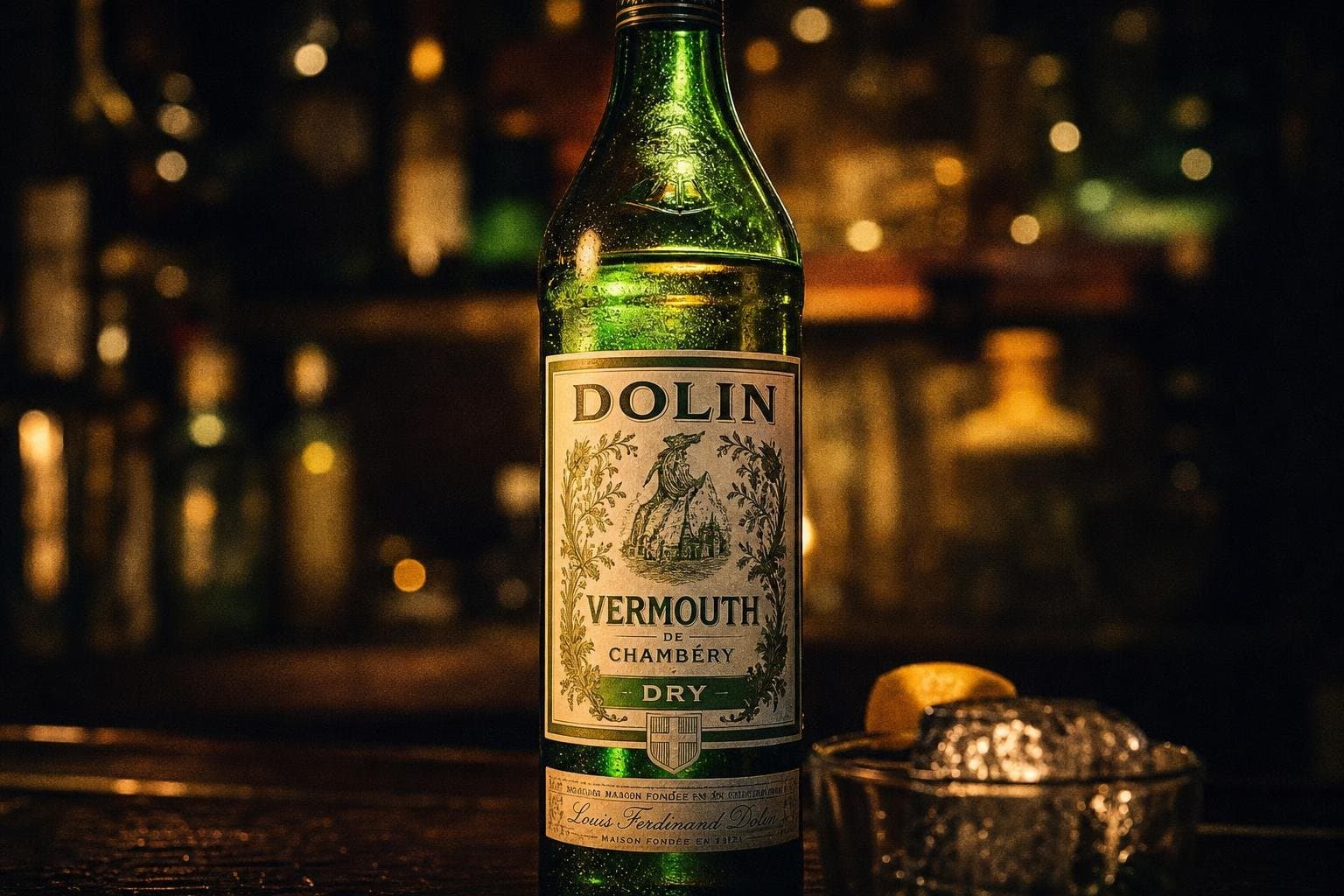

There's a bottle of dry vermouth in most home bars that has been open for eight months. It lives in a cabinet, not the refrigerator. It gets used in quarter-ounce increments, when it gets used at all. The person who owns it thinks of it the way they think of Worcestershire sauce — a background ingredient, a supporting player, something that would be embarrassing to run out of but not particularly interesting to replenish.
This is the condition vermouth has been reduced to. And the reduction is almost entirely our fault.
The Drink That Forgot It Was a Drink
Source 4 traces vermouth's origins back to Roman medicinal practice — wine mixed with herbs, drunk for health — and follows the thread through European apothecaries before the category took recognizable shape in Turin and Chambéry. The name itself derives from the German Wermut, meaning wormwood, the bitter botanical that once defined the category's character. What's striking about this history is how purposeful vermouth was in its original form. It wasn't a diluting agent. It was the point.
The practical origins are equally revealing. As source 4 describes it, vermouth emerged partly as a solution to a winemaking problem: the heavy, concentrated wine pressed from grape skins at the bottom of fermentation tanks was too intense to drink as-is, so producers added sugar, herbs, flowers, fruit, and spices to transform it into something pleasant. Vermouth was, at its origin, an act of creative thrift — a fortified, aromatized wine that happened to be delicious. Not a cocktail ingredient. A drink.
The transformation into "cocktail modifier" happened gradually, then all at once. The Martini's rise through the 20th century — and its progressive drying-out — turned dry vermouth into something bartenders measured in drops rather than ounces. The sweet vermouth in a Manhattan fared slightly better, but only because the ratio stayed more honest. By the time craft cocktail culture arrived in the early 2000s, vermouth had been so thoroughly subordinated that a generation of bartenders learned to treat it as a flavoring agent rather than a co-equal ingredient.
The Martinez — widely regarded as a precursor to the Martini — tells this story in miniature. As Jason Hedges, beverage director at L'Amico in New York, explains via Tasting Table, the Martinez reflects "a time when cocktails evolved organically over decades and guests embraced nuanced, spirit-forward drinks without expecting every cocktail to be bright, citrus-driven, or instantly familiar." The drink calls for sweet vermouth in a proportion that actually registers — you taste it, you're meant to taste it. Its decline tracks almost exactly with the decline of vermouth as a category worth paying attention to.
What Vermouth Actually Tastes Like (When You Let It)
The problem with treating vermouth as a modifier is that it trains both bartenders and drinkers to stop tasting it. If your mental model of dry vermouth is "the thing that makes a Martini less than pure gin," you're not going to notice when it's stale, and you're certainly not going to notice when it's exceptional.
The Asterley Bros dry vermouth guide is useful here, not because it's the most authoritative source in the room, but because it illustrates the range that exists within a single style. Their own English Dry, built from English white wines with 28 botanicals, leads with jasmine, rose, elderflower, and camomile on the nose, then moves through bright citrus, rosemary, sage, thyme, cardamom, cinnamon, and vanilla on the palate. Noilly Prat, by contrast, reads lean, dry, and brisk — a different instrument entirely. Dolin Dry brings alpine herb notes and a softness that suits a wetter Martini ratio. Carpano Dry runs spiced and bitter-edged. These are not interchangeable products. They are distinct expressions of a category with genuine range.
The guide's practical observation — that opened vermouth is best used within three to four weeks — points to the central maintenance failure. Most bars and home bartenders treat vermouth like a pantry staple with an indefinite shelf life. Vermouth is wine. Fortified wine, yes, but wine. It oxidizes. It goes flat. The botanicals that give it character fade and then turn. An eight-month-old bottle of dry vermouth sitting in a cabinet isn't a Martini ingredient; it's a liability. The reason so many Martinis taste like cold gin with a whisper of something vaguely wrong is that the vermouth in them has been dead for months.
This is the foundational irony: the ingredient that gets treated as least important is the one that requires the most care.
The Renaissance Happening Mostly Outside American Bars
While American cocktail culture has been slow to reconsider vermouth's role, something more interesting has been developing elsewhere. Source 4 profiles producers in the Priorat region of Catalonia who are treating vermouth as a primary expression of terroir — not a byproduct, not a cocktail ingredient, but a way to interpret local grape varieties and botanical traditions. In a region better known for powerful red wines, these producers are making vermouth that reflects the landscape it comes from.
This is vermouth returning to its original logic. The drink was always about the relationship between base wine and botanical additions — the wine wasn't incidental, it was the canvas. When that relationship is taken seriously, vermouth becomes something worth drinking on its own, over ice, as an aperitif, the way much of southern Europe has always consumed it.
The VinePair podcast episode featuring the co-founders of Cueva Nueva gestures at the same tension: what does vermouth mean in the American market versus what it means in Europe? The category's identity crisis is partly geographic. In Spain and Italy, vermouth-as-aperitif has never gone away. In the United States, vermouth became so thoroughly associated with cocktail production that its standalone character got lost. The question of where vermouth goes next is, in part, a question of whether American drinkers can be persuaded to think about it the way Europeans already do.
The Imbibe guide to Berkeley drinking offers a small data point: Bar Panisse, the cocktail offshoot of Chez Panisse, is built around the philosophy of locality, organic produce, and quality ingredients translated into classic cocktails. It's the kind of program that takes vermouth seriously by default — because if you're sourcing carefully and executing classically, you can't afford to ignore the supporting cast. Whether that ethos spreads beyond its particular cultural context is another question.
The Bartender's Complicity
Craft cocktail culture deserves some credit for the current situation, and not the good kind. The movement that rescued countless forgotten spirits and techniques also, paradoxically, reinforced vermouth's subordination by fetishizing complexity. If your menu features a drink with house-made orgeat, three different rums, and a dehydrated citrus wheel, the Martini next to it — which requires only that your vermouth be fresh and your ratio be honest — looks almost embarrassingly simple. The incentive structure rewards invention over execution.
PUNCH's recent piece on rule-breaking cocktails captures the craft bar's relationship to ingredients like vermouth obliquely. Bar legend Joaquín Simó's point about sugar — that "sugar is not the enemy" and a touch of it can add balance to drinks that feel too astringent — applies equally to vermouth. The enemy isn't the modifier; it's the reflexive dismissal of anything that doesn't read as a primary flavor. Vermouth gets dismissed the same way simple syrup does: as a crutch, as a shortcut, as something the serious bartender transcends rather than masters.
The result is menus full of drinks that showcase technique and obscure ingredients while the Martini — the drink that most directly exposes the quality of your vermouth — gets made with whatever's been sitting open behind the bar since last Tuesday.
There's a version of this argument I've made before, writing about the Bamboo — a drink that is essentially equal parts dry sherry and dry vermouth, stirred, and which therefore has nowhere to hide. The Bamboo is a brutal honesty test for your vermouth. Most bars fail it not because they've chosen the wrong bottle but because they've stopped thinking about the bottle at all.
What Treating Vermouth Seriously Actually Looks Like
The practical case for vermouth rehabilitation isn't complicated, but it requires a change in category thinking.
First: refrigerate it. This is non-negotiable. Vermouth is wine. It belongs in the refrigerator after opening, and it should be replaced within a month. The Asterley Bros guide puts the window at three to four weeks. That's the ceiling, not the target.
Second: drink it on its own before you put it in anything. Pour an ounce over ice. Taste it. If you can't describe what you're tasting — if it's just "wine-ish" or "slightly bitter" — you don't know your ingredient well enough to use it well. The range between Noilly Prat's lean austerity and Carpano Dry's spiced weight is substantial. Those differences matter in a Martini. They matter more in a Bamboo or a Martinez, where the vermouth carries more of the load.
Third: consider the ratio as a variable, not a fixed point. The Martinez worked because it used vermouth in a proportion that made it audible. The contemporary obsession with bone-dry Martinis — which is, historically speaking, a fairly recent affectation — has trained bartenders to treat lower vermouth as automatically better. It isn't. It's just drier. Whether drier is better depends on the vermouth, the gin, and what you're trying to accomplish.
Finally: buy bottles worth caring about. The category has genuine range, from widely available workhorses like Dolin and Noilly Prat (mid-price, most specialty shops and well-stocked liquor stores) to more characterful options like Carpano Dry or the Asterley Bros English Dry (premium end, specialty shops or online). None of these are expensive relative to the spirits they're paired with. The cost of treating vermouth as a serious ingredient is a refrigerator shelf and a monthly replacement cycle. The return is every stirred drink you make getting measurably better.
Ver


