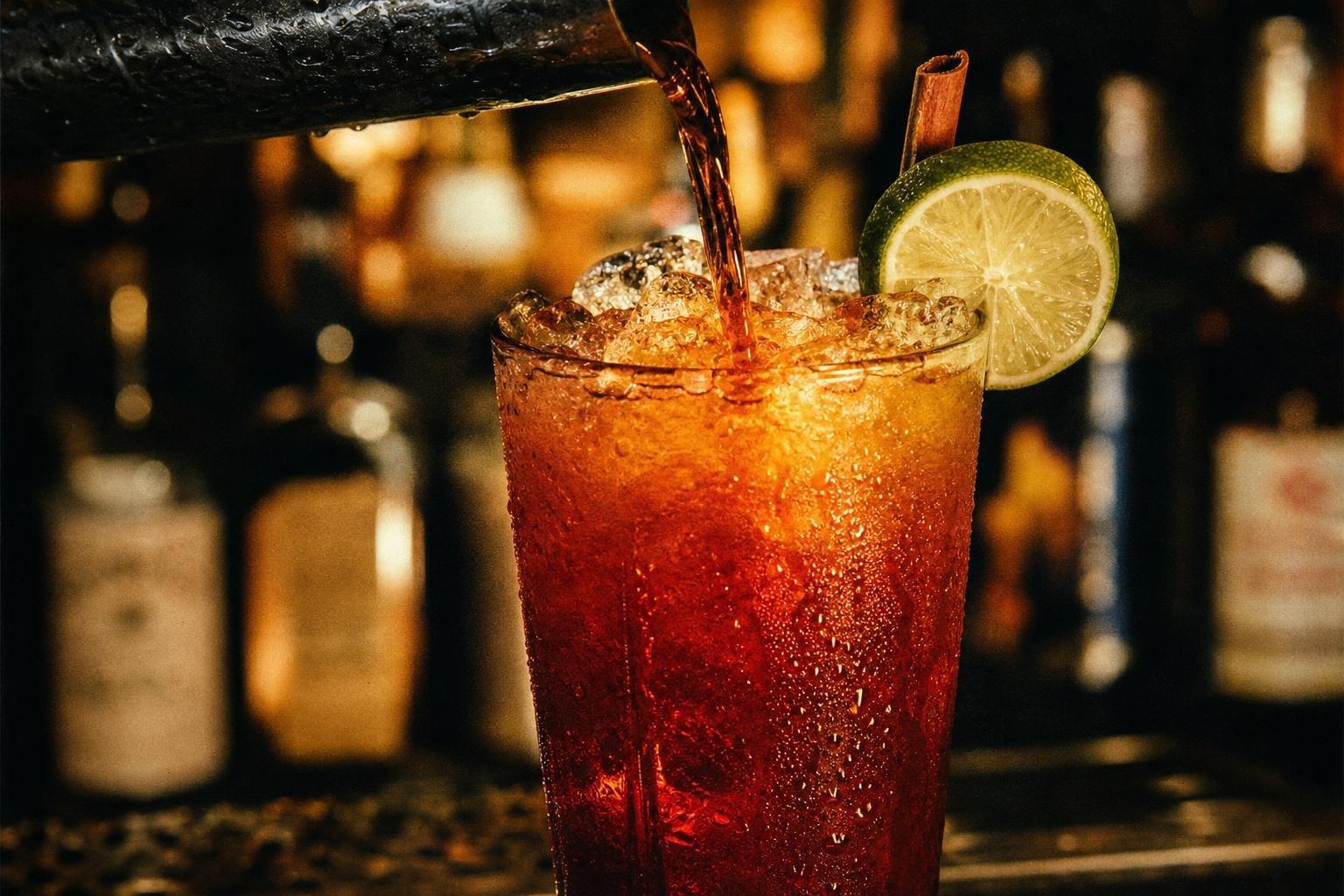

A bartender in Tours wants you to be scared of a drink. In a recent video for his bar Maskwood, Jordan Arbib walks through his version of the Zombie, warns that it's "a cocktail that can be frightening," and repeats the old line that patrons used to be limited to two of them because the thing hit that hard — before admitting he's softened his own recipe and keeping one ingredient secret so as not to alarm the room (actu.fr).
That's a nice piece of bar theater. It's also almost exactly the kind of story that's been attached to this drink for nine decades, and it tells you more about how tiki mythology propagates than about what's actually in the glass.
The Zombie's reputation for secrecy is real enough to be a cliché. What's thinner is the idea — repeated across tiki lore for years — that Donn Beach ran his bar on some elaborate cipher: coded bottle labels, scrambled recipe cards, a formula nobody could crack until a dedicated researcher finally broke it decades later. It's a great premise for a podcast. It is not something the sources in front of me actually confirm, and I'm not going to dress up a recipe-mill fantasy as documented history just because it makes for a punchier headline.
What I can trace, and what's worth taking seriously, is the secrecy culture itself — where it came from, why it worked as a business strategy, and why the drinks that survive from that era are reconstructions, not decryptions.
The Man Who Sold Disappearance, Not Just Drinks
Ernest Raymond Beaumont Gantt — Donn Beach — opened a small Hollywood bar that's widely credited as the starting point of the American tiki tradition, though even that founding story comes with an asterisk: accounts of his early biography lean on travel tales and personal mythmaking that are hard to separate from fact (Tiki Tim Adventures). The site that tells this story plainly concedes the opening date itself is disputed, which is the correct way to handle it. Cocktail history doesn't hand out clean founding myths, and anyone writing about Donn Beach without that caveat is selling you a brochure, not history.
Here's the thing about a man whose own biography was already half invention: secrecy wasn't just a quirk of his bar operations, it was the same instinct that built his personal legend. If you're selling an escape — and Depression-era Hollywood was very much in the business of selling escape, long before the first tiki torch was lit (Tiki Tim Adventures) — then mystery is a feature, not a bug. A drink nobody can replicate at home is a drink you have to come back for. That's good business. It is not the same thing as a cryptographic system.
Three Dots and a Dash Shows You What "Recovered" Actually Means
Take Three Dots and a Dash, the Morse-code V-for-victory drink that's "strongly associated with Donn Beach," with its exact debut year still unresolved (Copycat Cocktail). That hedge — strongly associated, not confirmed, debut year uncertain — is doing a lot of work, and it's the right amount of work. This is a drink built from two rums, two juices, honey syrup, falernum, allspice dram, and a dash of Angostura, flash-blended with crushed ice and poured unstrained with three cherries and a pineapple stick standing in for the Morse code itself (Copycat Cocktail). It's a genuinely well-built drink on paper — two rums doing different jobs, honey softening the citrus, falernum and allspice dram adding a long spice tail instead of a quick hit. That's sound architecture regardless of who gets the credit line.
But notice what the source calls it: a "recovered historic formula." Recovered, not decoded. That's an important distinction this publication cares about, and it's one the broader tiki-history conversation often blurs. A recovered recipe means someone pieced together a plausible version from fragmentary menus, old photographs, surviving staff memory, and educated palate work — the same way historians reconstruct any lost technique. A decoded formula implies there was a literal cipher sitting in a vault, waiting for the right person to crack it. The archived Don the Beachcomber menus that confirm Three Dots and a Dash as a house drink verify that the drink existed and roughly what it contained (Copycat Cocktail) — they don't verify a hidden code waiting to be broken.
I'd rather drink a well-reconstructed Three Dots and a Dash that admits its uncertainty than a "historically accurate" one that's quietly papering over the gaps with confidence it hasn't earned.
Why the Secrecy Story Keeps Working on Bartenders a Century Later
Go back to Tours. Jordan Arbib's Zombie uses three rums, falernum, fresh lime, a cinnamon-and-spice grenadine, and grapefruit juice, plus one ingredient he won't name on camera (actu.fr). Notice that the structure — multiple rums, falernum, fresh citrus, a spiced sweetener — rhymes with the Three Dots and a Dash build almost exactly. That's not a coincidence. It's the tiki template Donn Beach popularized: layer two or three distinct rums for complexity, balance with citrus, round the edges with a spiced syrup, and let a flash-blend with crushed ice do the aeration and dilution work a shaker can't quite manage the same way (Stillroom glossary).
What's changed in ninety years isn't the architecture. It's the marketing. Arbib isn't guarding a formula because the drink is genuinely dangerous to disclose — he's guarding it because "the bartender who won't tell you the secret ingredient" is a story customers like to hear, the same way "you could only order two" is a story customers like to repeat even though nobody at that table has any documentation for the claim. The legend survives because it's a better bar story than "this has a lot of sugar and a lot of rum, pace yourself." Donn Beach built his entire brand on exactly that instinct, and it's still paying dividends for bartenders who never met him.
The Real Decryption Problem Isn't a Cipher. It's a Century of Bad Photocopies.
If there's a genuine mystery in the Zombie's history, it's the boring, unglamorous kind: menus get lost, recipe cards get reprinted with errors, bars close and reopen under new owners with half-remembered builds, and every "original recipe" circulating today is some bartender's best reconstruction from incomplete evidence. That's not a code waiting to be cracked. That's just how pre-digital bar history works when nobody thought to write anything down for posterity.
This matters because it changes what you should actually want from a Zombie. Not a drink that claims perfect historical fidelity — nobody can honestly offer you that — but a drink built on the real structural logic Donn Beach was working with: multiple rum expressions chosen for distinct roles, fresh citrus, a spiced syrup for backbone, and a technique (crushed ice, short hard blend) built to serve something strong cold and fast before it got the chance to turn cloying. Judge any Zombie on that logic, not on whether the bartender swears it's "the original."
The next time someone tells you they've cracked Donn Beach's secret code, ask them for the primary source. What you'll usually get back is a good story, a plausible rum blend, and an admission — if they're honest — that the debut year, the exact proportions, and half the ingredient list were never pinned down to begin with. That's not a failure of research. It's just what happens when the man selling the drink wanted the mystery more than he wanted the paper trail.


