


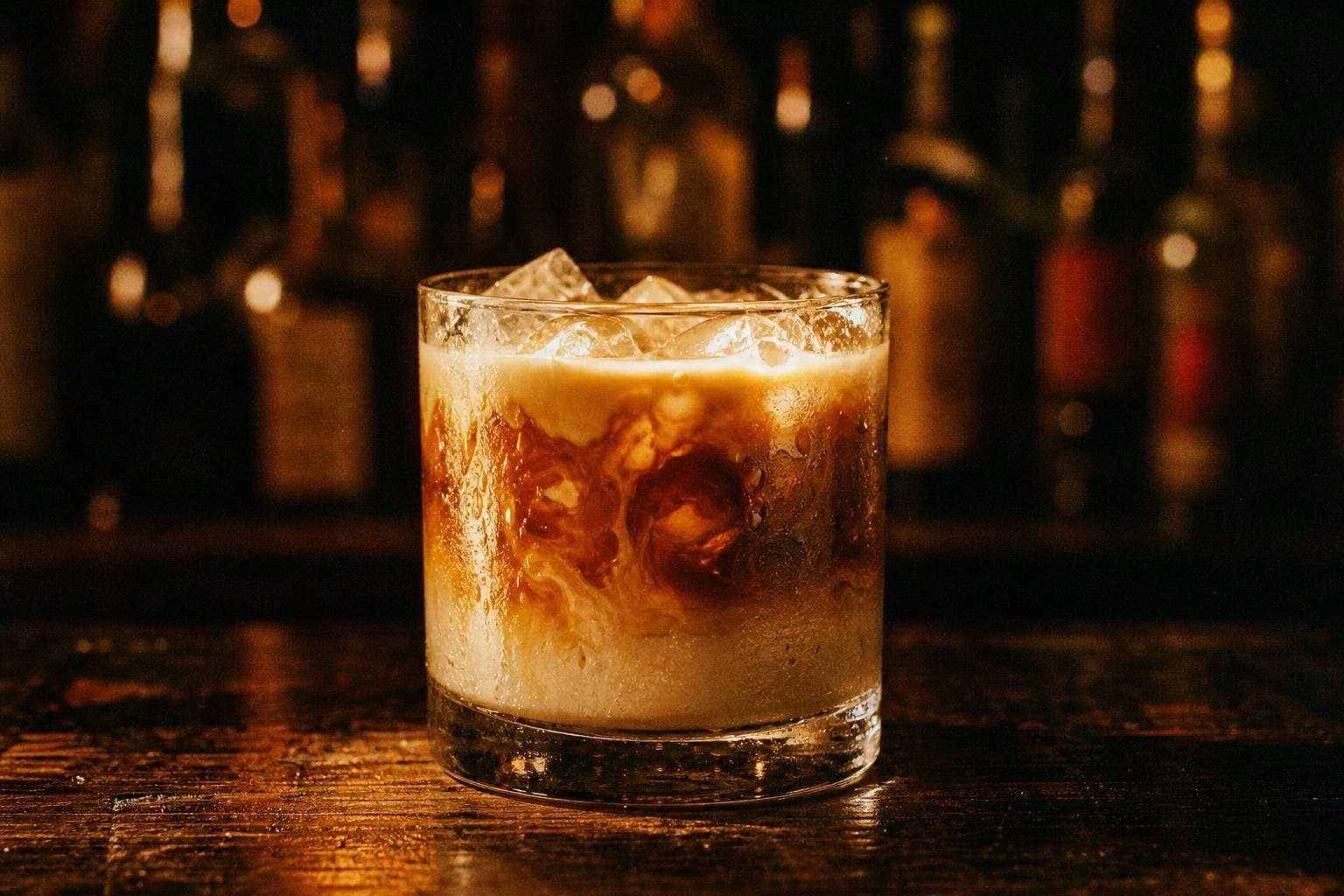

The disco-era drinks revival has a credibility problem. Most of it is nostalgia dressed up as irony — bars slapping Tequila Sunrise on a menu because the aesthetic is fun, not because anyone thought hard about the drink. So when Punch covered Tavern Next Door's White Russian riff last month, I expected another winking retro gesture. What head bartender Conor Johns is actually doing is more interesting than that.
Johns keeps the original names — White Russian, Singapore Sling, Brandy Alexander — as what he calls familiar signposts, then rebuilds the drinks from the inside out. His White Russian drops the vodka and Kahlúa entirely. In their place: equal parts mezcal, Demerara rum, Braulio amaro, vanilla liqueur, and coffee liqueur, a few dashes of Angostura, batched and served as an Old-Fashioned variation. The result, per Parsons, reads like a malted milkshake that forgot it was supposed to be simple. Five bottles where one used to be. The Dude would not approve. The drink sounds correct.
The Trick Is Keeping the Name
What Johns is doing — and what most retro revivals miss — is using the original drink as a structural argument rather than a costume. The White Russian's actual appeal was always richness, coffee bitterness, and a certain dairy-adjacent weight. Vodka and Kahlúa were just the delivery mechanism available in 1970. Mezcal and Braulio get you to the same place with more to say along the way.
This is the same logic that Imbibe traced through the Martini's long arc — the Manhattan came back when rye and quality vermouth returned; the Negroni came back when American drinkers relearned bitter. The drink's soul survived; the ingredients evolved to match what was actually available and good. Johns is applying the same principle to a drink that nobody thought deserved the treatment.
The White Russian's reputation is so low that the bar is essentially on the floor. That's an advantage. Nobody is going to argue with you about the correct spec. You can rebuild it honestly, keep the name for navigation, and let the drink make its own case.
Whether this signals a broader rehabilitation of '70s cocktails or just one smart bar doing smart things is worth watching. Punch's coverage of underrated tequila classics — the Rosita, the Toreador, the Metexa — suggests the appetite for serious treatment of overlooked drinks is real. The question is whether bars follow the logic or just follow the