


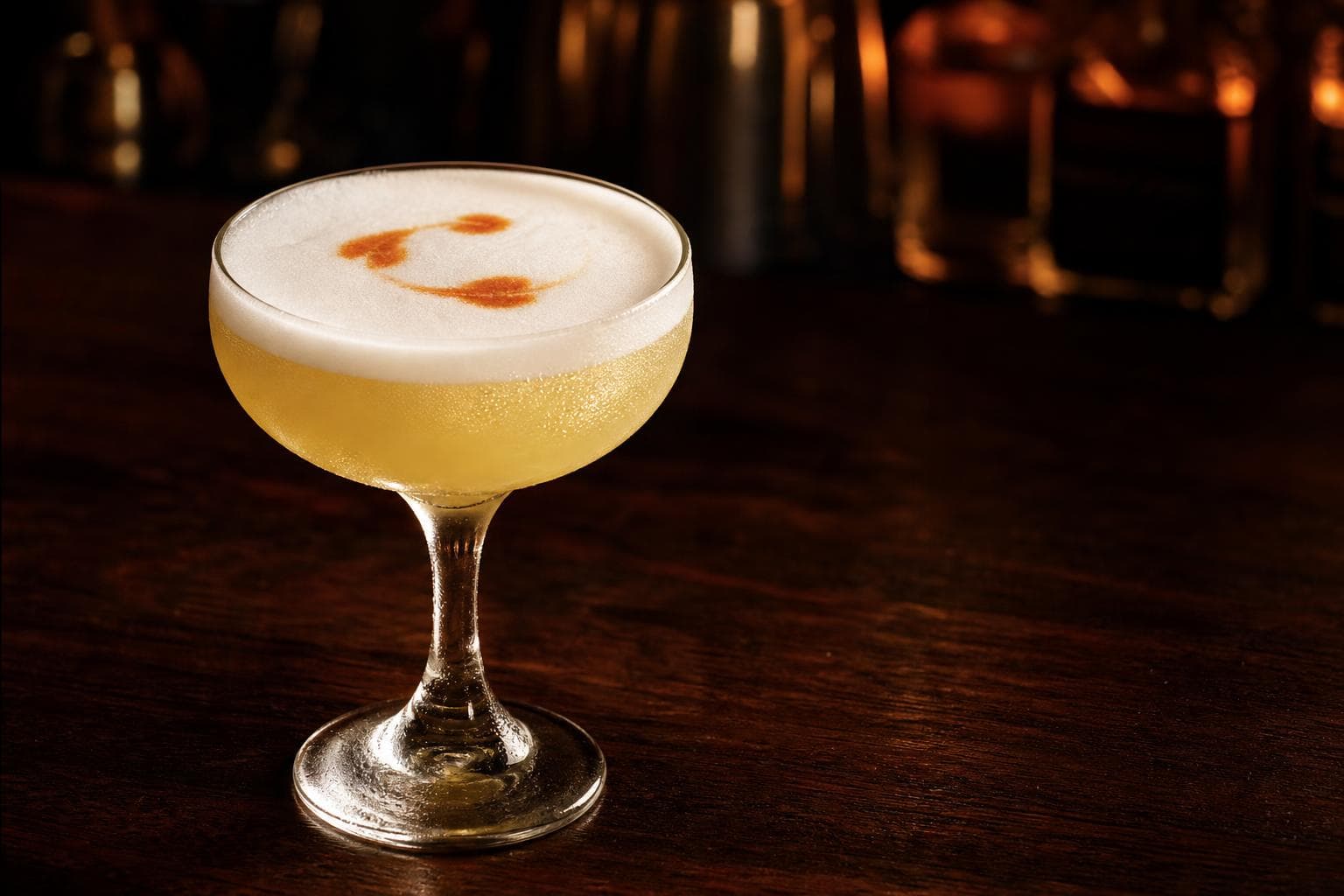

Three ingredients. Egg white. Done. The pisco sour has a reputation as an approachable classic — the kind of drink that seems like it should be easy to nail. That reputation is a lie, and any bartender who's made a bad one knows exactly where it went wrong.
The problem isn't the recipe. The problem is that the pisco sour punishes imprecision in ways most sours don't, because the base spirit itself is doing more work than people realize.
The Spirit Is Not Interchangeable
Pisco is a grape brandy, but that description flattens what's actually a highly variable category. Palate Diplomacy's breakdown of pisco types lays out the core distinctions: pisco puro is made from a single grape variety and emphasizes the fruit's natural character; pisco aromático uses aromatic varieties like Italia or Torontel and brings floral, fruity complexity; pisco mosto verde is produced from partially fermented must, yielding a richer texture and more residual sweetness; and pisco acholado blends styles for a balanced middle ground.
Each of these behaves differently in a sour. A quebranta-based puro — the workhorse grape, neutral and earthy — will give you a clean, dry platform where the citrus and sugar do most of the talking. An aromático made from Italia grapes brings its own floral lift, which means your sweetener needs to stay restrained or the drink tips into perfume. Mosto verde's inherent richness changes the texture equation entirely; you may not need as much simple syrup, and if you add your standard measure anyway, you've just made a dessert.
The myth of simplicity comes from treating pisco as a single thing. It isn't. Choosing your bottle is the first technical decision in the recipe, not a footnote.
The Ratio Problem Nobody Talks About
The standard pisco sour ratio floats around 3:1:1 — three parts pisco, one part lime, one part simple syrup — with egg white and a few drops of Angostura on top. That's a starting point, not a formula.
Lime juice is the variable that breaks most home versions. Citrus acidity fluctuates with season, source, and how long the fruit has been sitting in your refrigerator. A lime that's been on the counter for a week is measurably less acidic than one cut fresh. The difference between a pisco sour that sings and one that tastes like sweetened brandy is often a few milliliters of juice. Taste your citrus before you build the drink. Adjust.
The egg white is the other point of failure — not in flavor, but in technique. Dry shaking first (no ice, just the egg white and the other ingredients) builds the foam. Adding ice and shaking again chills and dilutes. Skip the dry shake and you get a thin, watery froth that collapses before the glass reaches the table. The foam isn't decoration. It's the delivery mechanism for the Angostura bitters on top, and it changes the texture of every sip.
This is what the "simple" label obscures: the pisco sour requires sequential technique, variable-aware ratios, and a spirit decision upfront. That's not simple. That's demanding.
Build It Right
Pisco Sour
- 2 oz Peruvian pisco (quebranta-based puro for a clean, dry result — try Campo de Encanto Acholado for more complexity; widely available at specialty spirits shops, roughly $30–40)
- ¾ oz fresh lime juice (taste and adjust — you may want up to 1 oz depending on acidity)
- ¾ oz simple syrup (1:1 ratio; reduce to ½ oz if using a mosto verde or aromático pisco)
- 1 oz egg white (roughly one egg white, or pasteurized if preferred)
- 2–3 dashes Angostura bitters
Combine pisco, lime, simple syrup, and egg white in a shaker. Dry shake vigorously for 15 seconds — no ice. Add ice and shake again for another 10–12 seconds. Double-strain into a chilled coupe. Dot the foam with Angostura and drag a toothpick through to create the traditional pattern, or don't — the bitters are there for aroma and contrast, not aesthetics.
On the Peru-Chile question: Both countries produce pisco and both have legal frameworks defining it. The production methods differ — Peruvian regulations prohibit adding water after distillation and require the spirit to be distilled to proof, among other distinctions. The debate over which country holds the "authentic" claim is long, politically charged, and unlikely to be resolved here. For the sour, Peruvian pisco is the traditional base, but the more important variable is the grape type and style, not the flag on the bottle.
The Verdict
The pisco sour earns its place in the canon not because it's easy but because it's honest. There's nowhere to hide. Bad citrus, wrong sweetener level, lazy shaking — the drink reports all of it. That's the same quality that makes a well-made Daiquiri a better bar test than a twelve-ingredient showpiece.
The bars getting it right — and Tales of the Cocktail's 2026 Spirited Awards nominees include Alonso Palomino of Lady Bee in Lima among the International Bartender of the Year contenders — understand that precision in a three-ingredient drink is harder to fake than complexity in a twelve-ingredient one. The pisco sour doesn't need rescuing or reinventing. It needs to be made correctly, which turns out to be a higher bar than it looks.