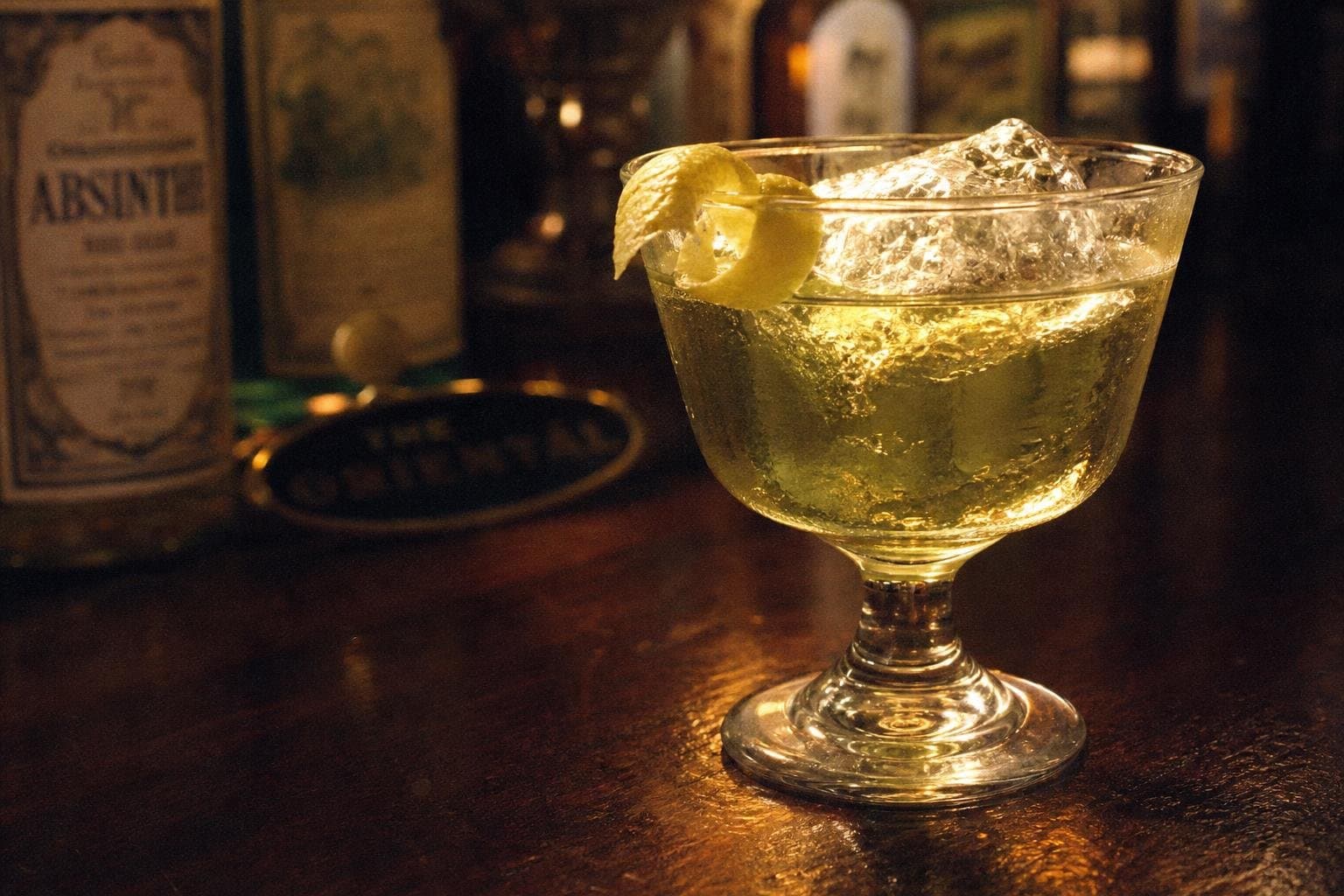

A drink named for a death notice should have a tidy origin story. It doesn't. The Obituary Cocktail — gin, dry vermouth, a whisper of absinthe, a lemon twist — disappeared from New Orleans bars for decades and came back so quietly that most of the city's own drinkers never noticed it left. That's the real story here, and it's a better one than the assigned-topic version of cocktail revival, where a single bartender finds a dusty recipe card and the rest is marketing copy.
Nobody Actually Knows Who Made It
The drink traces, as best anyone can tell, to the louche French Quarter scene of the years right after Prohibition ended in 1933, when Tennessee Williams and Truman Capote types were drinking in cafés that no longer exist under names nobody wrote down carefully enough (BBC). New Orleans historian Sue Strachan, who wrote a book specifically about this cocktail, traces the earliest known printed reference to a 1942 guide called "The Bachelor in New Orleans," and says the drink was likely invented at Café Lafitte on Bourbon Street (BBC). Likely, not definitely. That's the correct word, and it's worth sitting with. A cocktail named after a death notice, invented in a bar on a street famous for drunken tourists in plastic beads, and nobody can produce a receipt. The gap between "likely invented at" and "invented at" is where most of cocktail history actually lives, and the Obituary sits comfortably in it.
It's worth contrasting this with how a modern recipe gets documented today. A current online recipe database will list exact measures, calorie counts, and the named creator of a new drink down to the year it was adapted (Difford's Guide). That level of record-keeping simply didn't exist for a bar napkin invention in 1933 New Orleans, and it's a big part of why the Obituary's paper trail is so thin. We've gotten very good at documenting cocktails that don't need it and very bad, historically, at documenting the ones that do.
It Didn't Come Back Because Someone Found It. It Came Back Because the Law Changed.
Here's the detail that makes this drink interesting instead of merely quaint: its disappearance and return track almost exactly with the legal status of its third ingredient. Absinthe was effectively barred from U.S. shelves for nearly a century before it was relegalized in 2007 (BBC). A cocktail that leans on absinthe for its signature bitterness doesn't get to exist in any meaningful way while that ingredient is contraband or adulterated. So "revival" here isn't really about rediscovery. It's regulatory. The recipe never needed excavating from some forgotten notebook — it needed its main supporting ingredient to become legal again, at which point bartenders who already knew the formula could just start pouring it.
That's a useful corrective to how revival stories usually get told. The tidy version is always: brilliant bartender finds forgotten classic, single-handedly resurrects it, cue applause. Compare that to how a bar like Death & Co actually built its reputation — not through one miracle rediscovery but through two decades of steady operation, a deep bench of original cocktails, and slow geographic expansion into cities like Denver, Los Angeles, and Seattle (Imbibe). Longevity in this business is rarely one dramatic save. It's usually structural — a law changes, a distributor finally imports something, a spirit comes back into production. Credit goes to people. Causation usually belongs to supply chains and statute books.
Even Revived, It Barely Shows Up
Here's the part that should temper any triumphant framing. At Cure, the acclaimed Neal Bodenheimer bar in New Orleans, the Obituary never actually sat on a printed menu — a bartender would make you one if you knew to ask (BBC). At Fives, on Jackson Square, Clayton Rosenthal builds his with Old Tom gin, Drapo Dry vermouth, and Mata Hari absinthe, and warns newcomers that the first sip is a punch in the mouth — which, for a martini-strength drink dosed with wormwood-based spirit, checks out (BBC). That's two bars, in one city, where the drink is actually legally poured and findable. "Revival" shouldn't mean a drink exists on menus nationwide, printed and searchable the way a database entry is (Difford's Guide). It should mean a drink is retrievable again, by people who know to ask for it, in the place it belongs. By that lower, more honest bar, the Obituary has made it back. By the bar of "you can order this in Cleveland," it hasn't, and probably won't, and that's fine.
There's a pattern worth watching across bar culture generally, not just in New Orleans: the longest-lived bars tend to survive by sticking to a small set of ideas executed precisely rather than chasing reinvention every season, the same instinct that's kept partners like David Kaplan and Alex Day running their original New York location toward its 20th anniversary (Imbibe). The Obituary didn't need a redesign. It needed absinthe back on the shelf and a bartender willing to pour something that isn't on the laminated list.
The drink's real lesson isn't about resurrection. It's about what gets lost when a single ingredient becomes illegal, and how much of what we call a "comeback" is really just a law finally catching up to a recipe that never actually went anywhere.


