


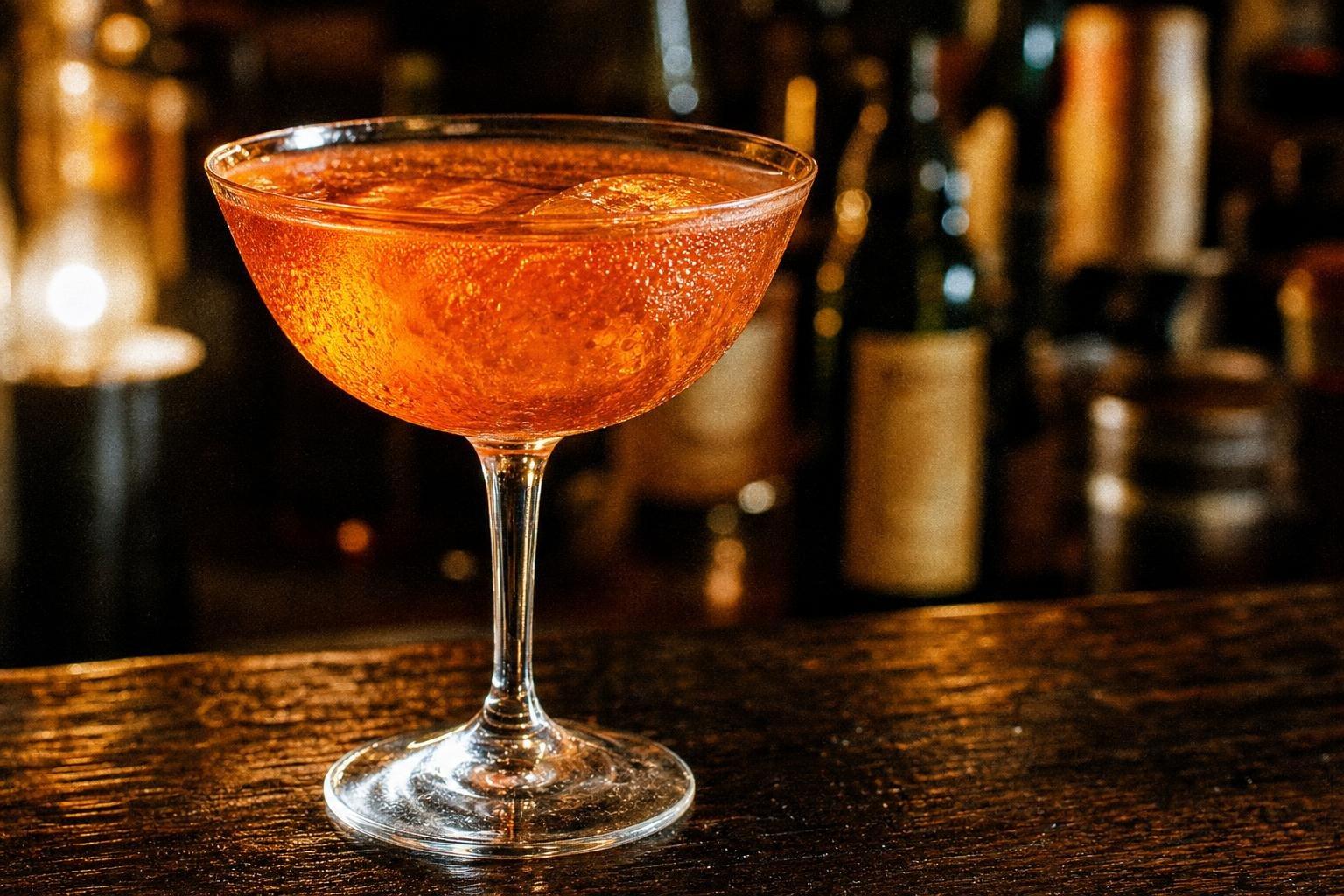

Bénédictine and amaro get filed under "accent flavor" — a quarter-ounce here, a rinse there. The drinks below put them in the driver's seat. None of this is new invention. It's just bartenders finally using these bottles for what they're actually built to do.
Why this works, structurally. Genever, amaro, and bitters all extract botanical character, but they do it at different concentrations and with different bases — genever keeps a grain distillate (moutwijn) present enough to carry its own texture, while amaro leans on sugar to balance a deliberately bitter core, and bitters concentrate that same aromatic logic into a few dashes rather than an ounce, per a WSET-level breakdown of production methods. That's the mechanical reason a half-ounce of amaro can restructure a whole drink instead of just seasoning it.
1. Bénédictine, pushed past the Vieux Carré
The honey-spice-green-tea profile that made Bénédictine a fixture of the Vieux Carré and the old "21" Club staple, the B&B, is getting asked to do more work now — accenting Daiquiris, Tom Collinses, even a milk-washed riff on the Vieux Carré itself, according to Punch's current survey of the liqueur. Worth flagging: the monastery-to-revolution-to-rediscovery origin story — monks in 1510, a lost recipe, a wine merchant's 1863 "rediscovery" — is the liqueur's own marketing legend, not verified history, and the source itself treats it with appropriate skepticism ("allegedly," "as the story goes"). Treat it as folklore with good production values, the same caveat that applies to Chartreuse's near-identical narrative.
2. The Amaro Daiquiri, which is really a temperature argument
Dial down the rum, swap in an Alpine amaro with eucalyptus and gentian notes, and the tropical Daiquiri becomes a cold-weather drink without losing its shape. Echo Lake co-owner Paul McGee built his version after encountering an amaro Daiquiri at Chicago's Billy Sunday around 2017, pairing the amaro with an aged St. Lucian rum for brown-sugar and toasted-almond depth, per Imbibe. This is the correct use of seasonal reasoning — not a new category, a reskin of a sour template that actually earns the swap.
3. The Negroni, which never needed permission to mutate
Equal-parts gin, sweet vermouth, and Campari was always a template, not a commandment, and the riffs collected by Punch — a Kingston Negroni that swaps in funk, mezcal versions chasing smoke, a Root Beer Negroni channeling old soda fountains — prove the three-ingredient ratio is sturdier than people give it credit for. Most of these succeed because they respect the bitter-sweet-aromatic balance rather than overriding it. The ones that fail are the ones chasing novelty for its own sake.
4. The Paper Plane, credited to Sam Ross
Built on equal parts bourbon, Aperol, Amaro Nonino, and lemon, the Paper Plane was created by Sam Ross in 2008 for Toby Maloney's opening menu at The Violet Hour in Chicago, a direct structural descendant of the Last Word, according to Imbibe. Ross originally used Campari before swapping to Aperol for approachability — a rare case of a bartender softening a drink on purpose and the drink getting more famous for it, not less.
The through-line
None of these four drinks required anyone to invent anything. They required someone to notice that a liqueur built for bittering, flavoring, or aromatizing could also structure a whole cocktail if you stopped treating it like a rinse. That's the whole trick. Worth trying before reaching for whatever new release is getting pushed on you this month.