



Flips don't trend. They don't photograph well. A whole egg in a shaker is not content. And yet the category has outlasted nearly every cocktail fashion of the past two centuries — which should tell you something.
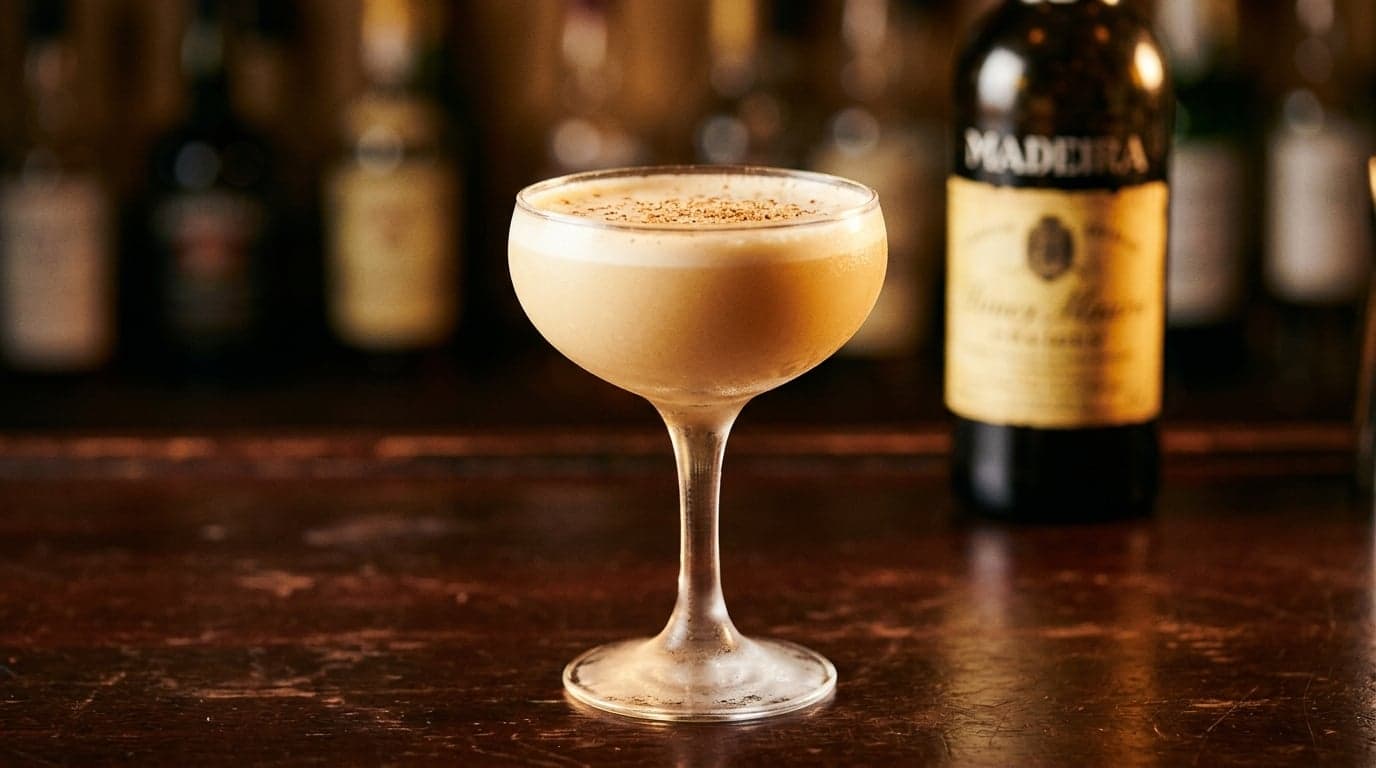
The Boston Flip in particular is having a quiet moment. Punch's coverage of Tomat in LA traces the drink's lineage back to Frank Newman's American-Bar: Boissons Anglaises & Américaines (1904), where the recipe calls for equal parts rye and Madeira, sugar, and a whole egg. By the 1930s and '40s, it appeared in the Mr. Boston Deluxe Bartender's Guides with similar proportions but an egg yolk instead of the whole egg. That's the full paper trail — no disputed genius inventor, just a drink that evolved through use.
Here's what makes flips worth understanding, and what the Boston Flip specifically gets right:
1. The Ratio Is the Argument
The original Boston Flip runs 1:1 rye to Madeira. That's not a cocktail — that's a negotiation. The wine and the spirit have equal standing, which means neither dominates. The egg is the mediator: it rounds the rye's grain edge and softens the Madeira's oxidative funk into something that reads as richness rather than weight.
Most modern bartenders who revive flips tilt spirit-forward — Miley Aryucharoen at Tomat runs hers at 5:1, rye over a custard base, which is a different drink with the same bones. Neither approach is wrong. They're just different arguments about what the egg is for.
2. Madeira Is Doing Real Work Here
Madeira is not a garnish ingredient. It's a fortified wine that's been heat-aged — sometimes for decades — and carries a distinctive nutty, caramelized quality that no other wine replicates. In a flip, it functions as sweetener, acid moderator, and flavor layer simultaneously. Swapping it for cream sherry or port gets you in the neighborhood but not the address.
Madeira is still made and widely available — this is not an obscure-spirits problem. Bottles from producers like Blandy's or Broadbent run roughly $15–25 at most wine shops and many well-stocked liquor stores (specialty shop tier, not online-only). The ingredient isn't hard to find. The knowledge that it belongs in this drink is what's missing.
3. The Egg Question Has a Correct Answer
Whole egg versus yolk-only changes the drink structurally. Whole egg produces a lighter, frothier texture — more mousse than custard. Yolk-only is richer, denser, closer to eggnog territory. The 1904 recipe calls for whole egg. The 1930s versions call for yolk only. Both are documented. Neither is definitive.
The practical answer: whole egg if you want the drink to feel like a cocktail; yolk-only if you want it to feel like dessert. The Boston Flip is not dessert.
4. Why It Disappeared (And Why That's Instructive)
Flips fell out of fashion partly because raw eggs became culturally suspect in the mid-20th century and partly because the drinks that replaced them — highballs, sours, eventually the modern craft movement — rewarded speed and visual clarity. A flip requires a dry shake, a wet shake, and patience. It doesn't fit a busy service well.
What's interesting is that the VinePair survey of bartenders on underrated modern classics doesn't include a single flip. The category isn't even in the conversation — which means it's not being revived so much as rediscovered, one bar at a time, by bartenders who've gone far enough back in the books to find it.
The Build (Boston Flip, Traditional)
- 1 oz rye whiskey
- 1 oz Madeira (Sercial or Verdelho — drier styles work better here)
- 1 tsp simple syrup or sugar
- 1 whole egg
Dry shake hard (no ice) for 15 seconds. Add ice, shake again. Double-strain into a chilled coupe. Grate fresh nutmeg over the top. That's it.
The flip rewards bartenders who think about texture as a design element rather than an accident. It's also one of the few categories where the historical recipe is genuinely better than most modern riffs — not because innovation is bad, but because the original problem was already solved. The egg, the wine, the grain spirit: that's a complete sentence. Most cocktails are still working on their thesis.