


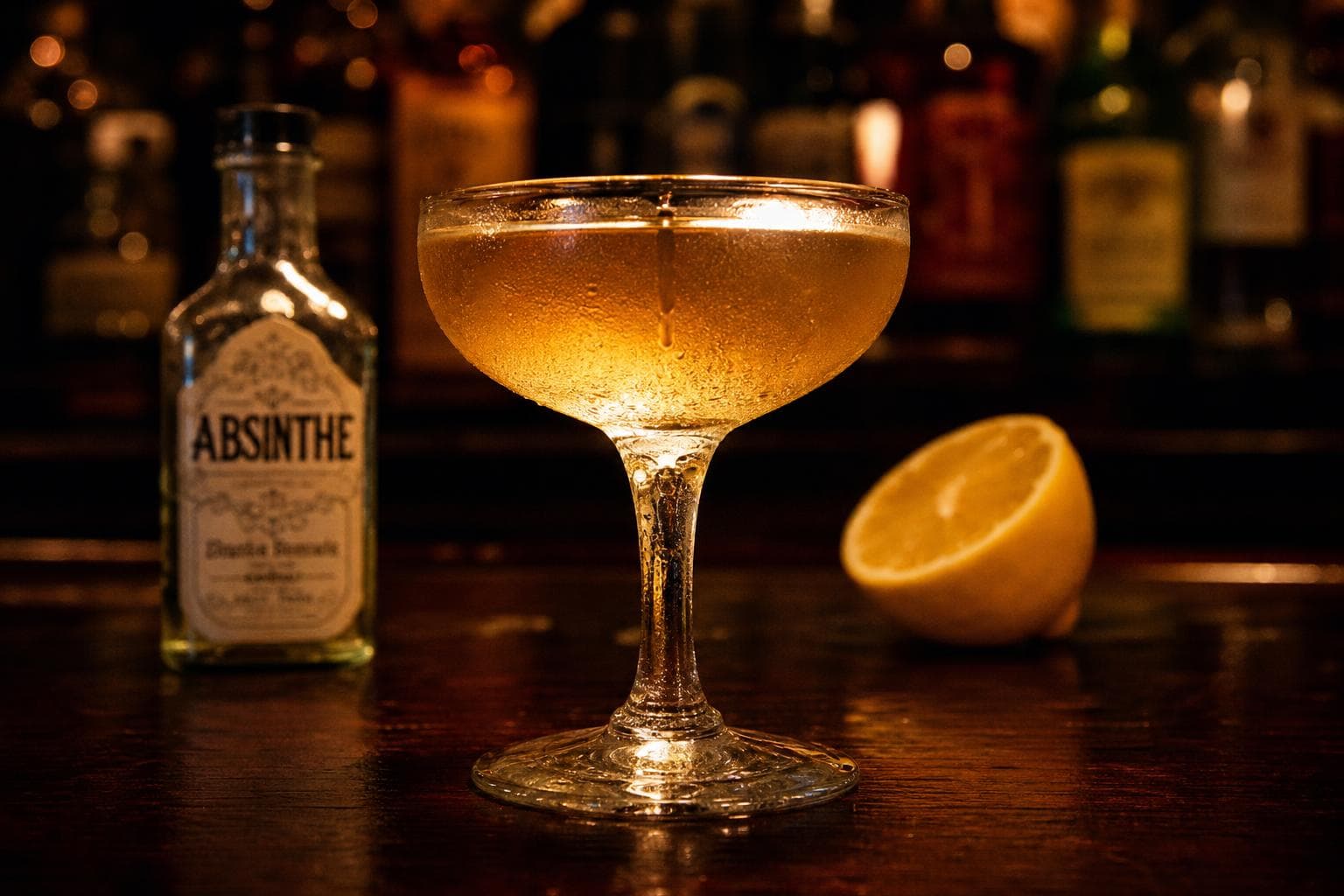

Harry Craddock's warning in the Savoy Cocktail Book (1930) is the most honest thing ever written about a hangover cure: "Four of these taken in swift succession will unrevive the corpse again." He wasn't joking. He was also, characteristically, only writing about one of them.
The Corpse Reviver family is cocktail history's most misunderstood franchise. Everyone knows the No. 2. Almost nobody orders the No. 1. The others barely exist in living memory. Here's the honest accounting.
What "Corpse Reviver" Actually Meant
The name predates Craddock by decades. The Corpse Reviver concept first appeared in the Gentlemen's Table Guide in 1871, where the recipes varied widely — brandy, vermouth, whatever was available. The idea was functional: a morning drink to restart a body that had been stopped by the previous night. Less cocktail, more jumper cables.
The medicinal framing wasn't metaphor. Camper English, author of Doctors and Distillers, has argued that nearly every ingredient in the No. 2 has a documented history as actual medicine — juniper against plague, citrus against scurvy, quinine for malaria, wormwood to expel parasites. The Corpse Reviver wasn't named ironically. It was named aspirationally.
The Four Variations, Ranked Honestly
No. 2 — The One That Earned It
Equal parts gin, Cointreau, Lillet Blanc, and fresh lemon juice, with a rinse of absinthe. Harry Craddock's version at the Savoy codified this formula, and it holds up because the structure is sound: the citrus cuts the sweetness, the absinthe lifts the whole thing without dominating, and the Lillet adds body without weight. It's a sour with ambition.
The absinthe is not optional. Bars that skip it are making a different drink and should say so.
No. 1 — Underrated, Correctly Obscure
Brandy, apple brandy, and sweet vermouth. Stirred, not shaken. Older than the No. 2 in spirit if not in name — this is the morning-after drink as the Victorians understood it, which is to say: more alcohol, less citrus, no apologies. It's a serious drink that requires good vermouth and a willingness to drink something that tastes like a decision. I'd argue it's better than its reputation suggests, but its reputation is "forgotten," so that's a low bar.
No. 3 — Historically Present, Practically Absent
Recipes vary enough across sources that pinning down a canonical No. 3 is genuinely difficult — which tells you something. When a drink's own family can't agree on what's in it, the drink has a provenance problem. I won't invent specifics to fill the gap. What's documented is that it existed in the pre-Prohibition era as a brandy-forward variation; what's not documented, reliably, is a recipe worth building at home.
No. 4 — Effectively Fictional
If you've seen a "Corpse Reviver No. 4" on a menu, someone made it up. That's not necessarily a condemnation — bartenders invent things — but it's not history. File it under "creative extension of a brand name."
Build the No. 2 Correctly
Corpse Reviver No. 2
- ¾ oz London dry gin (Beefeater or Tanqueray — something with backbone)
- ¾ oz Cointreau
- ¾ oz Lillet Blanc
- ¾ oz fresh lemon juice
- Absinthe rinse (Pernod or St. George Absinthe Verte)
Rinse a chilled coupe with absinthe, discard excess. Shake remaining ingredients hard with ice. Double-strain into the coupe. No garnish required; a maraschino cherry if you want the period-correct look.
The equal-parts formula is the standard, though bumping the gin slightly and pulling back on the Cointreau is defensible if your sweet threshold is low. Don't go below ½ oz lemon — the acid is structural, not decorative.
Substitution note: Cocchi Americano works in place of Lillet Blanc and adds more quinine bitterness, which is historically appropriate and makes the drink slightly drier. Worth trying once.
Availability: Lillet Blanc is widely available. St. George Absinthe Verte is specialty shop or online. Cointreau is everywhere.
The Verdict
The No. 2 is the rare case where the famous version is actually the best version. It survived because the recipe is genuinely good, not because of marketing. The No. 1 deserves more attention from anyone who drinks Manhattans and thinks they've covered the classics. The rest of the family is historical footnote material — interesting to know about, not worth chasing.
Craddock's warning stands. One is a cure. Four is the disease.