


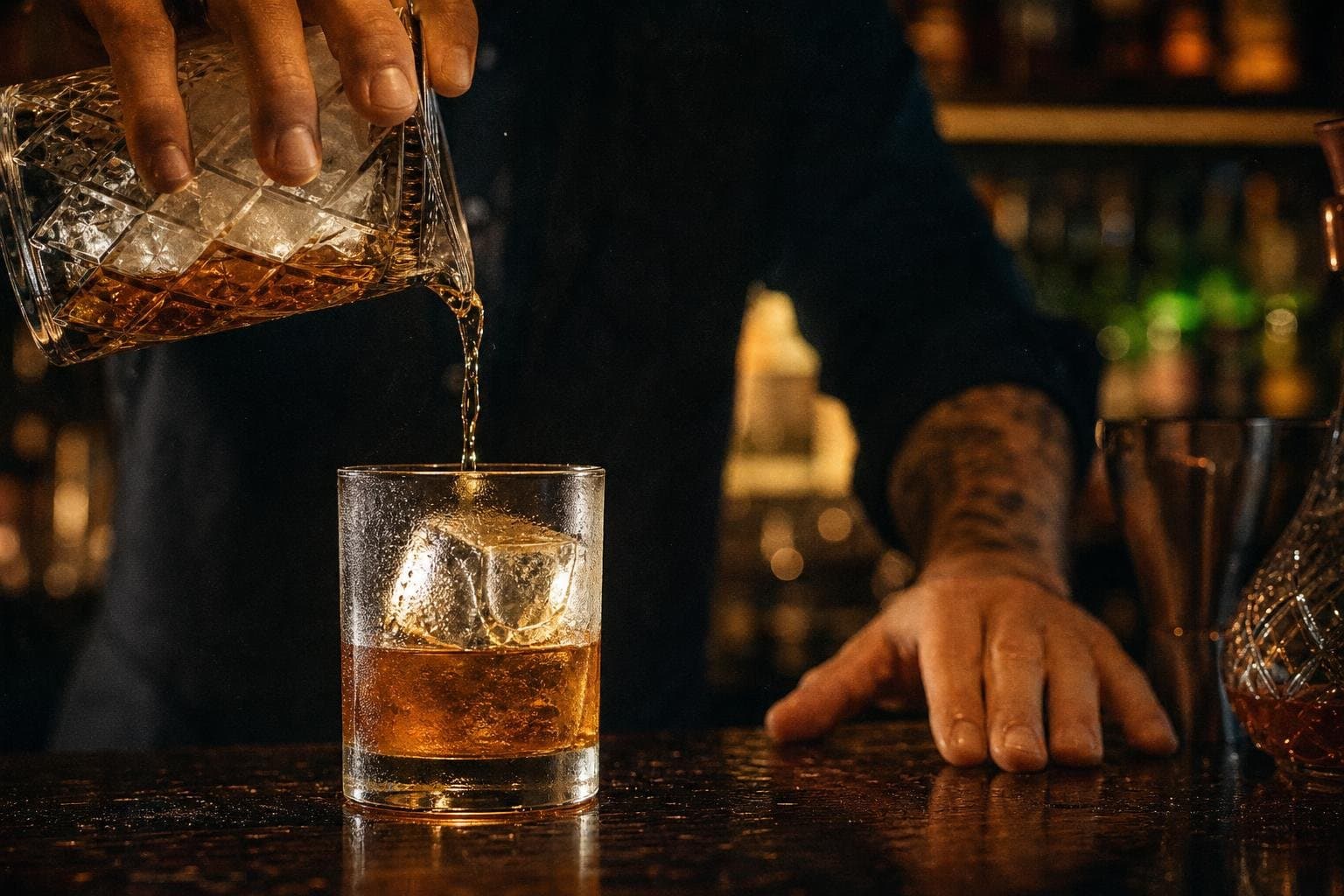

I've spent a lot of issues here arguing that bars ignore a deep bench of forgotten drinks in favor of the same five trends. David Wondrich just made the opposite case, and he's not wrong: the real threat to cocktail culture right now isn't novelty. It's a growing conviction that the highest compliment a drink can earn is sounding old.
Wondrich traces this back to the renaissance itself — the recovery work of the late '90s and early 2000s, when bartenders like Dale DeGroff and Sasha Petraske turned bar programs into something closer to archival research. That work was necessary. Prohibition and a half-century of mixer culture had buried real drinks, and somebody had to dig them up. But Wondrich's argument is that the digging became the whole job. Menus now "read like syllabi," he writes, and a bartender gets praised for the accuracy of a reproduction rather than the merit of an original idea — the Improved Whiskey Cocktail and the Corpse Reviver No. 2 cycling through programs from coast to coast like a required curriculum.
The Good Version of This Tension Already Exists
The useful counterpoint isn't abandoning history — it's what the Sazerac Bar at The Roosevelt is actually doing with it. Assistant food and beverage director Matt Schulte describes the program's philosophy as honoring the past "without being trapped by it," explicitly rejecting the museum framing: "We're not a museum," he says, while still pouring the same rye, Peychaud's, and absinthe rinse that's defined the drink since the 1850s coffee house era. That's the right posture. Tujague's does something similar with its 1918 Grasshopper, still the restaurant's top seller, while building the rest of the menu around small variations rather than static reproduction.
Compare that to how real evolution happens in a category like the Martini. Salvatore Calabrese's 1985 Dukes Martini didn't succeed by replicating something from a bar manual — it succeeded because it changed the proof, the temperature, and the ritual enough to spawn its own subcategory. Nobody asked whether it was authentic. They asked whether it worked.
That's the distinction worth holding onto. A deep bench is only valuable if bartenders are still willing to swing with it — to treat old formulas as raw material instead of scripture. The next test isn't whether a bar can source the right Jamaican rum. It's whether anyone there still has the nerve to change the recipe once they've found it.