


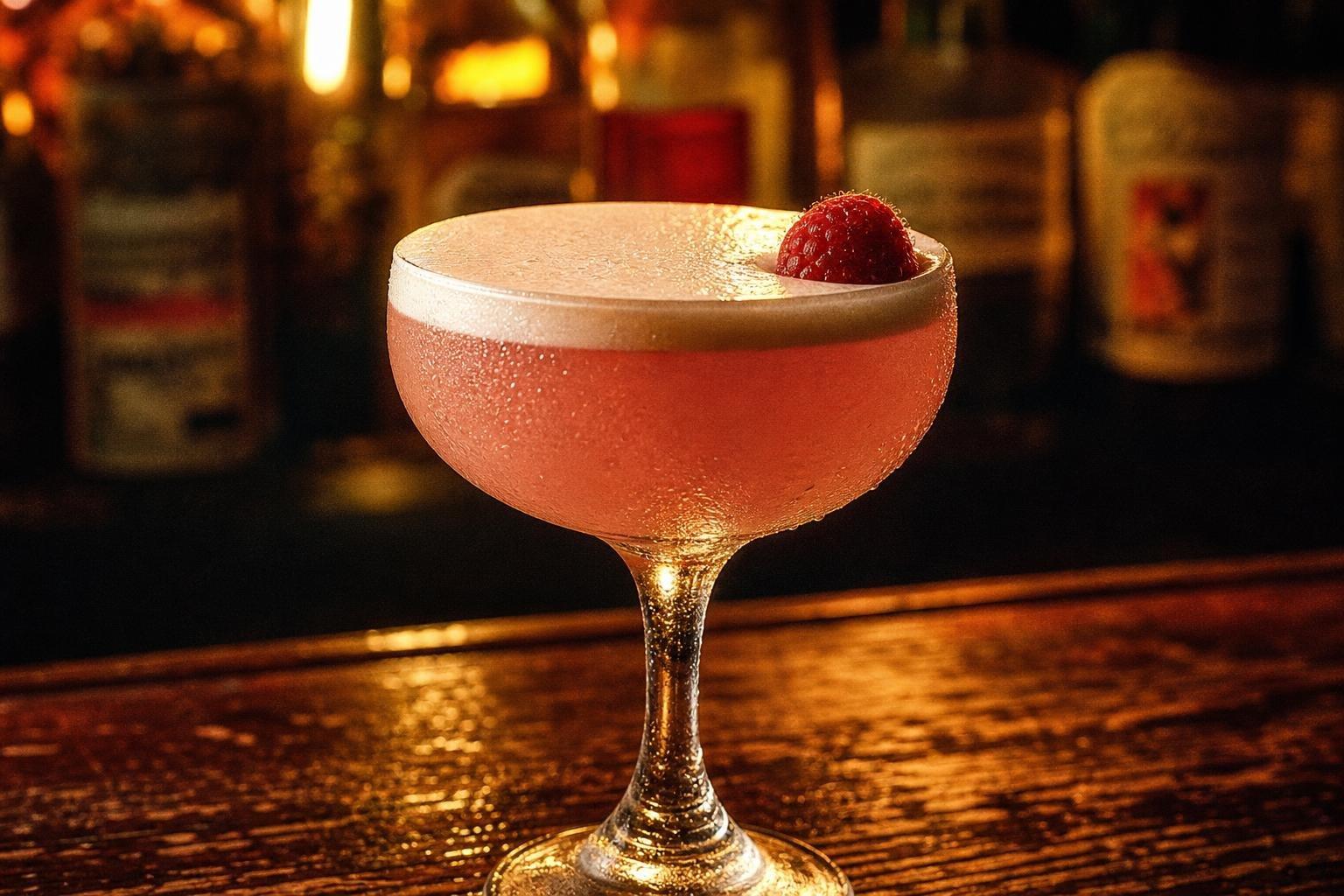

Order a Clover Club at most bars built after 2010 and you'll get a knowing nod from whoever's shaking it. It's a pink drink with raspberry syrup and a cap of egg-white foam, and for a long stretch of American drinking history that was all the information anyone needed to dismiss it. Pink meant frivolous. Foam meant fussy. The name itself — borrowed from a Philadelphia gentlemen's club — sounded like a punchline waiting for a setup.
None of that tracks with what the drink actually is, or with how seriously bars now treat it.
The Origin Story Is Older and Murkier Than the Joke Suggests
The drink's name comes from the Clover Club, a Philadelphia association founded in the early 1880s whose members included journalists and other prominent local figures, who met at the Hotel Bellevue, later folded into the Bellevue-Stratford name. The cocktail was established well before Prohibition, not invented during it, which already undercuts the "Prohibition punchline" framing — this is a pre-Volstead drink that survived the dry years rather than one born from them, per the available history Sangreman.
Nobody can tell you who actually mixed the first one, and that's not a gap specific to the Clover Club. It's the norm. The Pegu Club — another eponymous cocktail named for a colonial-era social club, first appearing in print in 1923 — has the exact same problem: a drink that clearly existed in some form before anyone bothered to write it down, with no verifiable single author behind it Robb Report. Cocktail history runs on this pattern constantly. A club has a bar. The bar has a house drink. Nobody files the paperwork. Generations later, bartenders squint at old menus and argue about credit that was never clearly assigned in the first place.
Why It Became the Drink Bartenders Use to Judge Each Other
Here's what actually earned the Clover Club its current reputation as a technique benchmark: it's unforgiving. The modern spec — gin, lemon, raspberry syrup, and a generous measure of egg white, dry-shaken first to begin aerating before the ice goes in — leaves nowhere to hide Sangreman. Get the dry shake wrong and the foam collapses instead of settling into that velvety cap. Oversweeten the syrup and it tips into dessert territory. Underbalance the lemon and the raspberry turns cloying. It's a sour with almost no ingredients to adjust and almost no room for error, which is exactly the kind of drink a bar uses to figure out whether a new hire actually knows what they're doing.
That technical demand lines up with a broader shift the cocktail revival went through once it stopped needing to prove itself. The early renaissance was obsessed with seriousness — Edison bulbs, sleeve garters, lectures on bitters history — but once bartenders no longer had anything to prove, bars relaxed into craft rather than performance Imbibe. Part of that relaxation showed up in glassware: the same period that revived the Clover Club's natural home, the coupe, also saw bars abandon the oversized Martini-glass-as-birdbath era in favor of smaller, historically accurate vessels that kept drinks cold and foam intact to the last sip Imbibe. A Clover Club in a coupe isn't an aesthetic choice. It's the glass the drink was designed for, finally back in circulation.
You can see the same instinct at work right now in how new bars treat other pre-Prohibition obscurities. Vandell in Los Angeles revived the 1937 Poet's Dream from the Café Royal Cocktail Book rather than inventing something from scratch, swapping in pisco as the one real variation Punch. That's the same move the Clover Club benefited from: dig up a drink that already works, respect the structure, and let the execution do the talking instead of the garnish.
The Risk Is Turning It Into Scripture
I've argued before that the real threat to this whole revival isn't trend-chasing, it's reverence — menus that read like syllabi, where the highest compliment a drink can earn is sounding old rather than tasting good (/p/the-cocktail-renaissance-didnt-die-from-trend-chasing-its-dying-). The Clover Club is vulnerable to exactly that. It's become a credential drink, the thing a bartender makes to prove competence rather than to serve someone who just wants a good sour. That's a fine use for it. But watch whether bars keep treating it as a living drink worth adjusting — a little less syrup here, a different gin there — or whether it calcifies into a test with one correct answer. A benchmark is only useful if people are still allowed to beat it.