


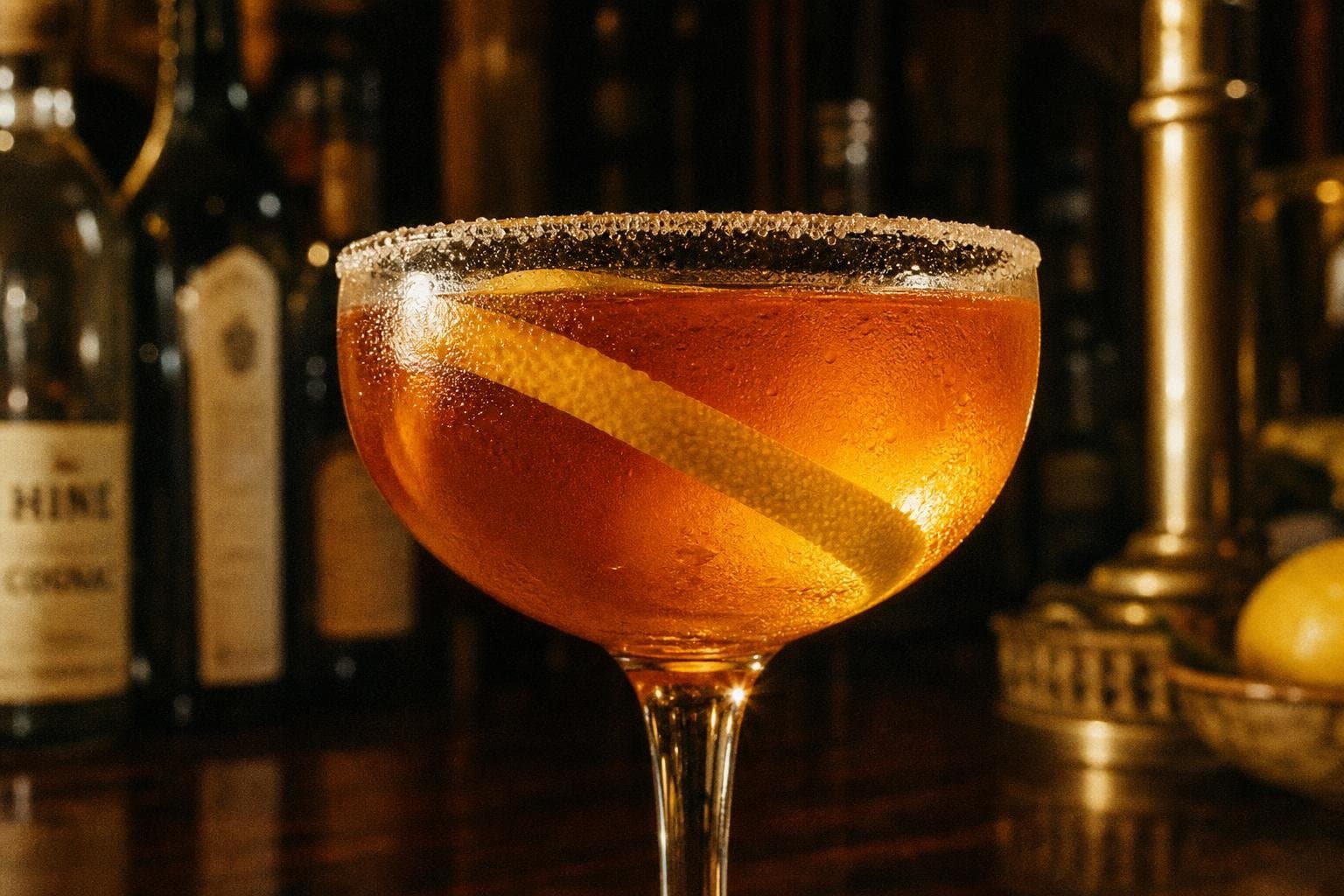

The Sazerac gets the heritage plaques. The Ramos Gin Fizz gets the mythology. But the drink that arguably started New Orleans' cocktail identity — the Brandy Crusta — barely registers on most menus, even in the city that invented it.
That's worth correcting.
What It Is
The Brandy Crusta predates the Sazerac. Punch traces it to the 1850s, where it was developed by an Italian bartender named Joseph Santini — though as with most cocktail history, competing claims exist and the full provenance is disputed. What's documented: it's a Cognac-based drink, spirit-forward, served in a sugar-rimmed glass with a long spiral of lemon peel lining the inside. The crusta — that sugar rim and citrus shell — is the whole point. It's where the drink gets its name and its visual identity.
The template: Cognac, maraschino liqueur, orange curaçao, lemon juice, Angostura bitters, sugar. Shaken, strained into a prepared glass. The proportions vary by source, but the architecture is consistent: a sour-adjacent structure that predates the formal sour category.
Why It Disappeared
The Crusta nearly vanished in the early 20th century — not because it was bad, but because it was fussy. The prepared glass takes time. The long lemon peel is a technique, not a garnish. During Prohibition and the decades of simplified bar culture that followed, drinks requiring that kind of setup got quietly dropped.
Punch notes that bartender Chris Hannah was the first to bring it back to New Orleans in 2004 — at Arnaud's French 75 Bar — and that his version balanced the original spirit-forward template against modern palate expectations. That revival is real and documented. What it didn't do is make the Crusta a household name outside serious cocktail circles.
Why It Deserves More Attention Than It Gets
1. It's a structural ancestor. The Crusta sits at the root of the sour family tree. Understanding it clarifies why the Margarita, the Sidecar, and the Daiquiri are built the way they are. The sugar rim isn't decoration — it's calibration, compensating for the lemon's acidity before the drink hits your palate.
2. The Cognac base rewards good sourcing. This is a drink where the base spirit matters enormously. A VS Cognac will taste thin and hot. A VSOP with some age — something with dried fruit and oak — fills out the maraschino and curaçao without fighting them. The drink is a diagnostic: it tells you immediately whether the bartender chose the right bottle.
3. It's genuinely hard to find. Not because the ingredients are obscure — Cognac, maraschino, and curaçao are all standard back-bar items — but because the preparation is labor-intensive and the name recognition is low. Most bars that could make it don't bother listing it. Ask anyway.
A Working Spec
This is a synthesis of documented historical versions and modern revival specs, not a single authoritative recipe (those don't exist for drinks this old):
- 2 oz VSOP Cognac
- ¼ oz maraschino liqueur (Luxardo is widely available, ~$30, specialty shops and most well-stocked liquor stores)
- ¼ oz orange curaçao (Pierre Ferrand Dry Curaçao is the current standard, ~$35, specialty shops)
- ½ oz fresh lemon juice
- 1 tsp simple syrup
- 2 dashes Angostura bitters
Prepare the glass first: sugar rim, long spiral of lemon peel pressed against the inside. Shake everything with ice, strain into the prepared glass. No ice in the glass — this is a short, cold, concentrated drink.
The Honest Assessment
The Crusta is not a casual drink. It takes longer to make than a Negroni, it requires technique, and it doesn't photograph as cleanly as a purple Aviation. What it does is taste like something with a point of view — tart, spirit-forward, faintly sweet, with the citrus oils from that lemon peel doing real aromatic work before the first sip.
Imbibe's coverage of New Orleans bar culture consistently returns to Arnaud's French 75 Bar as a place where the classics are taken seriously. If you're in the city,