


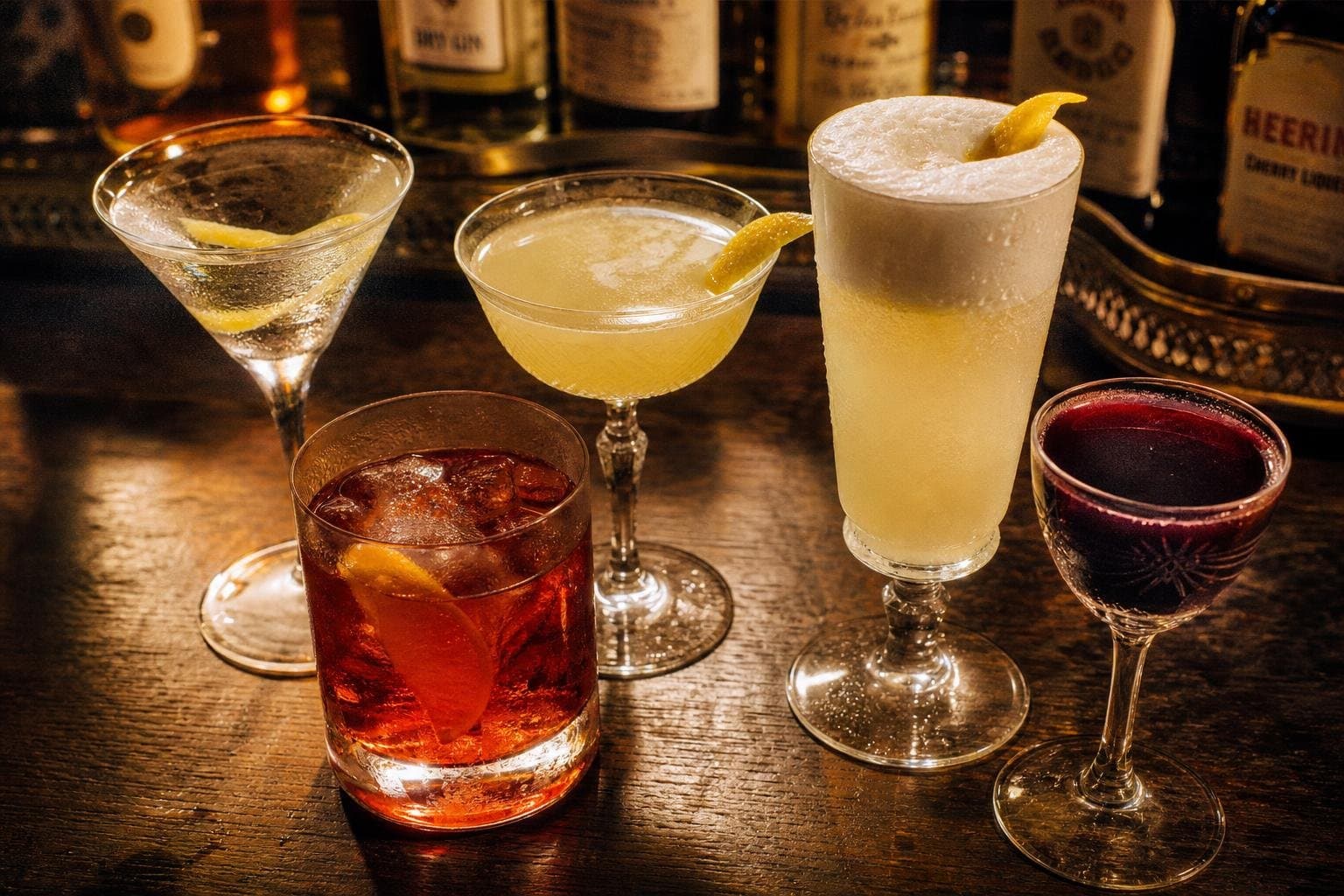

Every few months a trade outlet publishes a list reminding bartenders that the canon has more than five drinks in it. Good. The problem isn't that these lists exist — it's that most of them get forgotten by the next trend cycle. So let's take the latest crop seriously and sort what's actually worth your bar time from what's padding.
1. The Cardinale deserves a slot on any aperitivo-leaning menu. Gin, Campari, and either dry vermouth or white wine depending on the lineage — Punch's rundown notes bartender Naren Young prefers the vermouth version for its "bone-dry" austerity, building his own on Contratto Bitter. The drink's origin story (a visiting cardinal in Rome, 1950) is the kind of neat anecdote that should make you raise an eyebrow rather than repeat it as settled fact — cocktail naming lore from that era rarely comes with paperwork. What matters is the structure: it's a Negroni with the sweet vermouth stripped out and replaced by something drier, which tells you more about why the Negroni works than another panettone variant ever will.
2. The Star Daisy is the apple-brandy Martini nobody ordered, and that's the point. London dry gin, apple brandy, dry Curaçao — Joaquín Simó told Punch he picked it up from Sasha Petraske at the original Milk & Honey. Unlikely combinations like this one are where the 19th-century daisy family actually gets interesting: the format tolerates genre-crossing ingredients the Martini never would. If your bar owns apple brandy and only pours it in autumn, this is the drink making that bottle look foolish for sitting idle nine months a year.
3. The Gin Fizz Tropical is a 1939 recipe wearing a 2020s finish. Charles H. Baker documented it in The Gentleman's Companion, and the version chef Charles Phan built swaps the original's pineapple juice for pineapple gum syrup and brings in orgeat instead of cream — per Punch. Phan's note on shaking longer than feels necessary is the kind of practical detail that gets lost when recipes get reprinted without anyone actually making them. Orgeat has had its own quality problems lately — mass-produced versions losing the almond-and-orange-flower complexity that makes a fizz like this sing — so the ingredient matters as much as the technique here.
4. The Wibble is still a regional drink, and that's not a flaw. Dick Bradsell's gin, sloe gin, grapefruit, lemon, and crème de mûre mix is what Robert Simonson calls "a minor classic" — Punch reports it's been spotted in Copenhagen, Gothenburg, and Amsterdam but hasn't broken out of its London home turf. I'd rather see a drink stay a well-loved local fixture than get strip-mined into a chain restaurant menu item. Not every good cocktail needs a passport.
5. The Obituary proves the Martini riff well never runs dry. A few dashes of absinthe into the standard gin-vermouth frame, with roots that trace to mid-century New Orleans — Punch notes it's currently on the menu at Maison Premiere under owner William Elliott. The drink's actual inventor is murky, which is true of nearly every absinthe-adjacent cocktail from that era; treat any confident single-attribution story about it with suspicion.
Honorable mention outside the gin lane: the Up To Date, which I've covered before, keeps surfacing in different contexts — most recently as a reminder in Difford's Guide that Hugo Ensslin's 1916 original ran leaner than the rye-sherry-Grand Marnier build most bars now pour. The sherry-forward expansion is an improvement, but it's worth knowing the two aren't the same drink.
What ties these together: none of them needed a rebrand, a bottle collaboration, or a TikTok sound to justify existing. They just needed someone to keep making them. That's the actual maintenance work of bar culture — not discovery, upkeep.