


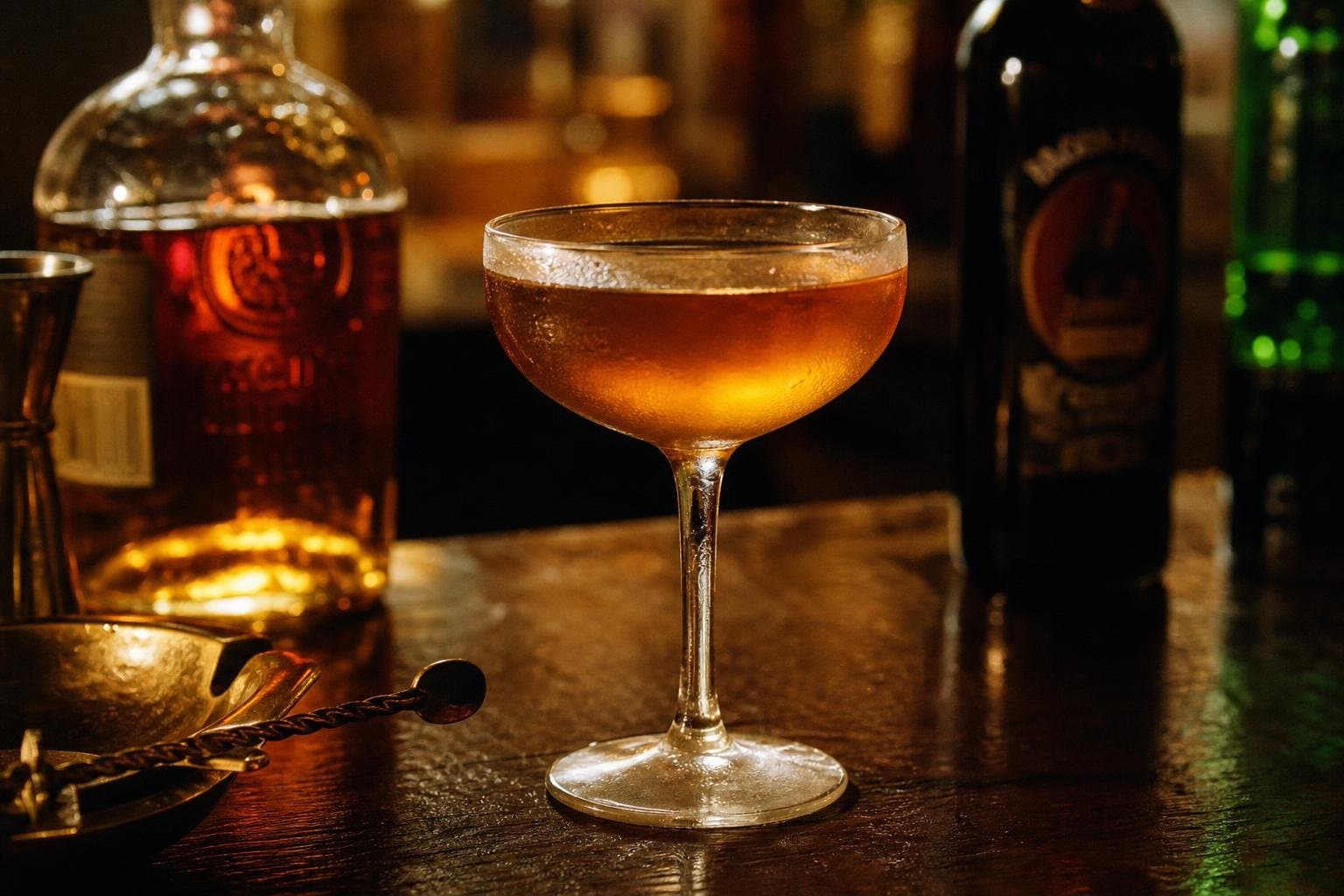

The Algonquin cocktail has been sitting in cocktail history books for nearly a century, name-checked in revivalist bibles like Jim Meehan's PDT Cocktail Book and Ted Haigh's Vintage Spirits and Forgotten Cocktails, and it still hasn't broken through. Punch covered why earlier this year: the original recipe — two parts rye, one part French vermouth, one part pineapple juice — is genuinely difficult to make work. Bartenders who've tried it tend to find the same problem Dillon Raaz found when he first encountered it: the combination doesn't cohere.
I wrote about the Algonquin's failed revival back in June. What I didn't have then was a concrete example of someone actually solving the problem. Now there is one, and it's worth dissecting — not because the solution is replicable at home, but because the reasoning behind it tells you something about why certain drinks stay buried.
Why the Original Fails (and What That Reveals)
The Algonquin's provenance is documented but modest: Punch traces it to a 1930s book called Along the Wine Trail (where it appears as the New Algonquin) and a 1937 Esquire appearance. Named for the Algonquin Hotel's Round Table — the circle of writers and wits that included Dorothy Parker — it has cultural cachet and zero traction.
The structural problem: rye and pineapple juice don't want the same things from vermouth. Rye wants something dry and herbal to push against. Pineapple juice wants either richness or acid. French dry vermouth, caught in the middle, satisfies neither. The drink ends up tasting like a disagreement.
What Raaz Did Differently — and Why It Works
Bar director Dillon Raaz at Atoma in Seattle spent a decade on and off trying to crack this. His solution, the Weird Al 'Gonq'ovich, is a stirred drink built on rye, pineapple gum syrup, tepache, Tokay wine, and chocolate nocino, finished with a spritz of cacao nib-infused peaty Scotch.
The key move, per Punch, was replacing most of the vermouth and some of the pineapple component with tepache — the traditional Mexican fermented pineapple beverage. The reasoning is worth quoting directly: Raaz and his assistant bar manager John Lundahl noted that dry French vermouth in the 1920s "probably was fermented anyway 'cause of lack of good refrigeration." Whether or not that's historically accurate, the functional logic holds. Tepache's fermented quality dries the palate despite its fruitiness, giving the rye something to work against while keeping the pineapple character intact. Raaz says the result "drinks like a Martini."
The rye anchor is a 90-proof Washington state-grown bottling from Woodinville Distillery — a local product whose spiced nose and vanilla-chocolate notes, according to Raaz, subtly guided the secondary flavors in the build.
What This Means for Drinks That Stay Buried
A few patterns worth noting for anyone digging through the forgotten-cocktail shelf:
1. Structural failure ≠ bad ingredients. The Algonquin's problem wasn't rye or pineapple — it was the connector. Vermouth was doing a job it couldn't do. Identifying the weak link is the whole work.
2. Fermentation as a bridge ingredient. Tepache, shrubs, kombucha, and similar fermented components are increasingly showing up as solutions to exactly this kind of problem — they carry fruit character while adding the drying, acidic quality that pure juice lacks. Punch's 2026 best new bartenders roundup shows the same instinct across multiple recipes: bartenders pairing high-manipulation technique with fermented or acid-adjusted components to solve balance problems that classic builds couldn't.
3. The cocktail revival has a selection bias. The drinks that came back — the Last Word, the Corpse Reviver No. 2, the Jungle Bird — came back because they worked as written, or close to it. The ones that didn't come back often had a structural flaw that nobody wanted to do the work to fix. The Algonquin is the rare case where someone did the work.
The Weird Al 'Gonq'ovich isn't a home bartender recipe — tepache and Tokay wine and chocolate nocino require either a well-stocked specialty shop or a commitment to making your own. But the underlying argument is portable: some drinks stayed buried because they deserved to, and some stayed buried because nobody had the right ingredient yet. Knowing which is which is the whole game.