


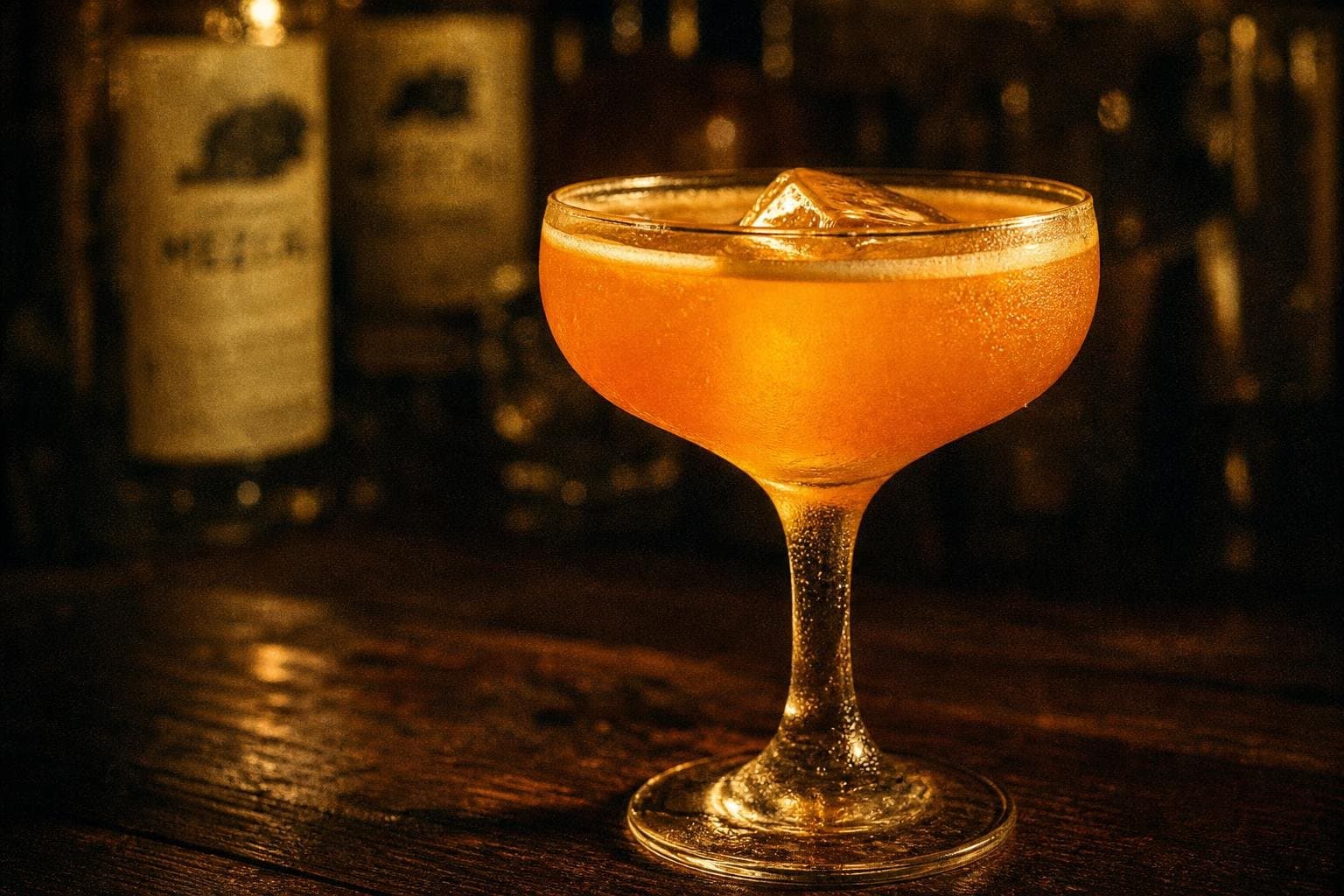

Kira Ellington named a cocktail after a Phish song, then had to invent a drink to fit the name. What she landed on was a carrot-and-mezcal sour held together by gentian liqueur — a drink where the bitterest ingredient in the glass is also the one doing the connecting work. "Gentian is fairly versatile," Kiesling general manager Jeremy Ross told Imbibe. "It makes a killer White Negroni, it can be an asset in any Martini build, and it sings in a highball." That's not a marketing tagline. That's a bartender describing what happens when you put Suze or Salers into a shaker and it doesn't fight the other ingredients — it introduces them to each other.
The assigned premise here — that Suze just had "its American moment" — overstates the shape of what's actually happening. There's no single event, no launch, no viral menu I can point to. What the sources show is quieter and, frankly, more interesting: gentian has been working its way into the American bar canon one riff at a time, for reasons that have nothing to do with hype.
The Bridge Ingredient Nobody Names the Drink After
Gentian's whole appeal is structural. It doesn't ask to be the star. At Whisler's in Austin, Sean Skvarka and Matt Ross took a Black Manhattan and dropped Suze into it, producing the Southern Gentleman — a drink where the gentian's job is to pull extra spice out of the rye and extra sweetness out of the amaro without announcing itself, according to Imbibe. Skvarka was blunt about the ambition: "We weren't looking to reinvent the wheel. We just wanted to give it a different spin." That's the honest version of innovation in this business — most of it is spin, not invention, and the good bartenders know the difference.
You see the same logic at Bar Leone in Hong Kong, where Lorenzo Antinori's Yuzu Negroni pairs London dry gin and yuzu sake with Suze and Cocchi Americano, using the gentian to complement citrus bitterness rather than compete with Campari's, per Imbibe. And génépy — gentian's Alpine cousin — turns up doing structurally identical work in Dante's Alpine Negroni, stirred alongside Suze itself, and in the Pineapple Garibaldi, where it stands in for Campari entirely, according to Punch. None of these are new ideas dressed up as discoveries. They're the same principle — bitter root as connective tissue — applied to whatever's on the back bar that week.
The Health Claims Were Never the Point, Even When Suze Said They Were
Here's where I'd push back hardest on any "American moment" framing: it implies Suze earned new attention through some fresh discovery of its virtues. Suze has been making virtue claims about itself since the early 1900s, and they were nonsense even then. Cocktail historian David Wondrich's research, surfaced by Alcademics, digs into Suze's own importer brand book, Suze: Proud of Our Roots, which trotted out lines like "to be healthy and live a long life, it is essential to take a glass of gentian before every meal" and "a guarantee of good health and long life." Gentian root does stimulate appetite and aid digestion in a mild, real way — that's established pharmacology, not folklore. But "the stomach's friend" as a marketing epithet is exactly the kind of brand-authored origin story this publication won't launder as history. Suze's actual value to a bartender has nothing to do with anaemia or scrofula. It has to do with what it does structurally in a glass, which the drinks above demonstrate better than any tonic claim ever could.
Gentian's Advantage Is That It Isn't Playing Scarcity
There's a useful contrast sitting right next to this story. The Guardian reported on Chartreuse's Paris resurgence this month, where bars are running dry of bottles mid-shift and shops ration what little stock comes in. Suze isn't playing that game. It's produced continuously, distributed without the mythology of monastic secrecy, and sitting on shelves without a shortage narrative attached to it. That's a real distinction worth holding onto: Chartreuse's cult status is partly manufactured by genuine supply constraints; Suze's slow adoption has nothing to do with availability and everything to do with bartenders needing time to figure out what to do with something that tastes like dirt and orange peel and refuses to be sweet about it.
Worth watching over the next few months: whether more menus start crediting gentian liqueurs by name instead of burying them in a modifier line, the way Campari earned its own line item a decade ago. That's the real marker of arrival — not a trend piece, but a spec sheet.