



There's a tell at bad mezcal bars. The menu leads with smoke. Every description mentions it — "smoky finish," "hints of smoke," "beautifully smoky" — as though the word itself is a selling point rather than a description of one variable among dozens. The agave variety doesn't get mentioned. The producer doesn't get mentioned. Whether the piñas were roasted in a pit or a brick oven, whether the fermentation was open-air or closed, whether the distillate came from a clay pot or a copper still — none of that makes the menu. Just smoke.
This is what a trend looks like when it's running on fumes.
How Mezcal Became a Shorthand for Itself
The Oaxaca Old Fashioned is the drink that started it. Phil Ward created it during the early days of Death & Co. — tequila and mezcal standing in for whiskey, a simple structural swap that introduced an entire category to the cocktail world. Cocktails With Suderman credits it as "more than any other drink, the concoction that introduced mezcal to the cocktail world." Ward went on to co-found Mayahuel in 2009, one of the earliest mezcal-focused cocktail bars in the United States. The drink and the bar were acts of genuine curiosity — here's a spirit with depth and strangeness, let's figure out what it can do.
What followed was the usual arc: curiosity becomes enthusiasm, enthusiasm becomes trend, trend becomes obligation. By the time every neighborhood bar in America had a mezcal Negroni on the menu, the spirit had been reduced to its most legible attribute. Smoke. The thing that made mezcal interesting to a whiskey drinker in 2010 became the thing that made it interchangeable by 2026.
The production numbers tell the story of the demand side. Euronews reports that mezcal production in Mexico went from roughly 1 million liters in 2010 to more than 11 million in 2024, per COMERCAM, the country's mezcal regulatory body. That's not a trend. That's an industry. And industries flatten things.
The Category Is Bigger Than the Trend Knows
Here's what the smoke-forward menu doesn't tell you: mezcal is one entry point into a much larger world of Mexican agave spirits that most bars haven't touched. The Washington Post recently ran a piece on spirits like raicilla, bacanora, and sotol — arguing that "the term 'mezcal' only scrapes the surface of the variety of Mexican spirits worth seeking out." A raicilla described in that piece reads as "pungent" with "a fruity, funky flavor" — something like "a guava and cheese danish." That's not a smoky Old Fashioned riff. That's a spirit with its own logic, its own terroir, its own reason to exist in a glass.
The bartenders who are still doing mezcal right are the ones who treat it the way Ward treated it in 2009: as a starting point for questions, not a destination. What agave? Which producer? What does this specific bottle do that the one next to it doesn't? The smoke is incidental. The plant is the point.
I'd argue the mezcal fatigue people are experiencing isn't really fatigue with mezcal — it's fatigue with the version of mezcal that got copy-pasted onto every menu without anyone asking why. A well-made Espadín from a small Oaxacan producer and a celebrity-branded bottle from a hillside plantation are not the same drink. The bar that treats them as interchangeable is the bar that's running on trend, not knowledge.
What Doing It Right Actually Looks Like
The structural insight from Ward's work — that mezcal and gin occupy a continuum, that agave spirits can move through classic cocktail frameworks without forcing the issue — is still useful. A mezcal Martini riff works because the vegetal, mineral qualities of a good unaged mezcal do what gin does: they add complexity without sweetness. The smoke, if present, functions like botanicals — background, not foreground.
The recipe worth building at home isn't a novelty. It's a corrective.
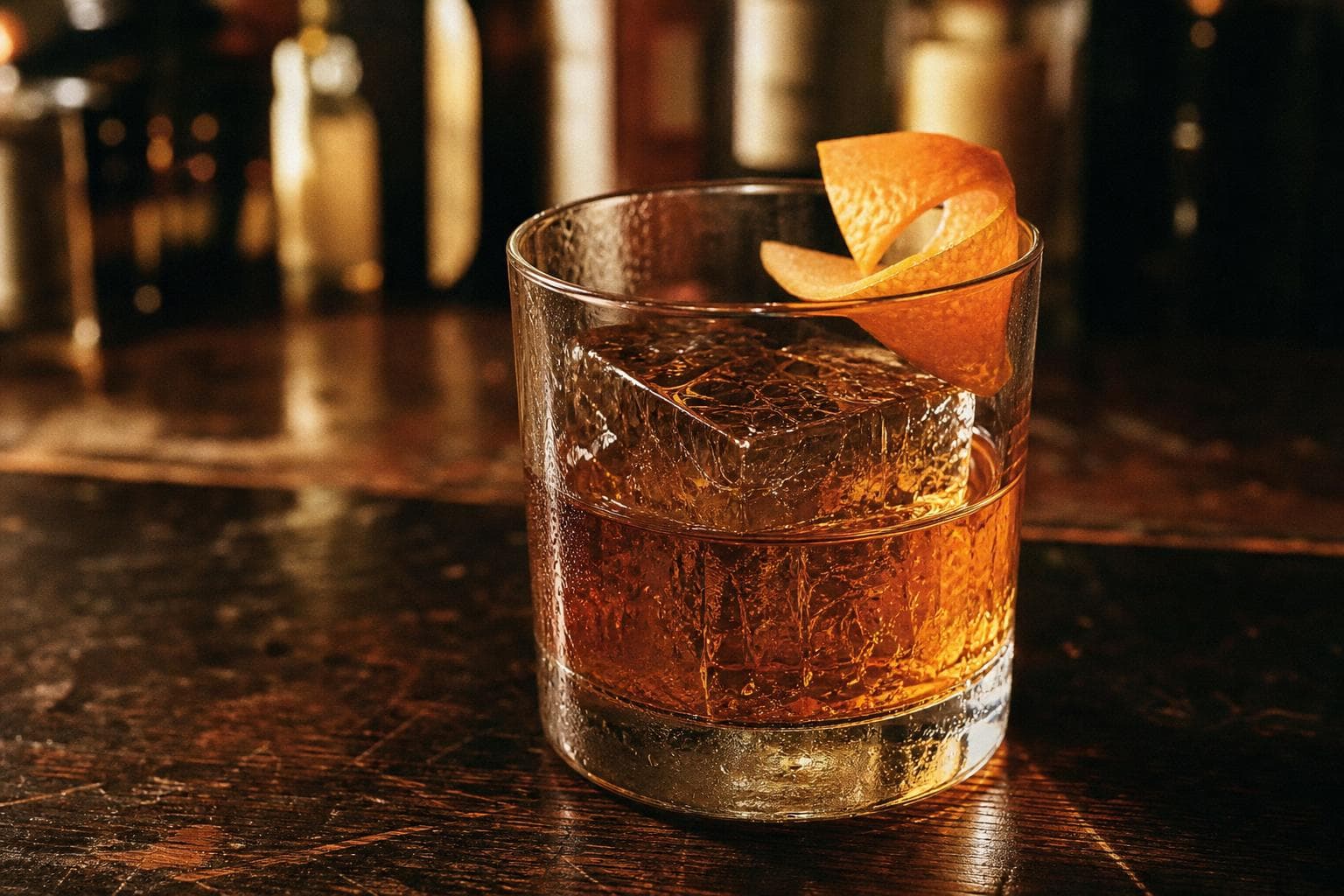
Mezcal Old Fashioned (the actual one)
- 2 oz Del Maguey Vida (widely available, ~$45, Espadín — approachable smoke, genuine character)
- ¼ oz agave nectar, diluted 1:1 with water
- 2 dashes Angostura bitters
- 1 dash Bittermens Xocolatl Mole bitters
Stir over large ice until properly cold — longer than you think. Express an orange peel, run it around the rim, drop it in. No cherry. No garnish theater.
This is the drink that started the conversation. Made with a bottle that has a story behind it, it still holds up. The smoke is present but not the point. The agave is the point.
The bars still doing mezcal right are the ones where the staff can tell you which agave variety is in the bottle and why it matters. That's a short list. Find those bars. Drink there.