


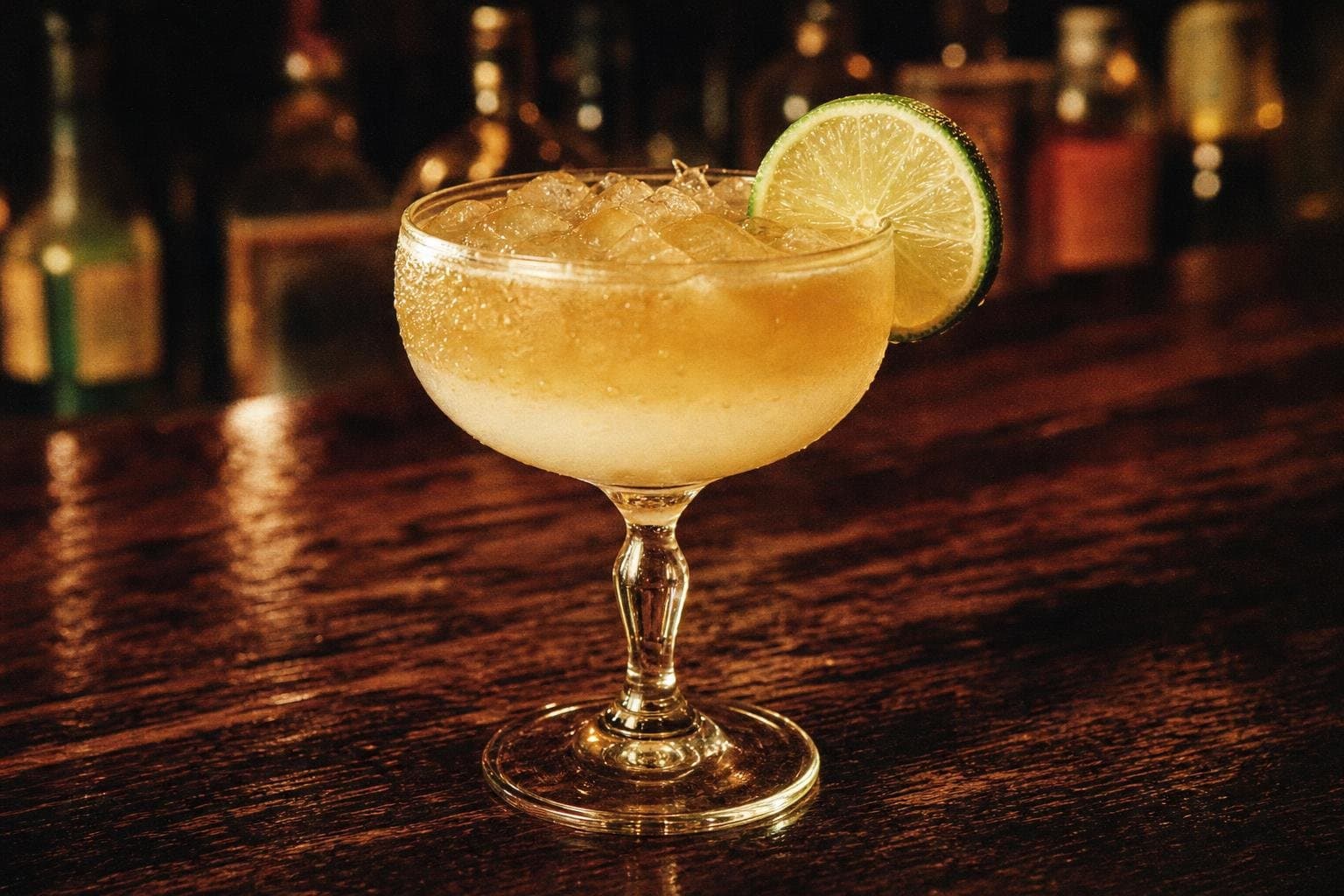

Walk into almost any bar pouring a Mai Tai tonight and the orgeat behind the counter is more likely to have come out of a plastic pump bottle than a blender. That's not a shortage problem. It's a quality problem dressed up as scarcity, and the two get confused constantly.
Orgeat is a cloudy, pale-ivory almond syrup cut with orange flower water, traditionally built from blanched almonds, sugar, and filtered water emulsified together without stabilizers — which is why a good bottle separates and needs a shake before you pour it (London Juice Company). Done right, it tastes like marzipan with a floral lift. Done wrong, it tastes like almond extract dumped into simple syrup, which is roughly what a lot of commercial versions amount to.
It Was Never the Hard-to-Find Ingredient
The first thing worth killing is the idea that orgeat is some lost or endangered syrup. It isn't. Monin's orgeat shows up on retail shelves and specialty spirits sites as a standard catalog item, marketed specifically for the Mai Tai, the Scorpion, and the Japanese Cocktail (Library of Spirits). That's the opposite of scarcity. Orgeat is everywhere. What's scarce is the version made the way it's supposed to be made — with real almond oil carrying the body and orange flower water doing the floral work, rather than a flavoring syrup standing in for both.
That distinction matters because it's the one bars blur constantly. "We ran out of orgeat" and "we only stock the industrial stuff" are two different sentences, and only one of them is a supply chain story. The other is a choice.
Tiki Built Its Whole Identity on House-Made Syrup, Then Stopped Making It
Tiki's entire original selling point was that nobody else was doing this work. Donn Beach — born Ernest Gantt, before he renamed himself — opened Don's Beachcomber in Hollywood in the early 1930s and built his drinks around house-made syrups and fresh juice at a time when most American bars were still pouring whiskey and gin with minimal fuss. He guarded his formulas so closely his bartenders worked off coded, numbered bottles (Spork Island Trading Co.). Across the bay, Victor Bergeron built Trader Vic's into tiki's other great empire and claimed to have invented the Mai Tai in 1944 — a claim cocktail historians still argue about, since Donn Beach has his own competing version of that story (Spork Island Trading Co.). Nobody owns that origin cleanly, and anyone who tells you otherwise is selling something.
What both men agreed on, in practice if not in credit, was that the syrup work was the craft. Orgeat wasn't a garnish to the Mai Tai. It was half the drink's architecture, doing the job rum and lime couldn't do alone.
Syrup maker B.G. Reynolds has pointed to the late 1960s and '70s as the period when tiki itself faded, as tastes shifted and the genre's relationship to Polynesian culture came under overdue scrutiny, before a revival took hold in the late 1990s led by bars like Smuggler's Cove (Stray Pirate). That's useful context, but it's also a reminder that the syrup-maker's-eye view of tiki history tends to center the syrup. Worth noting, not worth taking as neutral.
The Revival Brought Back the Mugs Before It Brought Back the Blender
Here's my read on where that leaves orgeat now. Tiki came back loud — carved tikis, exotica playlists, the ceramic mug collecting that turns a drink into a souvenir. What came back quieter was the actual kitchen discipline: squeezing juice to order, batching syrups in-house, treating the almond component with the same care as the rum. A bar can nail the aesthetic entirely and still be pouring a Mai Tai with syrup indistinguishable from what you'd put in a latte.
That's not a conspiracy, and it's not laziness exactly — it's the economics of a busy service bar choosing consistency and shelf life over character. A commercial orgeat doesn't separate, doesn't spoil as fast, and doesn't require someone in the back blanching almonds at 2 p.m. before a Friday rush. I understand the logic. I don't respect the result.
The fix isn't complicated. It's the same fix it always is with this column: taste the thing before you pour it, and if it tastes like almond extract and corn syrup, stop blaming the almond. The next time you're handed a Mai Tai, don't judge the rum first. Judge the orgeat. It'll tell you faster than anything else on the menu whether the kitchen behind that bar actually cares.