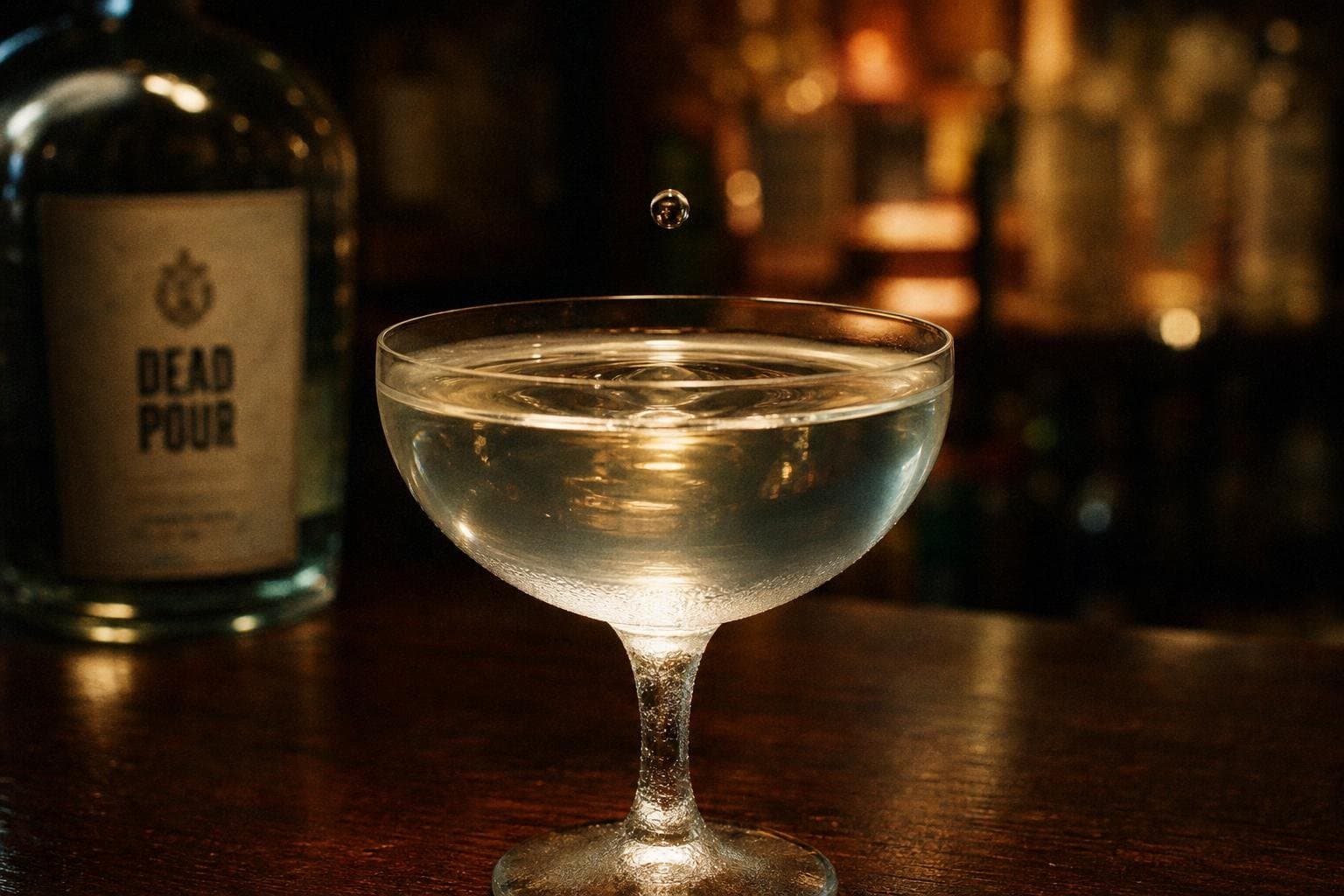

I wrote about clarified milk punch's 18th-century pedigree back in July and made the case that it's the oldest "modern" technique behind the bar — curdle the milk, strain the curds, keep the clarity. That history hasn't changed. What's changed is the company milk punch is keeping. Three months later, clarity has stopped being a technique with a reason behind it and started being a vibe bars reach for because it photographs well and sounds expensive to say out loud.
Nowhere is that clearer — sorry — than in a trend piece that ran recently asking why the chicest cocktails have suddenly gone crystalline. The writer orders a pre-batched bottled margarita that arrives looking like tap water, braces for disappointment, and gets a perfectly serviceable margarita anyway. Here's the detail that matters: the drink isn't clarified at all. Its maker, Lydia Ward, gets her clarity from citrus extracts blended straight into the tequila, not from curdling and straining anything (Country & Town House). That's not a knock on the margarita. It's a tell. Clarity has become a marketing signal so strong that a bottle can borrow its credibility without doing the work that earns it.
The Technique Had a Point. The Point Got Lost in Translation.
Clarification isn't a magic trick for making drinks look fancy. Paul Lougrat at London's A Bar with Shapes for a Name makes the actual case for it in that same piece: pull the solids out of ginger juice and the harsh spice softens, letting quieter floral notes through that the pulp was burying (Country & Town House). That's the whole argument for milk clarification too, going back to the curdling-and-straining method that let 18th-century punch travel for months without spoiling. The casein proteins in milk bind up tannins, pulp, and harsh pigment when they coagulate around an acid, and straining the curds leaves behind something genuinely smoother than what went in — not just clearer-looking, but different on the palate (tutoriales.com). That's real chemistry doing real work. It's also a slow process that requires patience, a second container, and a willingness to throw away a quart of curdled milk solids for every batch — which is exactly the kind of labor-intensive step that gets quietly skipped once a trend outruns the technique behind it.
Milk Punch Made It Back Onto Menus. It Didn't Get Treated Like the Main Event.
The good news is milk punch is still showing up where it should. The Punch Room at London's EDITION hotel just relaunched its menu under the name "Echoes," and milk punch sits on the list alongside four other house punches — a direct lineage from the bar's decade of punch programming (The Spirits Business). A bartender who spent five and a half years running that same room's bar program has written about milk punch too, folding a bourbon-and-oolong version into a National Punch Day feature built around Woodford Reserve, peach liqueur, and Aperol (Candra).
Notice what's happening in both cases: milk punch is present, but it's one line item among several, a nod to history rather than the thing the menu is built around. That's not a crime. Punch menus have always been collections, not single-serve showcases — a 1912 dinner menu built an entire ten-course meal around Punch Romaine as a mid-meal palate cleanser, not the headline act (How Humans Communicate). But there's a difference between punch-as-interlude in a formal meal and clarified milk punch — a technique that takes real time and real failure risk — getting filed next to a vodka-rum-gin-shiso-rosé punch that requires none of that patience. One of these drinks earns its place on the menu through process. The other earns it through volume. Listing them side by side as equally weighted "punches" flattens a distinction that used to mean something.
The Nonalcoholic Version Exposes the Contradiction Most Clearly
If you want to see where the awkwardness really lands, look at what's happening to milk punch in the zero-proof category. Punch's own roundup of nonalcoholic cocktails for Sober October includes a milk punch clarified with probiotic yogurt instead of the traditional acid-and-spirit combination (Punch). That's a clever substitution — yogurt brings its own acidity to do the curdling work lemon or wine would otherwise do. But it also strips out half of what made milk punch worth bottling in the first place: the spirit was the point. Historic milk punch wasn't clarified for texture alone; it was clarified so that a batch of rum or brandy punch could sit on a shelf for months without turning. A yogurt-clarified, alcohol-free version keeps the visual signature — the glassy clarity, the velvet mouthfeel — while discarding the preservation logic that made the original technique necessary rather than decorative.
And that version isn't cheap to make. The broader economics of nonalcoholic cocktails explain why: without alcohol acting as an efficient flavor carrier, bartenders need more raw ingredient, more time, and more technique to hit the same complexity, according to bar directors interviewed by Bon Appétit (Bon Appétit). A clarified N/A milk punch sits at the expensive end of that labor curve — all the filtration time of the original, none of the shelf-stability payoff that justified the labor in 1750.
What the Awkwardness Actually Reveals
None of this means milk punch doesn't deserve its spot back on bar menus. It means the revival has split into two different drinks wearing the same name. One version — the Punch Room's, the ones built by bartenders who understand what the casein is doing and why — treats clarification as a technique in service of flavor and texture, the same logic Lougrat applies to ginger juice. The other version treats clarity as an aesthetic that can be achieved by any means necessary, citrus extract or probiotic yogurt or whatever gets you to the same glassy photograph, history optional.
The tell is always the same: ask why a drink is clear, and see if the answer is about what happened to the liquid or about what the liquid looks like next to the others on the menu. A technique that took 18th-century bartenders weeks of patience to perfect shouldn't be reducible to a lighting condition. If clarity keeps spreading as a trend untethered from the chemistry that originally justified it, the next bar menu worth trusting will be the one that tells you, plainly, what got filtered out and why — not just that the glass caught the light.


