
There's a bottle of Luxardo on almost every serious back bar in America. It sits there, slightly sticky around the neck, getting pulled for Aviations and Last Words and the occasional Martinez. It is, by any measure, a success story of the cocktail revival. And yet something strange happened on the way to ubiquity: maraschino liqueur became a reflex rather than a choice. Bartenders reach for it because the recipe says to. Fewer and fewer of them seem to have thought hard about what it actually does — or what happens to a drink when it's wrong.
That's worth examining. Because maraschino's role in classic cocktail architecture is more load-bearing than its reputation suggests, and the story of how it got reduced to a supporting ingredient in its own narrative tells you something true about how the cocktail revival processed history.
What Maraschino Actually Is (And Why That Matters)
Start with the liquid. Maraschino liqueur is made from Marasca cherries — pits, stems, skins, and flesh — producing something that is clear, not red, and delivers what that source describes as a combination of cherry flavor, almond-like nuttiness from the pits, and a dry, almost austere finish. It is not sweet in the way people expect cherry to be sweet. It is not fruit-forward in the way Cherry Heering is fruit-forward. It occupies a strange middle register: recognizably cherry, but also herbal, slightly bitter, and with a dryness that makes it function more like a modifier than a sweetener.
This distinction matters enormously in the glass. When maraschino works in a cocktail, it's doing three things simultaneously: adding a whisper of fruit, contributing a faint bitterness, and providing just enough sweetness to balance without dominating. When it's used carelessly — poured heavy, or substituted with something fruitier — the whole drink tips. The Aviation becomes cloying. The Last Word loses its knife-edge balance.
The fact that maraschino liqueur is a staple in the Aviation, the Last Word, and the Martinez isn't coincidental. These are all drinks that require a modifier with restraint — something that adds complexity without announcing itself. Maraschino is, in this sense, the ideal supporting player. The problem is that supporting players get taken for granted.
The Drinks That Depended on It
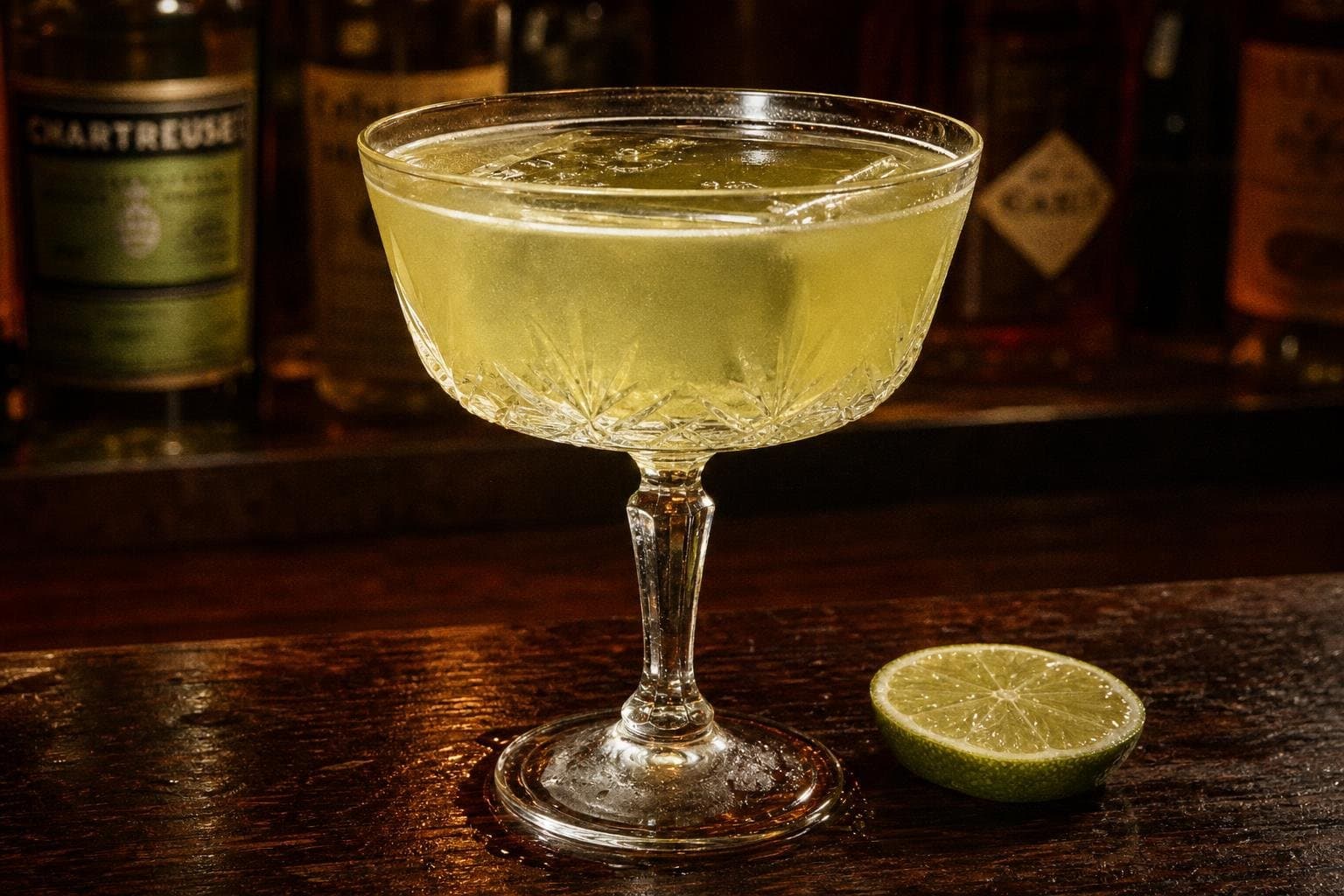
Consider the Last Word, which emerged from the Detroit Athletic Club in the early Prohibition era and built its reputation on a structure that should not work: equal parts gin, lime juice, green Chartreuse, and maraschino liqueur. On paper, this is chaos. Chartreuse is one of the most assertive liqueurs ever bottled. Lime is sharp and acidic. Gin brings its own botanical agenda. And yet the drink is, when made correctly, a model of balance.
Maraschino is why. It's the only ingredient in that equal-parts formula that doesn't fight for dominance. The Chartreuse brings the herbal intensity; the lime brings the acid; the gin brings the structure. Maraschino smooths the seams. It's the ingredient that makes the other three agree to coexist. Pour too much and the drink goes sweet and muddled. Pour too little and the Chartreuse wins by a knockout.
The Martinez — gin, sweet vermouth, maraschino, bitters — presents a different case. Here maraschino is functioning almost as a seasoning, a small quantity that lifts the vermouth without competing with it. The drink's provenance is contested (cocktail history being what it is, multiple origin stories circulate), but its architecture is clear: this is a drink built around the interplay of gin and vermouth, with maraschino as the bridge between them.
The Aviation adds a third dimension. The cocktail renaissance of the early 2000s sparked renewed interest in these foundational drinks, and the Aviation's return brought maraschino back into regular rotation. But the Aviation also has crème de violette in its correct formulation — a subject this publication has covered at length — and the interplay between those two modifiers is where maraschino's character becomes most visible. Violette is floral and sweet. Maraschino is dry and nutty. Together they create a modifier layer that is neither one thing nor the other. Separately, each one tips the drink in a direction it shouldn't go.
How the Revival Got It Half Right
The cocktail revival's relationship with maraschino is a study in selective attention. The drinks came back. The ingredient came back. The understanding of what the ingredient does — that part is still catching up.
Part of the problem is that the revival processed classic cocktails primarily as recipes rather than as systems. The emphasis was on sourcing correct ingredients, following historical proportions, and presenting drinks with appropriate historical context. All of that is good. But it created a generation of bartenders who could tell you that the Last Word calls for equal parts and that Luxardo is the correct maraschino, without necessarily being able to tell you why the equal-parts structure works or what would happen if you shifted the maraschino by a quarter ounce.
The modern classic cocktail canon, as documented by people who were present for its construction, ran roughly from 2000 to 2012. During that period, the industry was doing serious excavation — pulling drinks out of pre-Prohibition recipe books, tracking down discontinued ingredients, rebuilding techniques that had been lost. Maraschino was part of that recovery. Luxardo, which is still in production and not hard to find (specialty shops and most well-stocked liquor stores carry it, typically in the $30–40 range), became the default recommendation because it was the most historically appropriate and most accessible option.
But "most accessible" has a way of becoming "only option" in bar culture. Once Luxardo became the standard, the conversation largely stopped. Nobody was asking whether Maraska or Lazzaroni might serve certain drinks better. Nobody was discussing how the slight variations between producers — Luxardo runs a bit drier, Lazzaroni a bit sweeter — might affect the balance of a specific recipe. The ingredient got canonized before it got understood.
The Substitution Problem Reveals the Understanding Problem
Here's a useful diagnostic: look at what bartenders reach for when they're out of maraschino. The most common substitutes include Cherry Heering, Luxardo cherry syrup, and kirsch — all of which are reasonable in a pinch but none of which are actually doing what maraschino does.
Cherry Heering is darker, sweeter, and more overtly fruity. It will make your Aviation taste like a cherry drink. Luxardo cherry syrup carries some of the same almond-cherry notes but lacks the dryness and the alcoholic structure. Kirsch is drier but also more neutral, missing the complexity that makes maraschino worth using in the first place.
The fact that these substitutes get recommended at all — and that some bartenders use them without noting the difference to the customer — suggests that maraschino's specific contribution isn't fully understood. If you knew what it was doing, you'd know that none of these substitutes replicate it. You'd know that a Last Word made with Cherry Heering is a different drink, not a close approximation.
This is the gap between knowing a recipe and understanding a drink. The revival was very good at the former. It was more uneven on the latter.
What Maraschino Teaches About Modifier Logic
Step back from the specific ingredient and the lesson gets broader. Maraschino's role in classic cocktail architecture is a case study in what might be called modifier restraint — the idea that the most important modifiers in a drink are often the ones you notice least.
The Bijou, named for the colors of its ingredients — gin for diamonds, sweet vermouth for rubies, green Chartreuse for emeralds — uses a similar logic. The Chartreuse is the star, but the vermouth is doing the structural work. Remove it and the drink becomes a gin-Chartreuse two-hander that's too intense to drink comfortably. The modifier that seems secondary is actually load-bearing.
Maraschino operates the same way in the drinks that use it. It's not the flavor you're tasting when you drink a Last Word. You're tasting the Chartreuse and the lime and the gin. But if the maraschino weren't there — or if it were wrong — you'd notice immediately. The drink would feel unfinished, or too sharp, or too sweet, depending on what went wrong.
This is the kind of understanding that separates a bartender who can execute a recipe from one who can diagnose why a drink isn't working. And it's the kind of understanding that the cocktail revival, for all its genuine achievements, didn't always transmit alongside the recipes it recovered.
Where This Leaves the Bottle on Your Back Bar
Maraschino liqueur is not obscure. It is not out of production. Luxardo is widely available; Maraska and Lazzaroni can be found at specialty shops or online, typically in a similar price range. The ingredient's accessibility is not the problem.
The problem is that accessibility without understanding produces a generation of drinks that are technically correct and subtly wrong. The maraschino is there. The proportions are right. But the bartender hasn't tasted the drink critically enough to know that their bottle is running a little sweet, or that the lime was cut too early and lost its brightness, or that the Chartreuse they're using is a different expression than the one the recipe was built around.
The cocktail revival gave maraschino its seat back at the table. What it didn't always do was teach people why the seat mattered. That's the work that's still unfinished — not sourcing the right bottle, but understanding what the bottle is for.
A well-made Last Word is one of the more honest arguments for why classic cocktail architecture holds up. Every ingredient is doing something specific. Nothing is decorative. The maraschino is not there because the recipe says cherry liqueur. It's there because without it, the other three ingredients can't agree on anything.
That's worth knowing. It's also worth tasting, carefully, the next time you make one.


