



What's become clearer since then is that the misidentification isn't just a training problem. It's structural. Genever doesn't fit the bins American bars have built, so it gets shoved into the nearest one — and the nearest one is gin. The spirit pays the price every time.
The Malt Wine Problem Nobody Explains
The category confusion starts at the production level and never gets corrected on the way to the glass.
Genever is built on malt wine — a pot-still distillate made from malted barley, rye, and maize, fermented and distilled at relatively low strength to preserve grain character. Juniper and botanicals are added to that base. Modern gin inverts this entirely: start with a highly rectified neutral grain spirit that contributes essentially nothing, then add botanicals. The botanical list overlaps. The underlying logic is opposite.
The result, as the Henley Distillery describes it, is a spirit with notes of malt, bread, spice, and subtle sweetness — "closer in style to a young whisky than to a London Dry gin." That's not a poetic flourish. It's a functional description that should change how you use it.
There are three styles worth knowing. Oude genever (old-style, not aged — the name refers to production method) carries at least 15 percent malt wine and often much more, with full grain character and sometimes oak aging. Jonge genever uses less malt wine and more neutral spirit — cleaner, lighter, still distinct from gin. Korenwijn sits at the richest end, with the highest malt wine content. These aren't marketing tiers. They're legally defined categories under Dutch and Belgian law, and they produce genuinely different drinking experiences.
Why the Old Fashioned Is the Correct Entry Point
The cocktail that cracks genever open for American drinkers isn't the one bars reach for. They default to a Gin & Tonic, which flattens oude genever into something that tastes like a confused whisky sour, or they try a Negroni variation that fights itself. The right move is older and more honest.
RyeCentral's breakdown of the Gin Old Fashioned makes the case plainly: genever "works as a whiskey-gin hybrid" in an Old Fashioned build precisely because the malt wine base provides the oak-adjacent grain character that the cocktail's structure needs. This isn't a modern riff. It's closer to the original. The bittered-sling format that preceded the modern Old Fashioned — documented in Jerry Thomas' work and traced through Robert Simonson's research — was built for spirits with grain weight. Genever is that spirit.
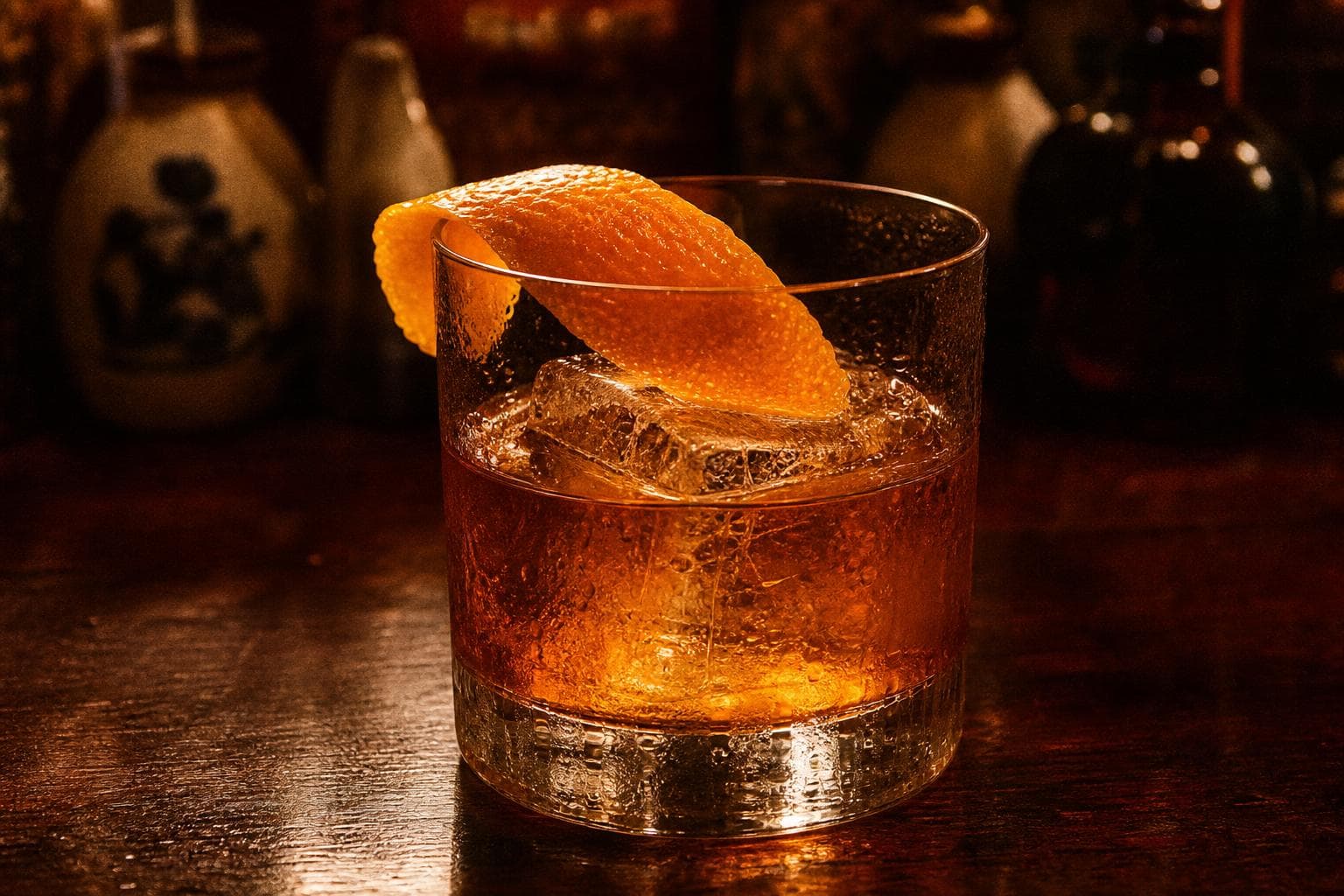
Genever Old Fashioned
- 2 oz oude genever (Bols Barrel Aged if you can find it; Bols Traditional as the fallback)
- ¼ oz simple syrup
- 2 dashes orange bitters
- 1 dash Angostura
Build in a rocks glass over one large ice cube. Stir 20–25 rotations. Express a wide orange peel over the surface and drop it in. No cherry. No fruit salad.
On the bottle: Bols Traditional Genever is the most widely distributed option in the US — specialty shops and well-stocked liquor stores, roughly $25–30. Bols Barrel Aged is harder to locate and may require an online retailer. Both are still in production; this is a distribution problem, not a discontinuation.
The Gin Boom Left Genever Behind on Purpose
Bar & Restaurant's recent piece on gin's resurgence frames the category's transformation as driven by bartender creativity and consumer sophistication. That's true. It's also a story about consolidation around a legible identity. Gin won because it could be explained in one sentence and riffed on infinitely. Genever requires two sentences minimum and a willingness to unlearn something.
The spirits industry, as Imbibe has noted in its coverage of cocktail historians like David Wondrich, has a tendency to let inconvenient history fade when it complicates the marketing. Genever is inconvenient. It predates gin, shaped gin, and then got eclipsed by it — and the eclipse was partly commercial, not purely about taste.
The verdict: genever isn't a gin alternative. It's what gin was before gin decided to be something easier to sell. Put it in an Old Fashioned build, explain nothing, and let the grain do the talking. The drinkers who get it will get it immediately. The ones who don't weren't ready for it anyway.