


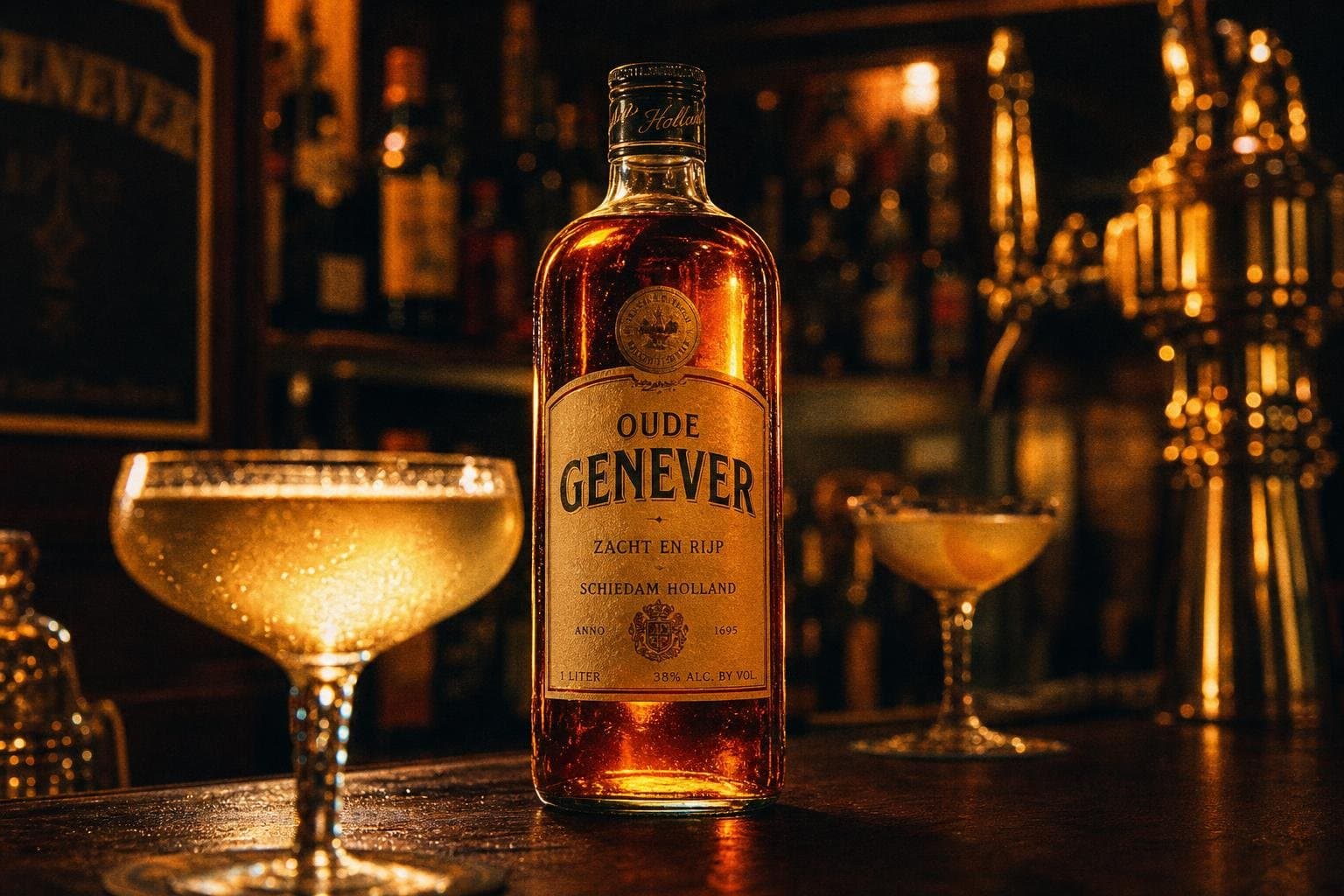

There's a bottle of genever on the back bar at maybe one in twenty serious cocktail bars in this country. When a bartender reaches for it, the explanation that follows is almost always the same: "It's like the original gin — kind of malty, kind of sweet, think of it as a bridge between gin and whiskey." The customer nods. They order it in a Negroni variation. They enjoy it fine. They never think about it again.
That explanation is not wrong, exactly. It's just not useful. And the gap between "not wrong" and "useful" is where genever has been stuck for the better part of a decade.
I've written about genever twice before — once on its categorical misidentification and once on how bars explain it incorrectly at the point of sale. What I haven't addressed directly is the upstream problem: why bartenders themselves remain uncertain about it, even the ones who stock it. The blind spot isn't at the customer level. It starts behind the bar.
The Malt Wine Problem Nobody Talks About
The thing that makes genever genuinely different from London Dry — and from the "original gin" framing — is malt wine, the distillate at its core. Malt wine (moutwijn) is a low-proof, pot-still spirit made from a grain mash, typically a blend of malted barley, corn, and rye. It's funky, grainy, and carries real weight. Botanicals, including juniper, are added to this base — not the other way around. In London Dry production, a neutral spirit is redistilled with botanicals; juniper dominates and the base disappears. In genever, the base is the point. The botanicals are seasoning.
This distinction matters enormously for how you use the spirit. A genever with high malt wine content — what's labeled oude style, meaning "old" in the traditional sense, not aged — behaves more like a lightly botanical whiskey than anything you'd reach for in a gin context. A jonge ("young") style, developed post-WWII to use less malt wine and more neutral grain spirit, is closer to the London Dry family but still not interchangeable with it.
The "bridge between gin and whiskey" shorthand collapses this distinction entirely. It tells you nothing about which genever you're holding, what it will do in a drink, or why the ratio of malt wine to neutral spirit is the actual variable that matters. Bartenders who learned genever from that shorthand are working with a map that doesn't show the terrain.
What the Canon Actually Requires
Here's the practical consequence: the classic genever cocktails — the ones that predate London Dry's dominance — were built around that malt wine character, not despite it. The Holland Gin Cocktail, essentially an Old-Fashioned built on genever, works because the spirit has enough body and grain character to carry bitters and sugar without disappearing. The John Collins was originally a genever drink; the London Dry version came later and is, depending on your palate, a step sideways rather than forward.
When bartenders substitute London Dry in these recipes — which happens constantly, because genever is harder to source — the drink still functions. It just becomes a different drink. The grain weight is gone. The slight funkiness that made the original interesting is gone. What's left is technically correct and experientially diminished.
This is the blind spot in practice: genever gets treated as a substitutable ingredient rather than a load-bearing one. A well-made Daiquiri tells you about a bar's commitment to balance. A well-made Holland Gin Cocktail, built on a proper oude genever, tells you whether the bartender understands what malt wine actually contributes. Most bars never get to that second test.
The Availability Excuse Doesn't Hold Anymore
The standard defense is distribution. Genever is hard to find, the argument goes, so bars don't stock it, so bartenders don't learn it, so customers don't ask for it. This is partially true and mostly circular. Several genevers are available through specialty retailers and online in most U.S. markets — Bols Genever (widely available, roughly $25–30) is the most accessible entry point, and while it's a jonge-leaning style, it's a legitimate starting place. Diep9 and Rutte Oude Genever represent the malt-wine-forward end of the spectrum and require a specialty shop or online order, but they're not out of production — they're just poorly distributed, which is a different problem with a different solution.
The distribution gap is real. But it doesn't explain why bartenders who do stock genever still reach for the "bridge between gin and whiskey" explanation rather than teaching the malt wine concept. That's not a supply chain failure. That's a knowledge gap that the industry hasn't bothered to close.
Genever doesn't need a revival. It needs bartenders who can explain what malt wine is and why it changes everything. Until that happens, the bottle stays on the back bar as a curiosity — occasionally ordered, rarely understood, and almost never the reason someone comes back.