


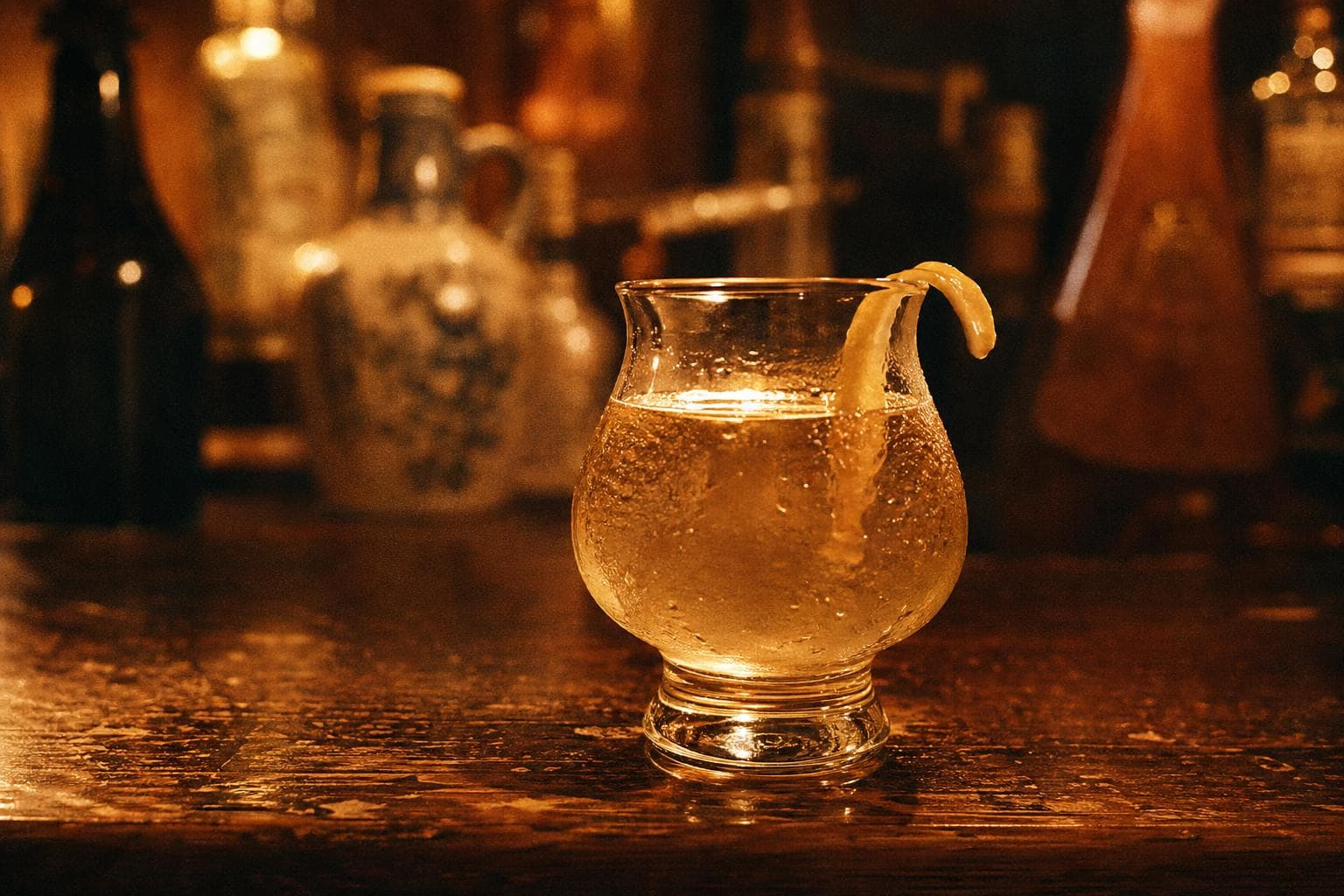

Every bar that stocks genever introduces it the same way: "It's like the ancestor of gin." Which is true, and also the reason it never gets ordered twice. Nobody wants the ancestor. They want the thing.
Here's what that framing misses. Genever isn't a primitive gin. It's a different spirit that happens to share a botanical. The base is moutwijn — malt wine, distilled from a grain mash of barley and other cereals — which gives it a richness that modern gin, built on neutral spirit, was specifically engineered to eliminate. Calling it gin's ancestor is like calling Scotch whisky the ancestor of vodka because both start with grain. Technically traceable. Practically useless.
The two main styles worth knowing: jonge (young) genever, which uses less moutwijn and tastes closer to a soft, slightly grainy gin; and oude (old), which uses more malt wine and lands somewhere between gin and an unaged whisky — herbal, round, with a faint sweetness that has nothing to do with added sugar. There's also korenwijn, aged in barrel for at least a year, which is its own category entirely and the one most American drinkers will never encounter because it almost never makes it here.
The distribution problem is real. Bols is the label you'll find at most specialty shops — it's the accessible entry point, widely available, and a legitimate product. Beyond that, you're hunting. The spirit has a dedicated museum in Schiedam, reportedly over 400 brands produced in the Netherlands, and essentially no shelf presence in the United States outside major cities. That's not obscurity. That's a distribution failure dressed up as obscurity.
Build it simply. Genever's best argument is the cocktail it was made for before gin existed.
The Dutch Gin & Tonic (which predates the gin & tonic)
- 2 oz Bols Genever (oude style; specialty shops, ~$25–30)
- 4 oz good tonic water
- Expressed lemon peel, discarded
Build over ice in a highball. That's it. The malt wine does the work — you get complexity the neutral-spirit version can't touch. If you want to go further, swap the tonic for equal parts tonic and soda, which keeps the sweetness from overwhelming the grain character.
For something more serious: 2 oz Bols Genever, ¾ oz fresh lemon juice, ½ oz simple syrup, shaken and served up. It's a Sour built for the spirit's actual flavor profile, not retrofitted from a gin template.
The verdict: genever is harder to find than it deserves to be, and easier to drink than its reputation suggests. Stop explaining it as proto-gin. Pour it as what it is.