


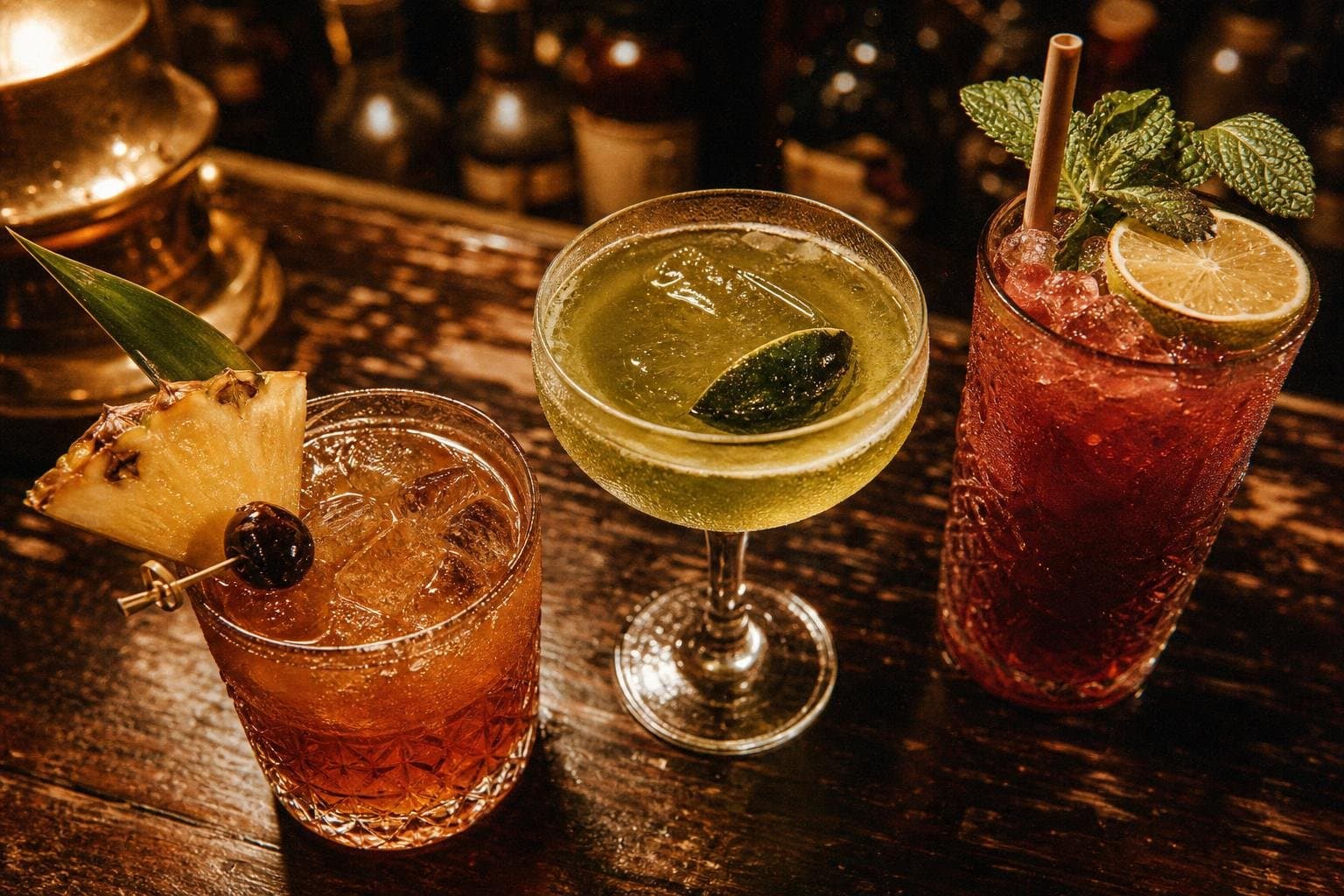

The Mai Tai gets the real estate. The Piña Colada gets the umbrella. Everything else in tropical drinking gets filed under "tiki-adjacent" and left to gather dust. That's a waste — because some of the most structurally interesting warm-weather drinks have been sitting in plain sight, ignored, for decades.
Punch's August roundup of underrated tropical classics is worth working through. Here's what the list reveals, drink by drink.
1. The Pago Pago — The Daiquiri That Grew Up
The bones: White rum, Chartreuse, crème de cacao, lime juice, pineapple juice.
The Pago Pago is what happens when someone decides a Daiquiri needs a second act. Punch traces it to the rum brand Ronrico in the 1940s, with an appearance in the second edition of Hyman Gale and Gerald F. Marco's The How and When. Bartender Paul McGee, who revived it at Echo Lake, compares its layered approach to Donn the Beachcomber's style — dual citrus, stacked flavors.
What makes it worth your time: Chartreuse and crème de cacao together is a combination that sounds like a mistake and drinks like a revelation. The herbal sharpness cuts the chocolate sweetness; the rum holds the whole thing together. McGee calls it "so approachable, yet, if you look for it, you find the layers." That's the test for any good drink.
Provenance note: Ronrico's role in the drink's creation is the brand's own account. Treat it as a starting point, not settled history.
2. The Pancho Villa — The Philippines' Answer to the Singapore Sling
The bones: Gin, gold rum, pineapple juice, fruit liqueurs.
Named for boxer Francisco Villaruel Guilledo — who fought under the name Pancho Villa — this early 20th-century Filipino cocktail is gin-and-rum in the same glass, which sounds chaotic and mostly works. Punch notes that Manila-born New York bartender Marlo Gamora found the original "not balanced at all" and rebuilt it rum-forward with more acid for modern palates.
The original came with a salty olive. Gamora serves it with lumpia. Both choices tell you something about how context shapes a drink's identity — the recipe is almost secondary.
3. The Away Colors — Fernet in the Tropics
The bones: Añejo rum, Fernet-Branca, tropical fruit elements.
Created at the now-shuttered New York bar Lion Lion, the Away Colors is the rare drink that puts a digestivo in a tropical frame without the whole thing collapsing. Punch flags it as a less-trodden path — the bitter, brooding character of an amaro feels incongruous with fruit-forward tropical drinking, which is exactly why it's interesting when someone makes it work.
Fernet-Branca in a warm-weather drink is a provocation. It's also, when balanced correctly, a solution to the problem of tropical drinks that are all sweetness and no spine.
What the List Actually Argues
Punch's framing is diplomatic — "hidden beneath the spotlight" — but the editorial point is sharper than that. These drinks aren't obscure because they're inferior. They're obscure because tropical drinking has a canon problem: a handful of drinks absorb all the oxygen, and everything else gets treated as a footnote.
The Pago Pago is a case study. It's structurally sound, historically documented, and genuinely delicious. It also requires Chartreuse, which means bars that stock it have no excuse not to make the drink. The fact that most don't is a menu curation failure, not a quality judgment.
The Pancho Villa raises a different issue: drinks with non-Western origins get filed under "exotic" and left there, rather than being integrated into the working canon. Gamora's rebalanced version is a reminder that adaptation is how classics survive — the original recipe being "not balanced at all" didn't kill the drink, it just meant someone had to do the work.
The Practical Takeaway
If you're building a home bar set for late summer, these three specs are worth running:
- Pago Pago: Tests your rum-and-Chartreuse instincts. If your Chartreuse is gathering dust, this is