
I've covered this ground before — twice, in fact. The April piece asked whether the handshake held up in the glass. The June piece argued that the reasons usually given for the cult don't survive scrutiny. What's changed since then is that Fratelli Branca has gotten louder about its own mythology — and the gap between what the brand says about itself and what's actually interesting about Fernet-Branca has widened enough to be worth naming directly.
The occasion: a limited-edition bottle collaboration with Los Angeles tattoo artist Austin England, announced this month, which Fratelli Branca describes as honoring the brand's "deep ties to tattoo culture." The press release quotes a sixth-generation family member saying the relationship "wasn't manufactured — it grew over years, glass by glass." That's a nice line. It's also exactly what a manufactured relationship sounds like when it's trying not to.
The Cult Preceded the Marketing. That's the Whole Point.
Here's what's actually true: Fernet-Branca does have a genuine relationship with bartender culture. It became a kind of industry handshake — the shot you buy a colleague, the thing you drink after your shift — not because of any campaign, but because it's bitter, bracing, and tastes like something that works rather than something that's trying to please you. VinePair's recent timeline of bar industry darling spirits traces how certain bottles earn that status: they occupy a "unique space" by providing utility to bartenders, functioning as both a digestif and a secret signal among people who know what they're doing.
Fernet-Branca earned that status the hard way. It's 39% ABV, built from a recipe the brand claims involves 27 ingredients — among them myrrh, galangal, saffron, gentian, and menthol — aged for twelve months in wood, according to the Institute for Alcoholic Experimentation's breakdown of the label's own claims. The recipe is proprietary and the exact ingredient count is disputed (the same source notes "27 or alternatively 40"), so treat any specific number as brand-adjacent rather than verified. What isn't disputed is the flavor: aggressively bitter, medicinal, minty in a way that reads as functional rather than refreshing. It tastes like something that was designed to do a job, not to be liked.
That's the source of the cult. Bartenders gravitate toward things that work, and Fernet-Branca works — as a digestif, as a modifier in small doses, as a palate reset. The tattoo connection, to the extent it's real, grew from the same place: late nights, industry bars, a shared aesthetic of things that are built to last and don't apologize for being what they are.
What Happens When the Brand Starts Explaining the Mystique
The limited-edition bottle is the third in an annual U.S. series, per the BevNET press release. There's also a merchandise line — apparel, hats, bar accessories — available through a separate retail site. The Fernandito (Fernet-Branca and cola, the Argentine serve) is currently touring Italy in a 150-event promotional campaign, hitting 86 municipalities from May through September 2026.
None of this is wrong, exactly. The Fernandito is a legitimate drink with genuine roots in Argentine bar culture, and the IBA has recognized it as an official cocktail. The tattoo collaboration involves a real artist doing real work. But there's a difference between a brand acknowledging a subculture and a brand deciding to manage its relationship with that subculture through annual limited editions and merchandise drops.
The bartender handshake worked because nobody was watching. The moment you put it on a collectible bottle with a QR code linking to a merch site, you've changed what it is. Not ruined it, necessarily — Fernet-Branca the liquid remains what it always was. But the story being told about it has shifted from "this is what people who know things drink" to "this is a brand with deep ties to authenticity, available this September while supplies last."
The Drink Still Earns Its Reputation. Drink It That Way.
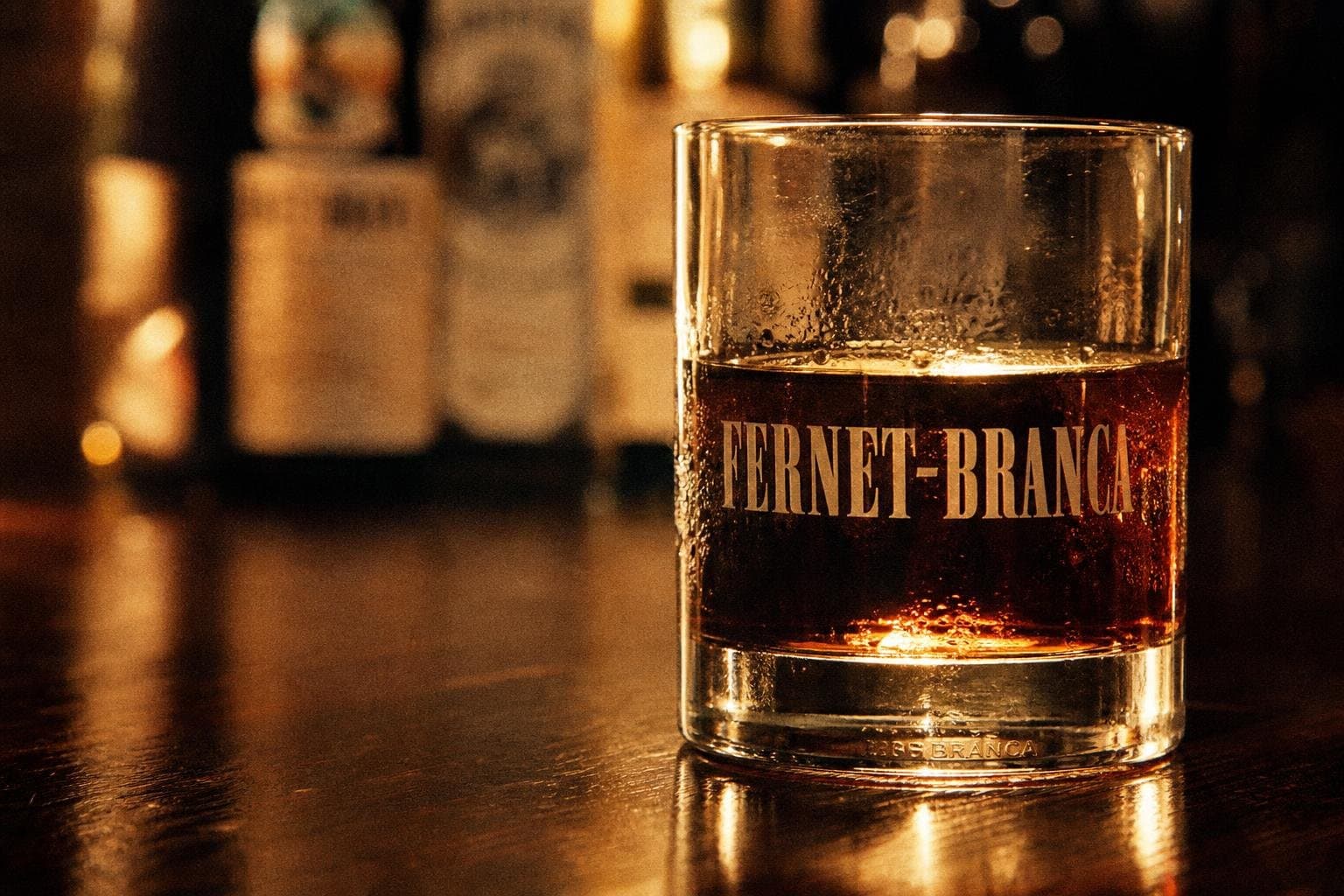
The correct response to all of this is to ignore the bottle and focus on what's in it. Fernet-Branca in a rocks glass after a long shift is still one of the more honest things you can put in your body at midnight. A small pour as a modifier — the Difford's Guide recipe index lists it as a component in several spirit-forward builds — rewards restraint and rewards knowing what you're doing.
The cult status is real. The reasons the brand gives for it are marketing. Those two things can coexist, and the drink doesn't need the brand's explanation to justify itself. A bitter digestif that's been in continuous production since 1845 and still tastes like it was designed for function over approval has earned its place on the shelf without the help of a limited-edition eagle tattoo bottle.
Buy the standard bottle. It's widely available at most spirits retailers, typically in the $30–$35 range for a 750ml. The collectible edition will cost more and taste identical.


