


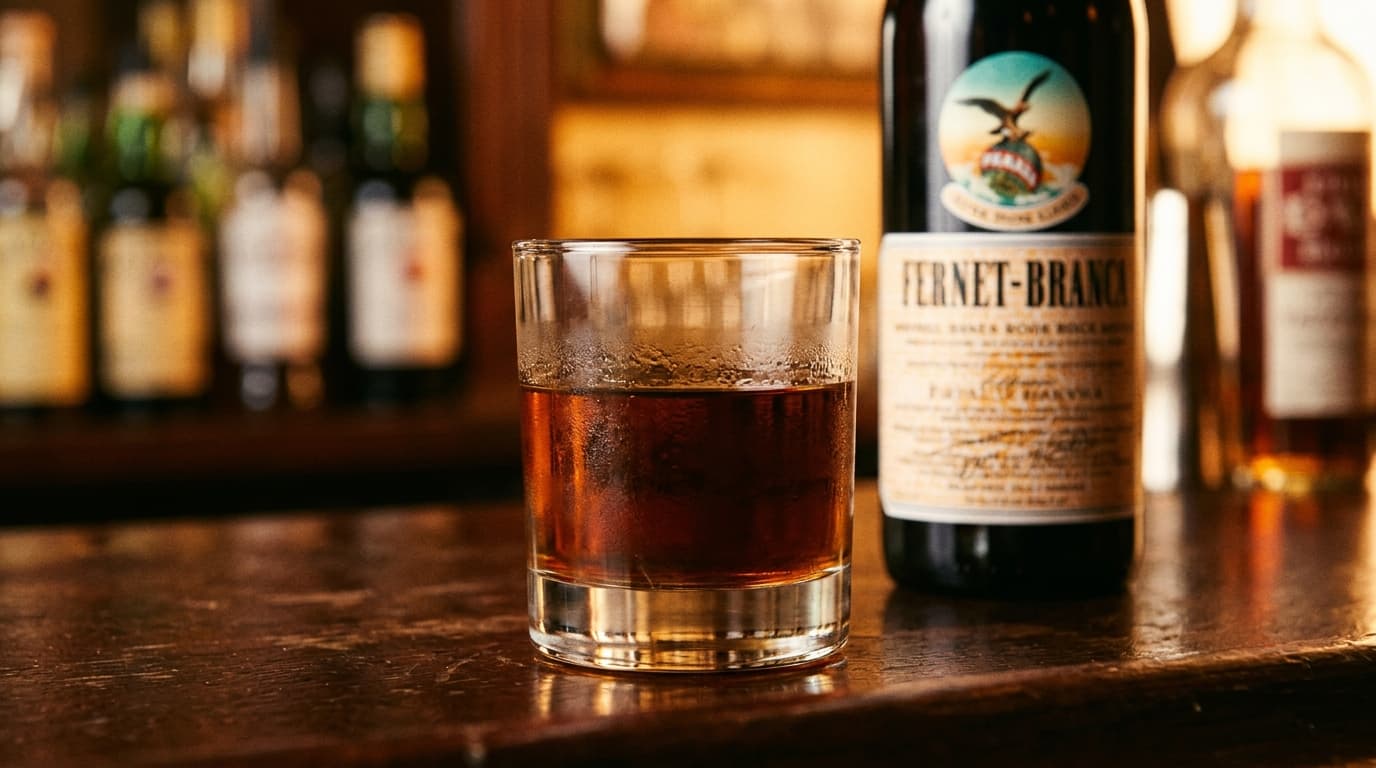

Every bar has a bottle of Fernet-Branca. Most of them are covered in a thin film of reverence. The stuff has achieved a status that's almost theological in certain circles — the shot you take with the bartender at the end of a long shift, the thing you order to signal that you're not a tourist. Branca USA's own marketing calls it "the bartender's handshake." Which is fine, as far as positioning goes. But handshakes aren't digestifs. So let's actually taste the thing.
What It Is, Before the Mythology
Fernet-Branca has been made in Milan since 1845, when Bernardino Branca founded the company. It's still family-run. The word "fernet" itself is disputed — it may reference a Swedish doctor the Branca family worked with, or it may derive from Milanese dialect for "clean iron," referencing the stirring rod once used in production. The real etymology is lost. The brand has leaned into the mystery rather than resolving it, which is either charming or convenient depending on your disposition.
Before it was a bar ritual, it was medicine. Fernet-Branca was sold as a remedy for cholera, menstrual cramps, and other ailments — the standard origin story for most amaros, which were medicinal before they were social. The "digestif" framing came later, as the category shifted from pharmacy to bar cart.
The Branca family is also the reason fernet exists as a style, not just a brand. Fernet-Branca is the original; other producers now make their own fernets, but the category name comes from this bottle.
The Tasting, Without the Ceremony
Neat, room temperature, no ceremony. Here's what's actually in the glass:
- Nose: Menthol-forward, almost aggressively so. Eucalyptus, camphor, something medicinal that earns the word. Under that, dried herbs — saffron is listed among the botanicals, though you'd be hard-pressed to isolate it.
- Palate: Bitter, but not the clean citrus-peel bitter of a good Campari. This is darker, rooty, with a pronounced minty coolness that some people love and others find overwhelming. The sweetness is restrained — less cloying than many amaros.
- Finish: Long, dry, slightly warming. The menthol lingers.
The honest verdict: it's a genuine digestif. The bitterness is real, the herbal complexity is real, and the cooling finish does something useful after a heavy meal. It is not, however, subtle. This is a bottle that announces itself. Whether that's a virtue depends on what you're after.
The Handshake Problem
Here's where I get skeptical. The bartender-handshake identity has become so dominant that it's started to obscure the drink itself. Branca's current U.S. marketing campaign — "Can you handle a shot of madness?" — runs on connected TV, out-of-home, and paid social, with AI-driven targeting and free subscription boxes for bartenders to drive trial and advocacy. That's a sophisticated machine for selling a bottle as an identity rather than a flavor.
The result is that Fernet-Branca gets ordered as a signal — I know what this is — rather than as a considered choice. Which is fine for the brand. Less fine for the drinker who's never actually sat with it and asked whether they like it.
The people who do like it tend to be genuine about it. It's become a legitimate nightcap choice for drinkers who've moved past the novelty and into actual preference. That's worth something. But there's a difference between a drink that earns its reputation and one that coasts on it.
Build It: The Fernet Sour (A More Honest Introduction)
Straight Fernet rewards patience. If you're not there yet, this is the better entry point.
Fernet Sour
- 1 oz Fernet-Branca
- 1 oz fresh lemon juice
- ¾ oz simple syrup (1:1)
- 1 egg white (or ½ oz aquafaba)
Dry shake, then shake with ice. Double-strain into a coupe. No garnish.
The acid cuts the menthol, the egg white rounds the bitterness, and you get something that actually shows you what the herbal structure is doing rather than just hitting you with it. It's a better argument for the bottle than the shot ritual.
The Verdict
Fernet-Branca is a legitimate digestif that has been partially consumed by its own mythology. The liquid earns respect; the ritual around it has become a bit of a costume. Drink it because you like bitter, herbal, menthol-forward spirits — not because you want the bartender to nod at you. And if you're in Milan, the museum tour is free.