
Ask ten bartenders what falernum is and you'll get ten different answers, and at least three of them will be arguing with each other by the second round. Syrup. Liqueur. Cordial. Proto-cocktail ingredient that somehow became an ingredient category of one. The confusion isn't new, but it's rarely interrogated past the shelf-talker level — which is a shame, because the disagreement tells you something real about how Caribbean drink culture gets flattened once it crosses into American bar programs.
Nobody Agrees on What's in the Bottle, Including the People Who Make It
The baseline version most drinkers encounter describes falernum as a sweet, lime-forward syrup or low-proof liqueur built around rum, lime, sugar, and a cluster of warm spices — clove, ginger, almond, sometimes allspice — according to a recent consumer rundown from Maplelixir. That same piece can't commit to a single category either, filing falernum under "syrup, liqueur, or low-proof liqueur" depending on the brand, which is less a definition than a shrug.
Push on the alcohol question and the shrug gets wider. One explainer traces falernum's origins back to an 18th-century Caribbean medicinal tonic before it migrated into bar use, per SolvedAvenue, and pegs Velvet Falernum in the 11–15% ABV range — close enough to liqueur territory but soft enough to blur into flavored syrup depending on the producer, according to the same source. Treat that range as a general sense of where the category sits rather than gospel — neither source is tracking a specific bottle's label proof, and falernum's ABV genuinely swings by maker, from essentially nonalcoholic syrup to something with real backbone, a point Maplelixir echoes when it notes alcohol content "can range from non-alcoholic syrup to low-proof liqueur or stronger modern versions."
The more interesting instability isn't proof, though. It's what's actually supposed to be in the base. Richard Godwin, writing about the Corn n' Oil — the rum-and-falernum proto-cocktail that's arguably falernum's whole reason for existing — relays a conversation with Foursquare's Richard Seale, who flatly disputes the common "blackstrap rum" framing of the drink's history and insists the Corn n' Oil originally called for brandy, not rum, in The Spirits. That's a working Barbadian distiller contradicting the received wisdom on a drink that's supposed to be falernum's flagship application. If the people closest to the source material can't agree on the base spirit of the signature cocktail, the syrup-versus-liqueur debate starts to look like a symptom, not the disease.
The Drink Vanished From the Island That Invented It
Here's the part that should bother anyone treating falernum as a trend ingredient: Godwin reports that during a 2021 visit to Barbados, he didn't encounter a single bar serving the Corn n' Oil, despite Mojitos and Aperol Spritzes being everywhere, as he writes in The Spirits. He also notes that most online recipes for the drink get the ratios wrong, frequently calling for equal parts falernum and rum — which he compares, correctly, to building an Old Fashioned with equal parts whiskey and sugar.
That's the real identity crisis. Falernum didn't disappear because it went out of production — it's still made, still sold, and still described across consumer-facing guides as a flexible modifier for rum sours, punches, and tropical highballs, per Maplelixir. It got untethered from the drink that gave it a reason to exist, got miscategorized on American shelves as a one-note tiki sweetener, and then got mis-proportioned by the recipe sites that inherited it secondhand. A vernacular 18th-century Barbadian drink, built as a showcase for rum, got rewritten into a syrup-heavy novelty shot because nobody bothered to ask a Barbadian bartender how it's actually supposed to taste. Even the industry's own circuit of seminars and guest shifts — the kind of programming Tales of the Cocktail Foundation runs at stops like its recent Miami date, per Tales of the Cocktail Foundation — tends to spotlight brand showcases and technique classes over the kind of ingredient archaeology falernum actually needs.
Treat It Like a Spirit-Forward Mixer, Not a Garnish
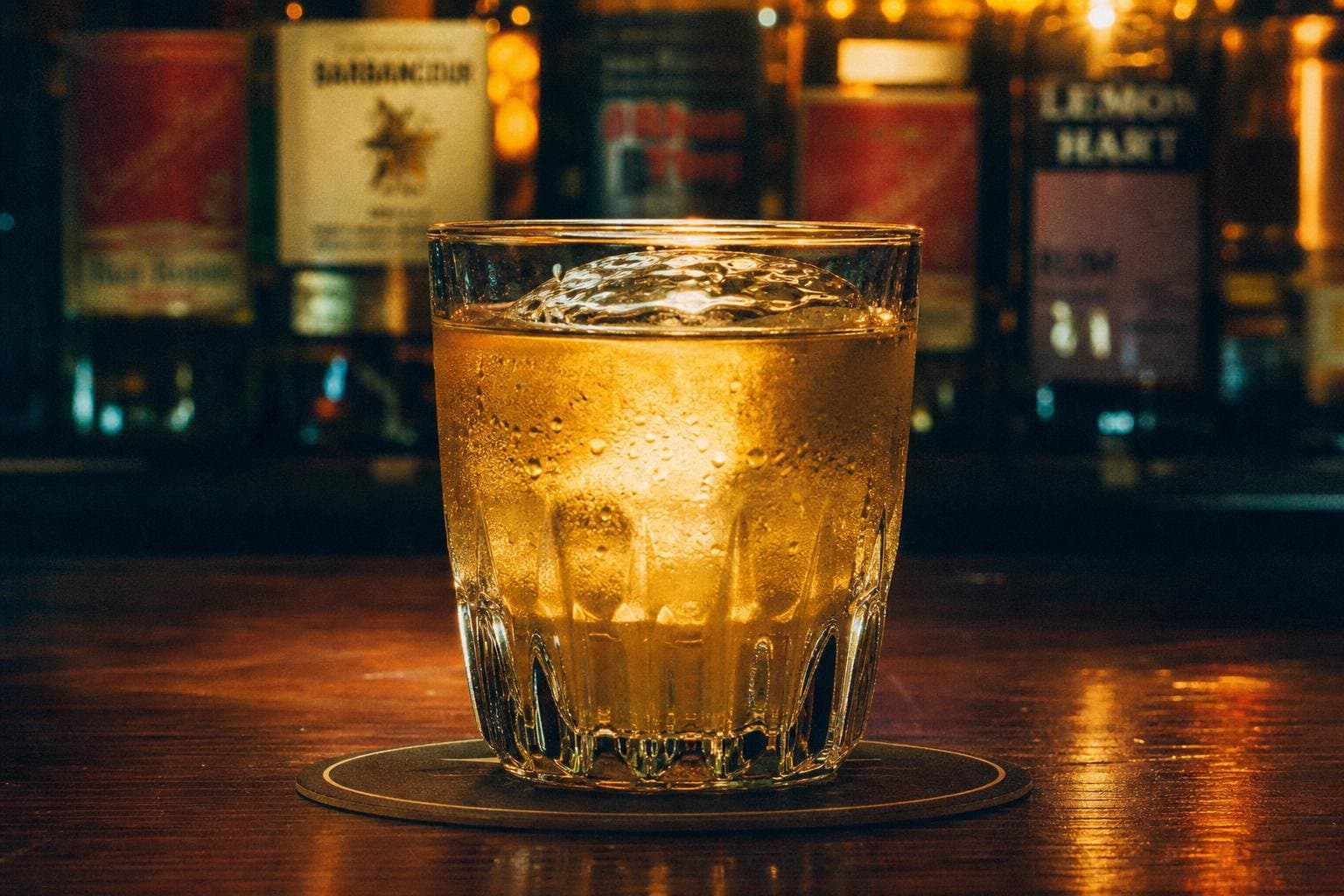
Godwin's own fix is instructive: he suggests thinking of the Corn n' Oil as a rum Old Fashioned, built on a large cube rather than crushed ice, where falernum plays the role sugar plays in a standard Old Fashioned — present, but not the point — as detailed in The Spirits. That's a useful corrective for anyone whose only falernum reference point is a tiki menu where it's dosed like cordial and drowned in crushed ice and citrus, the serving style most consumer guides still default to, per SolvedAvenue.
The category confusion over syrup versus liqueur is real, and the industry hasn't resolved it because resolving it would require agreeing on what falernum is for in the first place. Until bars start treating it as a rum showcase ingredient rather than a tropical seasoning, the ambiguity isn't going anywhere — and neither is the version of falernum that actually earns its place in the glass.


