


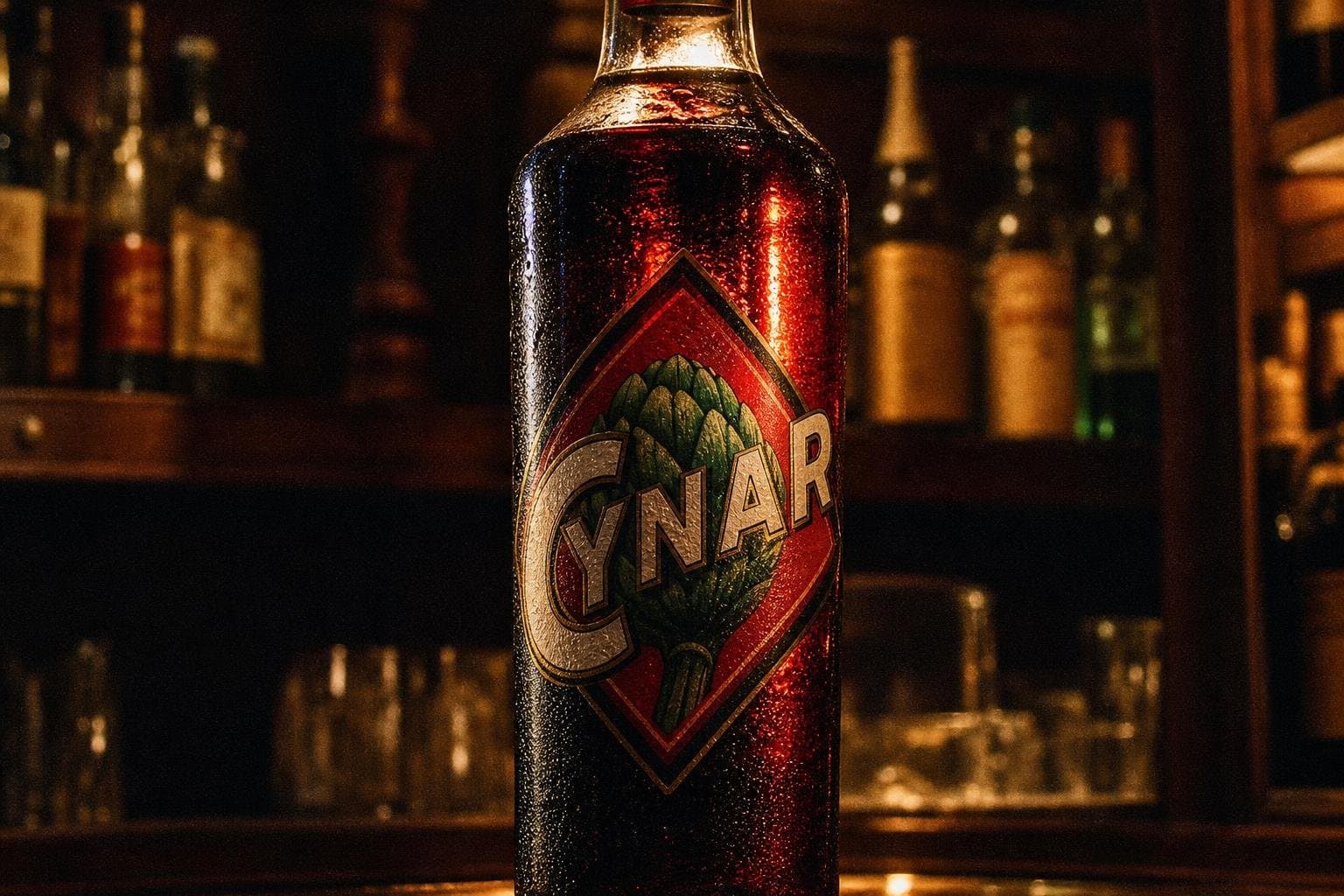

Tell someone there's a bitter liqueur made with artichoke and watch their face do the math. It sounds like a dare, not a drink. That reaction — equal parts curiosity and suspicion — is probably the single biggest obstacle Cynar has faced in its decades on the back bar, and it's also the most misunderstood thing about it. The artichoke isn't a gimmick. It's the whole reason the drink works, and it's also the reason most people never bother to find out.
The Name Does the Opposite of What It Should
Cynar takes its name directly from Cynara scolymus, the botanical name for artichoke, and the brand has leaned on that association from the start, making it the drink's most recognizable identity marker (Licorea). The problem is that naming a liqueur after a vegetable sets an expectation the drink doesn't meet. Nobody pours a glass expecting steamed vegetables, but the name plants the idea anyway, and it takes actual tasting to dislodge it.
In the glass, what you actually get is herbal, earthy, moderately sweet, with a bitterness that lingers without turning harsh — closer in architecture to other amari built from the Asteraceae family (artichoke, cardoon, and related plants long used in Italian infusions and digestive traditions) than to anything resembling a crudité platter (Licorea). That's a liqueur built on a genuinely old European habit: taking the bitter, unglamorous parts of plants — roots, leaves, the stuff nobody wants on the dinner plate — and turning them into something you drink on purpose. Aperol never had to clear that hurdle. Its name doesn't promise a vegetable. Cynar's does, and then spends every sip trying to walk it back.
A Digestif Culture Doesn't Export the Way an Aperitivo Does
Cynar's development sits in the broader 20th-century wave of Italian producers turning regional herbal-liqueur traditions into commercial aperitifs and digestifs, a period that gave Italy a crowded shelf of amari with overlapping but distinct identities. Within that history, Cynar settled into a specific role: an after-meal pour, tied to cafés and traditional bars rather than the pre-dinner spritz moment (Licorea).
That placement matters more than the flavor profile does. Aperol built its global footprint on a single, infinitely repeatable ritual — Aperol, prosecco, soda, served cold on a patio before anyone's hungry. It's a drink with a built-in occasion and almost no learning curve. Cynar's natural habitat is the opposite moment: slower, later, after the plates are cleared, consumed by people who already know what they want. A digestif culture doesn't travel the way an aperitivo culture does, because the aperitivo is social and expandable — more people, more rounds, more bars copying the formula — while the digestif is a private, settled decision. You don't build a global spritz craze out of a nightcap.
Bartenders Found It Anyway, Just Not Through a Spritz
What's actually changed is that cocktail bars, rather than casual drinkers, have been the ones pulling Cynar back into circulation, prizing it for the vegetal depth and bittersweet balance it brings to cocktails without overwhelming them (Licorea). That's the correct entry point for a liqueur like this. Amari in general are having a moment as cocktail-recipe ingredients rather than straight pours — see the current crop of amaro-built nightcaps showing up on menus, built the way a bartender in Memphis recently constructed a mezcal-and-amaro riff on the Espresso Martini, pairing a bittersweet amaro base against something smoky and sweet to land a specific, composed effect rather than a crowd-pleasing refresher (Imbibe). That's the register Cynar belongs in: a component that rewards a bartender's attention, not a spritz base that rewards volume.
The lesson isn't that Cynar lost some marketing war to Aperol. It's that the two were never competing in the same category to begin with, and expecting one to mimic the other's crossover was always a category error. Aperol won the patio. Cynar is still quietly winning the back bar, one well-built cocktail at a time, and it never needed a rebrand to do it — just bartenders willing to pour past the name.