


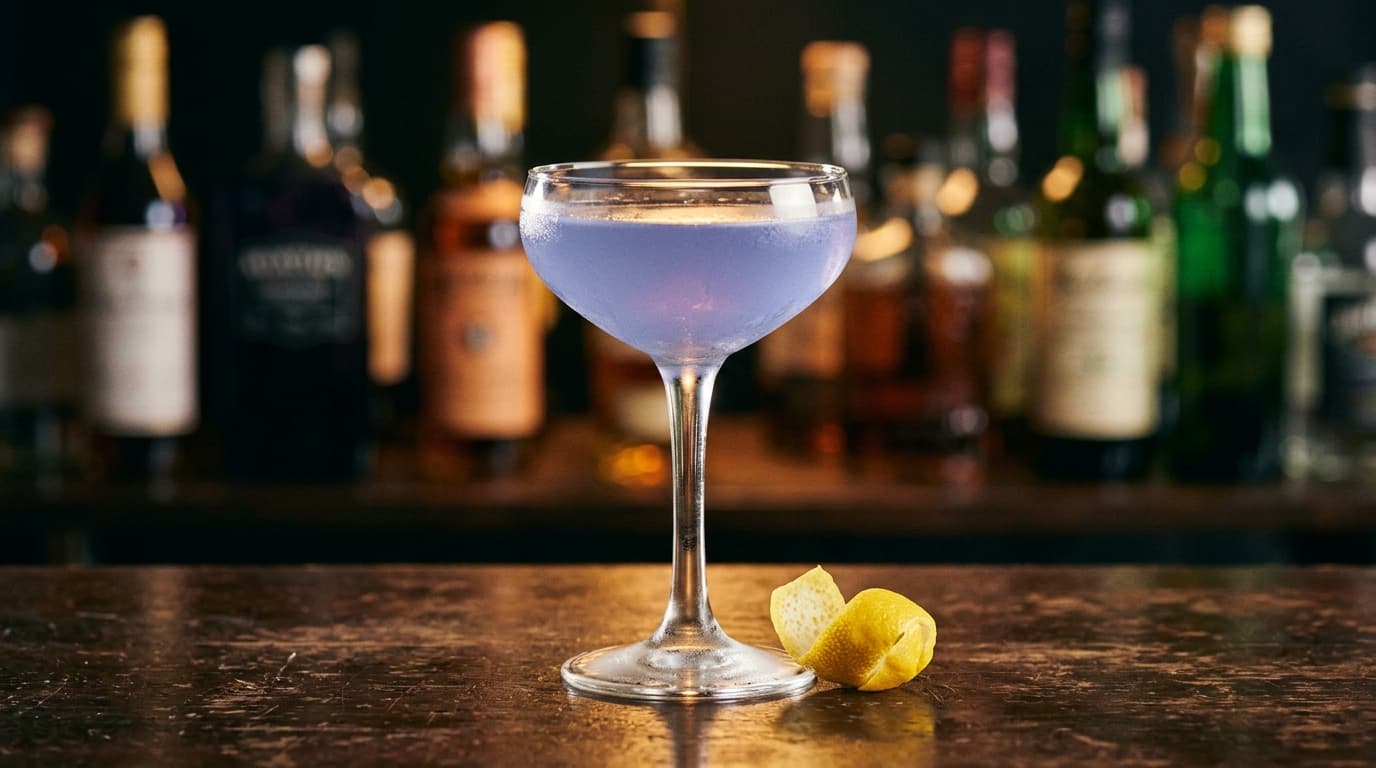

It matters more than most bars will admit.
The Aviation Had Two Violet Liqueurs, and They Are Not the Same Thing
Hugo Ensslin's 1916 recipe — the one that started this whole argument — called for crème de violette. But the liqueur that actually appeared in American vintage cocktail books for decades wasn't crème de violette. It was Crème Yvette, a French liqueur made from violet petals, berries, vanilla, and spices. Loungerati's coverage of the Yvette revival notes that Yvette shows up in David Embury's The Fine Art of Mixing Drinks and other canonical texts as the essential Aviation modifier — not a generic violet liqueur, but this specific one.
Crème Yvette went out of production in 1969. Crème de violette, the category it nominally belongs to, was barely available in the U.S. for most of the late twentieth century either. The result: by the time the cocktail revival started excavating classic recipes, bartenders were working from books that called for something that didn't exist, substituting something that was also nearly impossible to find, and calling the result authentic.
The distinction matters because Yvette isn't just violet. The berry and vanilla components give it a rounder, more complex profile than a straight floral liqueur. A crème de violette-based Aviation is sharper, more perfumed, more likely to tip into soap if you're even slightly heavy-handed. Neither is wrong. They're different drinks wearing the same name.
What the Bartenders Actually Did When Violette Vanished
The Institute for Alcoholic Experimentation's deep dive traces something revealing: by the time of the 1930 Savoy Cocktail Book and the 1937 Café Royal Cocktail Book, crème de violette had already been dropped from Aviation recipes. The ingredient didn't just disappear from shelves — it disappeared from the recipe itself, quietly, as if it had never been there.
This is how cocktail history actually works. It's not a clean narrative of loss and rediscovery. It's a series of pragmatic edits made by working bartenders who couldn't get an ingredient and adjusted accordingly, followed by later generations treating those adjusted recipes as the original. The violet-free Aviation became canonical not because anyone decided it was better, but because it was buildable.
The irony is that the "restored" Aviation — with violet liqueur added back — is itself a reconstruction based on a recipe that predates the version most people learned from. You're not drinking the classic. You're drinking the ur-classic, which is a different thing.
Build It Both Ways and Decide
Here's where I'll give you two recipes and let the glass settle the argument.
Aviation with Crème de Violette (Ensslin-adjacent)
- 2 oz London dry gin (Tanqueray or Plymouth)
- ¾ oz fresh lemon juice
- ½ oz maraschino liqueur (Luxardo)
- ¼ oz crème de violette (Rothman & Winter — widely available, specialty shops, ~$25)
Shake hard with ice, strain into a chilled coupe. No garnish required; the color is the garnish.
Aviation with Crème Yvette (the American bar tradition)
- 2 oz London dry gin (same)
- ¾ oz fresh lemon juice
- ½ oz maraschino liqueur (Luxardo)
- ¼ oz Crème Yvette (Cooper Spirits International brought it back; specialty shop or online, ~$35–40)
Same build. Different drink. The Yvette version is warmer, less aggressively floral, and more forgiving if your lemon is slightly tired.
Sidebar: Rothman & Winter is the most reliably stocked crème de violette in the U.S. and the one most bartenders reach for. Giffard makes a solid version that's easier to find in Europe. Crème Yvette is still in production but distribution is spottier — Wine-Searcher is your friend. Do not substitute crème de cassis, crème de mûre, or any other berry liqueur and call it close. It isn't.
The Verdict
The Aviation is not one cocktail. It's a family of related drinks that share a name and a structure but diverge at the modifier. The violet-free version that dominated the mid-century is its own valid thing — a gin sour with maraschino, clean and sharp. The violet versions are richer, more historically layered, and considerably more likely to divide a room.
My preference: Yvette, when I can get it. The vanilla and berry round out what can otherwise be a one-note floral note. But the more important point is this — if your bar is making Aviations and doesn't know the difference between these two liqueurs, they're not making a considered choice. They're just making whatever's on the shelf and calling it classic.
That's not excavation. That's decoration.