


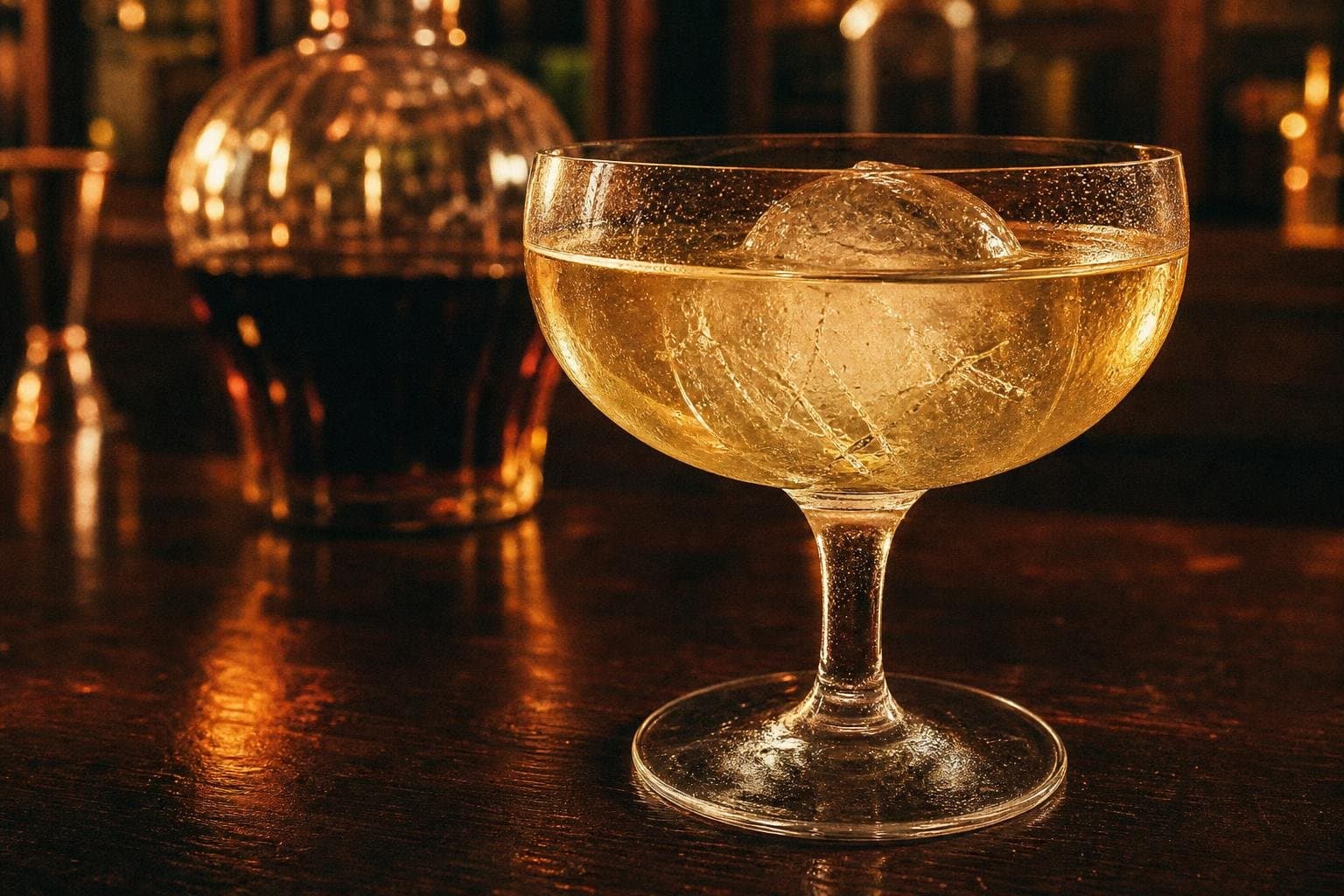

The clarified milk punch trend has a branding problem. Every bar that adds one to the menu frames it as innovation — a feat of culinary technique, a conversation piece, a sign that this is a serious program. What they're less eager to mention: Benjamin Franklin was making it in 1763.
That's not a fun fact. That's an indictment.
What Clarified Milk Punch Actually Is
The technique is simple and counterintuitive. You combine spirit, citrus, sugar, and spice with milk, let the acid curdle the milk proteins, then strain the whole mess through the resulting curds. What comes out is clear, shelf-stable, and silky — the proteins strip out tannins and harsh edges, the fat carries aromatics, and the result is something that tastes more integrated than the sum of its parts.
Saveur's recent piece on Franklin's recipe frames it plainly: milk punch "solved a practical problem — how to make a punch that could keep on a shelf and travel." That was the point. Shelf stability. Portability. It was logistics, not gastronomy.
The modern bar world rediscovered this and called it molecular mixology.
Why the History Matters
-
The technique predates the cocktail itself. Franklin's documented recipe is from 1763. Jerry Thomas's Bar-Tenders Guide — the foundational American cocktail text — wasn't published until 1862. Clarified milk punch isn't a cocktail technique. It's a punch technique that cocktail culture absorbed and rebranded.
-
"Clarified" is doing a lot of marketing work. The word implies a modern refinement. The process is identical to what 18th-century hosts were doing to make punch presentable and portable. The only innovation is the atomizer and the Instagram caption.
-
The "culinary technique" framing obscures a democratic history. This wasn't a professional bartender's trick. Franklin made it at home. It was a domestic skill, widely practiced, then forgotten — which is exactly the kind of history this publication exists to recover.
What the Craft Era Got Right (and Wrong) About Reviving Old Techniques
Imbibe's retrospective on the past 20 years of cocktail influence makes a useful distinction: the best revivals didn't just resurrect old recipes, they interrogated them. Jeffrey Morgenthaler's Amaretto Sour reboot worked because he identified what was broken — too sweet, no backbone — and fixed it with cask-proof bourbon and egg white. The drink got better. The technique served the drink.
Clarified milk punch revivals often run the opposite direction. The technique is the point. The drink is the vehicle. You end up with a clarified Negroni or a clarified Jungle Bird that's technically impressive and experientially... fine. Smooth. Interesting once. The kind of thing you order to understand it, not to drink it again.
The test worth applying: does the clarification make this drink better, or does it make it different? Those aren't the same thing.
If You're Going to Make One, Here's What Actually Matters
- Spirit selection is load-bearing. Brandy and rum are the historical base spirits for a reason — they have enough body to survive the straining process without going thin. Vodka-based clarified punches are technically possible and texturally pointless.
- Citrus type changes the curd. Lemon produces a finer, more complete curd than lime. Better curd means cleaner straining means clearer result. This is not a minor variable.
- Strain twice. Once through the curd, once through a fine-mesh or cheesecloth. The second pass is what separates a genuinely clear result from a merely pale one.
- It keeps. This is the feature, not the footnote. A properly made clarified punch refrigerated in a sealed bottle holds for weeks. Make a batch. Give it as a gift. Franklin did.
The Honest Version of This Trend
Clarified milk punch deserves its place on serious menus. The technique produces genuinely beautiful drinks when applied with intention. But the framing — as innovation, as modernity, as evidence of a bar's seriousness — is backwards. It's evidence of a bar's reading. The serious move is acknowledging that a Founding Father beat you to it by 260 years and then making something worth the wait.
The punch that travels well is the one that's honest about where it came from.