



There's a bar in Philadelphia where the staff will tell you, with visible pride, that they have Chartreuse when nobody else does. According to the Inquirer, Sassafras has been quietly stockpiling cases of both Green and Yellow for years — buying in bulk when allocations arrive, maintaining contacts inside the Pennsylvania Liquor Control Board, doing the homework to find out which vendor holds which portfolio. A search of the PLCB's Fine Wine and Good Spirits site shows no bottles in stock at all. Sassafras has six cocktails on their menu that use it.
That's one version of the story. The other version is that a bar is sitting on inventory while the rest of the market goes dry, and calling it curation.
I wrote about Chartreuse's scarcity strategy last June and argued that the monks' 2021 production cap was as much a brand move as a logistical one. The mystique deepens as the supply dwindles — that's not a coincidence, it's a feature. What I didn't spend enough time on was what happens downstream of that strategy, at the bar level, where the scarcity gets absorbed and then redistributed according to who has the right contacts and the capital to buy in bulk.
The Allocation System Rewards Insiders by Design
The mechanics here matter. The Inquirer's reporting on Philadelphia's situation is a useful case study because Pennsylvania's state-controlled liquor system makes the dynamics unusually visible. The PLCB allocates Chartreuse directly to bars and restaurants — not to retail shelves — and only to those who buy in bulk. There's no warning when a shipment arrives. No regular supply schedule. You need contacts, and you need to be ready to move when the call comes.
This is a system that structurally advantages established, well-capitalized bars with existing distributor relationships. A new program trying to build a Chartreuse-forward menu has almost no path in. A fifty-year-old institution with a partner who knows the right vendor rep can stock up four cases at a time.
The result is a two-tier market. Some bars have it; most don't. The ones that have it know they have something others can't get, and that knowledge shapes how they talk about it, how they price it, and — sometimes — how they ration it. The scarcity that started in the Chartreuse Mountains gets amplified at every node in the supply chain until it lands as a kind of cultural gatekeeping at the bar level.
What Gets Lost When the Bottle Becomes a Trophy
Chartreuse is genuinely remarkable. Made from 130 plants by Carthusian monks following a recipe drawn from an 18th-century manuscript, it has a complexity that most liqueurs don't approach. The Green is fierce and alpine; the Yellow is softer, honeyed, built around saffron. Both are load-bearing ingredients in serious cocktails — the Last Word, the Naked and Famous — not garnishes or gestures.
But when a bottle becomes a trophy, it stops being an ingredient. Bars that hoard Chartreuse and then feature it prominently on the menu as a signal of access are doing something subtly different from bars that use it because it makes the drink better. The former is about status. The latter is about flavor.
The craft cocktail movement built a lot of its identity around access to obscure, hard-to-find bottles — and Chartreuse became one of the clearest examples of how that ethos can curdle. What starts as genuine enthusiasm for a remarkable product becomes, over time, a mechanism for sorting insiders from outsiders. The bartender who knows how to get Chartreuse is demonstrating something about their network, not just their palate.
The Drink That Gets Caught in the Middle
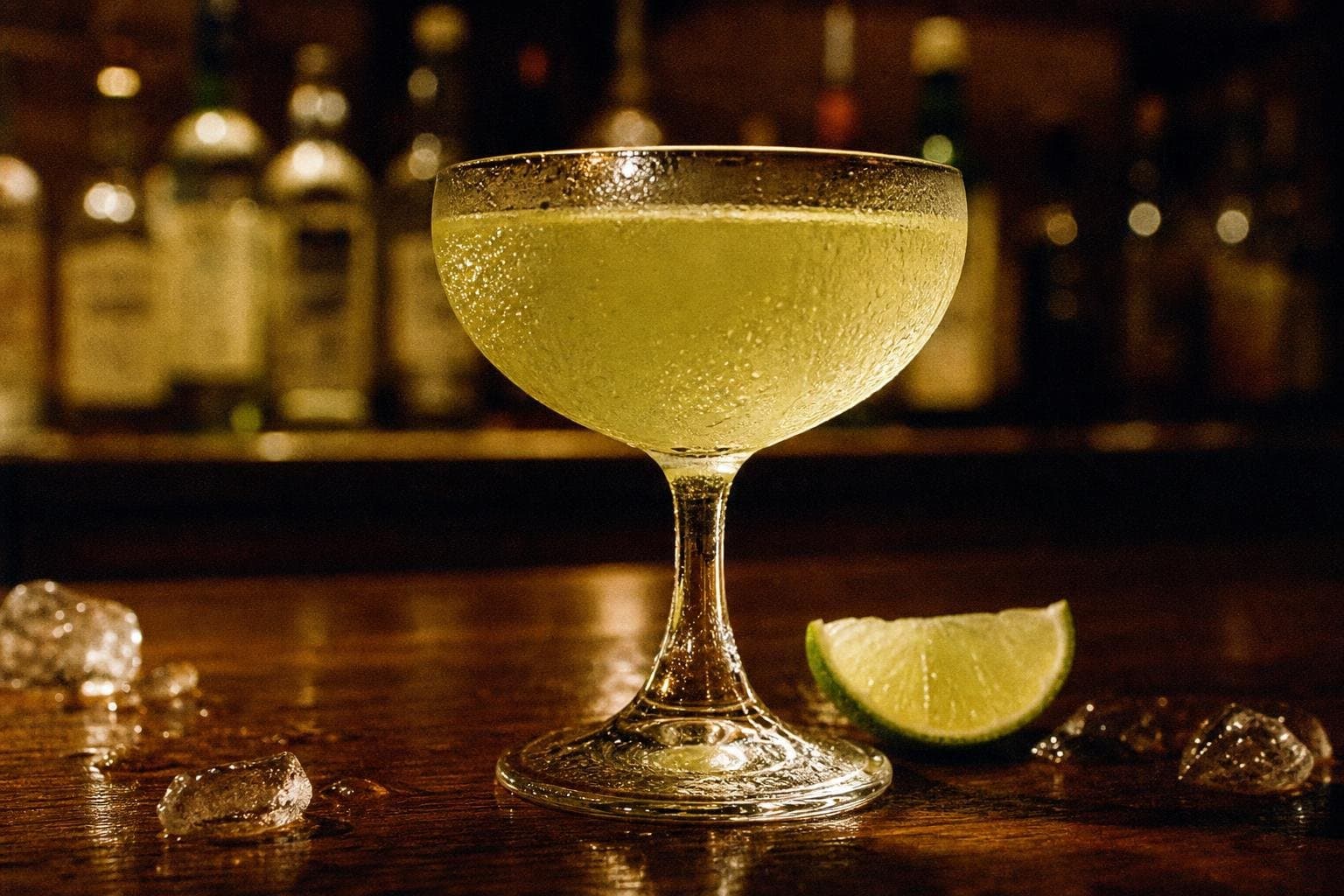
None of this is the drink's fault. A well-made Last Word — equal parts gin, Green Chartreuse, maraschino, and fresh lime — is one of the most balanced cocktails in the canon. The Naked and Famous, cited by the Inquirer as a Death & Co. classic, does something similar with Yellow Chartreuse and mezcal. These are drinks that earn their complexity. They're not vehicles for showing off a rare bottle; they're recipes where the Chartreuse is doing specific, irreplaceable work.
The problem is that scarcity has made it harder to evaluate Chartreuse on those terms. When a bottle is hard to get, every pour carries the weight of the acquisition story. The drink becomes secondary to the provenance.
Philadelphia's bars have found a partial workaround — the Inquirer reports that some have developed their own local interpretations of Chartreuse-style liqueurs, which is genuinely interesting and worth watching. If the monks' production cap holds, that kind of regional substitution may be where the more creative work happens anyway.
In the meantime: if your bar has Chartreuse and you're proud of how you got it, fine. Just make sure the drink is worth the story.