


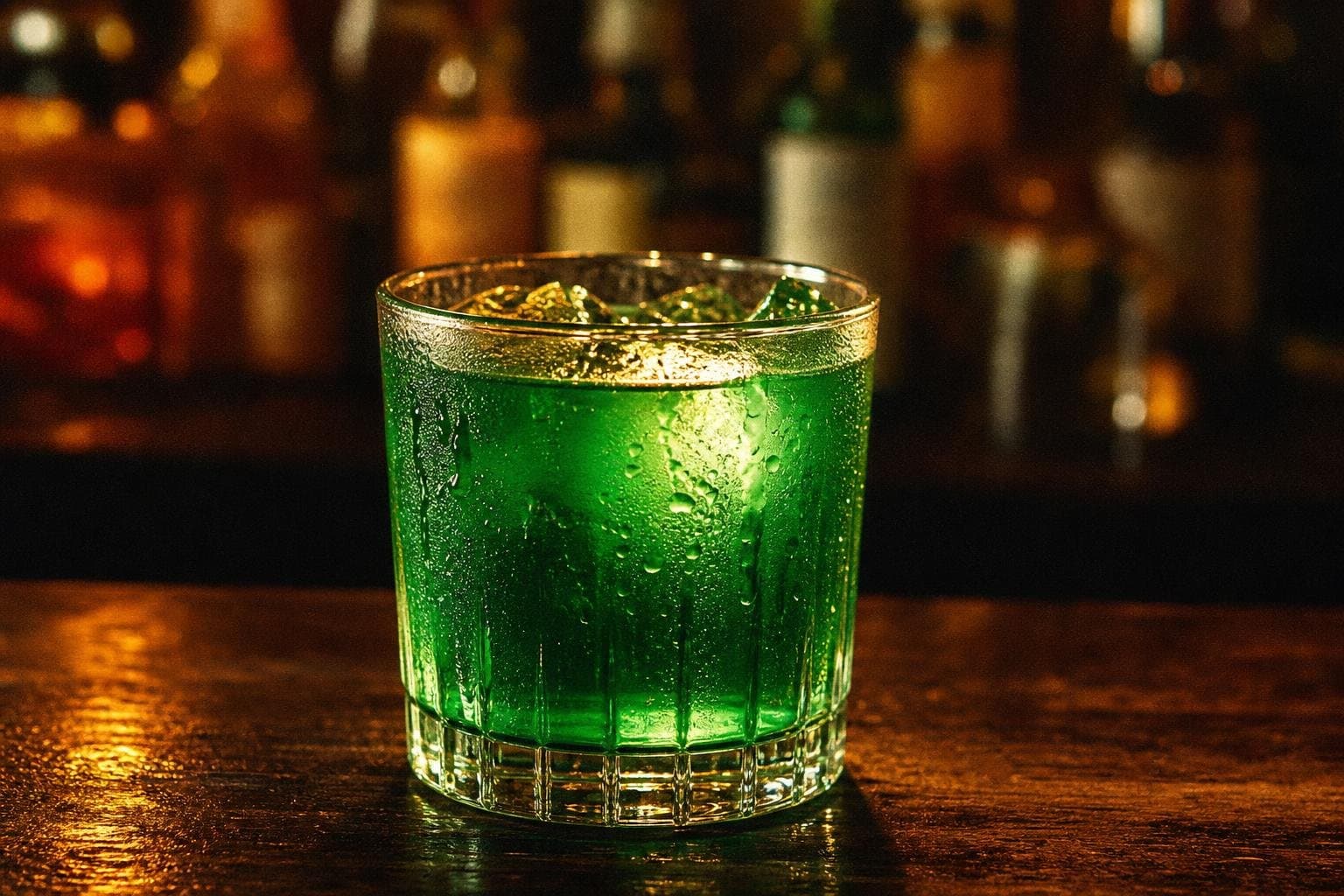

There's a bar in Philadelphia where the staff won't tell you how much Chartreuse they have left. They'll make you the drink. They just won't discuss inventory. According to the Philadelphia Inquirer, Sassafras — nearly fifty years in business in Old City — has been quietly stockpiling cases for years, because supply arrives without warning and the Pennsylvania Liquor Control Board has moved to allocate the spirit directly to bars and restaurants rather than retail shelves. A search of the PLCB's own site shows zero bottles available to the public.
That's not a supply chain problem. That's a liqueur that has become, functionally, a controlled substance.
The Production Cap Was a Choice, Not a Crisis
The monks didn't cap production because they ran out of alpine herbs. They capped it because they wanted to. Leland Little Auctions notes that the Carthusians made the deliberate decision to limit output — a choice that has since driven price surges worldwide and turned vintage bottles into auction-house inventory. The auction house recently offered sealed bottles it dates to the late 1930s or early 1940s, framing them as collectibles in their own right, distinct from the liquid's drinking value.
The BitterSweet blog traces the production history back to 1737, when the monks first bottled the Élixir Végétal for commercial sale — a preparation still made today, still at roughly 69% ABV. The commercial Green Chartreuse followed in 1764. That's nearly three centuries of uninterrupted production by the same religious order, through revolution, exile, and confiscation. The Carthusians have survived worse than demand spikes. The cap isn't existential — it's editorial.
What the cap does, practically, is transform a working ingredient into a status object. And the spirits world has a complicated relationship with that transformation.
When Scarcity Becomes the Product
The rare spirits auction market has been grappling with exactly this dynamic. RCA Auction's spirits expert Sebastian Renner has spoken publicly about the growing gap between "genuinely rare bottlings" and "short-lived hype" — the difference between something scarce because it's old and unrepeatable, versus something scarce because a producer decided to make it scarce. Chartreuse sits uncomfortably across that line. The antique bottles are genuinely rare. The current production is scarce by design.
The Foudre 147 release — a limited edition aged in the last active oak vat in the historic Voiron cellars, priced at roughly £386 including VAT through specialty importers — is the logical endpoint of this trajectory. It's a beautiful product, by all accounts: extended barrel aging, smoked-glass bottle, wooden label, the whole ceremony. It's also available only through specialty channels and typically sourced from Europe with a four-to-six week lead time. Whether you read that as artisanal scarcity or manufactured exclusivity depends on your tolerance for the monks' marketing instincts, which are, for a silent religious order, surprisingly sharp.
The Cocktail Bar Caught in the Middle
None of this is the bartender's fault, and the bartenders are the ones absorbing the friction. Sassafras's Neill Laughlin told the Inquirer that securing Chartreuse now requires cultivating contacts inside the PLCB, tracking which distributor holds which portfolio, and buying in bulk when a shipment arrives — with no advance notice of when that will be. He recently managed to obtain four cases each of Green and Yellow. That's not a purchasing strategy; it's foraging.
The drinks themselves remain worth the trouble. Green Chartreuse is one of the few liqueurs that genuinely can't be approximated — 130 botanicals, a recipe known in full by only two monks at any given time, a formula that has survived four centuries of political upheaval without ever leaving the order's control. The Last Word works because of it. The Naked and Famous works because of it. A dozen other cocktails that don't get enough credit work because of it. Yellow Chartreuse — milder, honeyed, saffron-forward — is a different animal that gets treated as a consolation prize and shouldn't be.
The problem isn't the liquid. The problem is what happens when a working ingredient becomes a collectible. Bars start hoarding. Prices climb. Home bartenders get priced out or simply can't find it. The cocktail culture that drove the revival — the craft movement, the pandemic home-bartending boom, the Tarantino bump that Times of Malta traced back to a single line in Death Proof — ends up being punished for its own enthusiasm.
The monks made a choice to limit what they produce. That's their right. But the next time someone romanticizes Chartreuse's scarcity as part of its mystique, it's worth asking: mystique for whom? The bar with four cases in the back and a contact at the PLCB is fine. The bar that opened last year and can't get on the allocation list is making a different cocktail menu.