


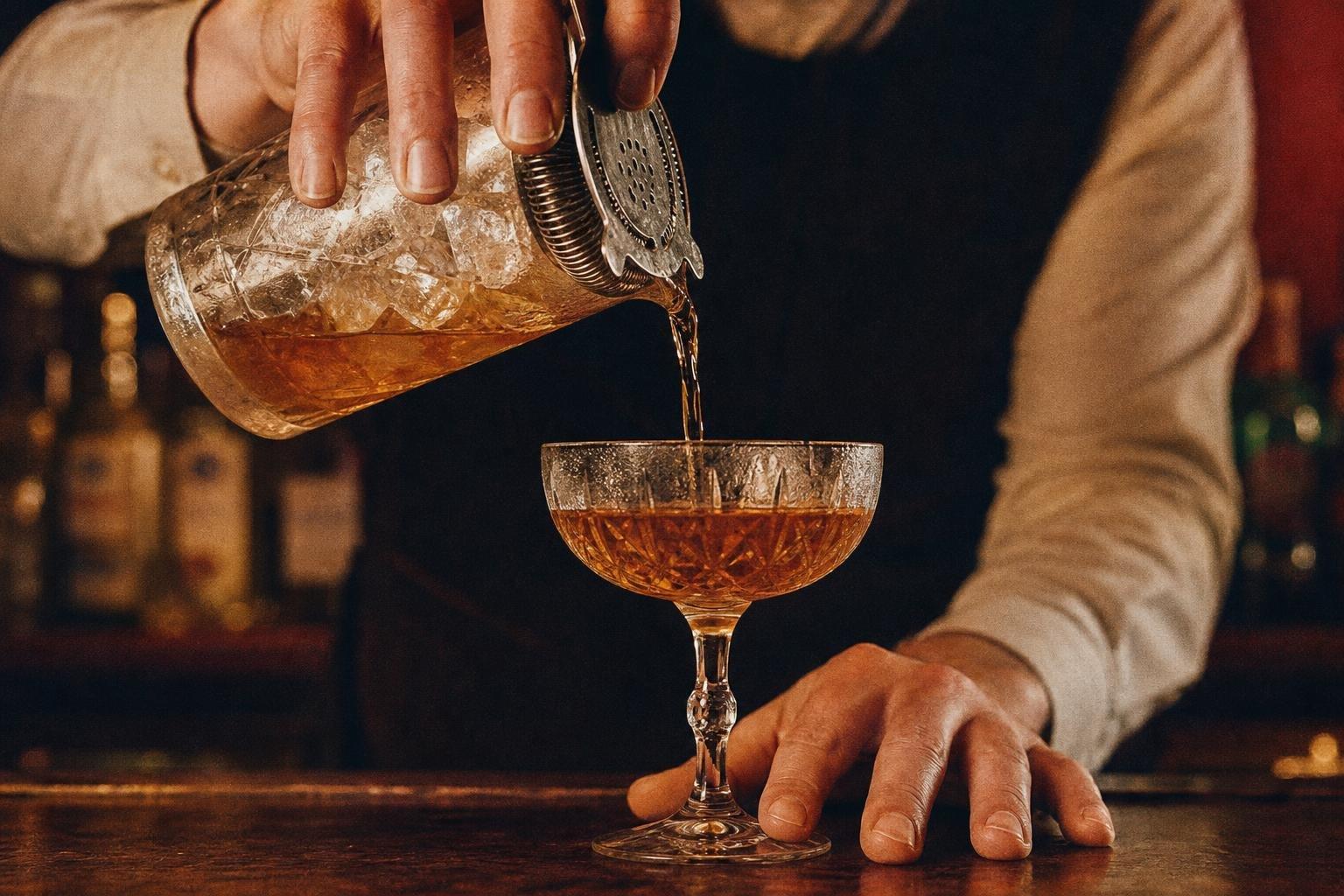

I wrote recently about how cocktail culture shed its early reverence — the sleeve garters, the Peychaud's lectures, the general sense that ordering a drink required a permission slip. Imbibe traced that shift well: vodka got welcomed back, bartenders stopped defining themselves by what they refused to serve, and a Louisville bar with real historical chops used its allocation of Pappy Van Winkle 15 to make $10 Jell-O shots just to prove it didn't take itself so damn seriously anymore. That's a good story. It's also incomplete, because the opposite correction is happening at the same time, and it's not actually looser — it's just louder.
The new seriousness wears a different costume. A recent survey of drink-prep theatrics — port tongs heated and snapped on bottles that don't need it, open flames, squirt-gun cooling agents, the works — lays out the same anxiety the Edison-bulb era had, just inverted. Instead of proving a drink is historically correct, bartenders are now proving it's an event. One commenter cited in the piece nailed the actual complaint: using port tongs, a technique meant for fragile vintage corks, on a standard modern bottle "shifts from a preservation technique to pure performance art" (via NYT coverage). Another just wanted their drink without the smoke show. That's not relaxation. That's reverence with a new object of worship — the camera, not the archive.
The craft that actually earned its place never needed either posture. Compare that to what Punch keeps quietly putting out: a Bénédictine guide built on the liqueur's genuine 1863 commercial recreation by Alexandre Le Grand and its real run through the Vieux Carré and the old "21" Club B&B (Punch), or a round of stirred tequila drinks that treat the spirit as something more than a Margarita delivery system (Punch). No squirt guns. No tongs. Just a liqueur and a spirit doing the work a drink is supposed to do: taste good, in balance, without a prop table.
The pendulum from "serious museum" to "serious spectacle" skipped right over the middle, which is where good bars actually live — technically sound, unbothered, and not performing for anyone. Watch which bars quietly drop the theater once the novelty stops drawing crowds. History says they always do.