



Cocktail culture keeps having the same argument with itself: how serious is too serious, how fun is too fun, and who gets to decide. This week's crop of trade coverage lands three data points on that argument at once, and none of them agree with each other.
1. The vodka amnesty finally went through. Imbibe's retrospective on two decades of bar culture traces how the early cocktail revival spent years treating vodka like contraband — a 2006 forum post from Tanqueray ambassador Angus Winchester compared it to "white paint," useful but beneath serious craft. By 2014, the industry had quietly reversed course, and "Vodka Pays the Bills" t-shirts became an inside joke at trade events. I'd call this less a renaissance than a correction. The original sin of the cocktail revival wasn't taking drinks seriously — it was confusing seriousness with gatekeeping. Vodka never stopped selling. Bartenders just stopped pretending that mattered less than their opinion of it.
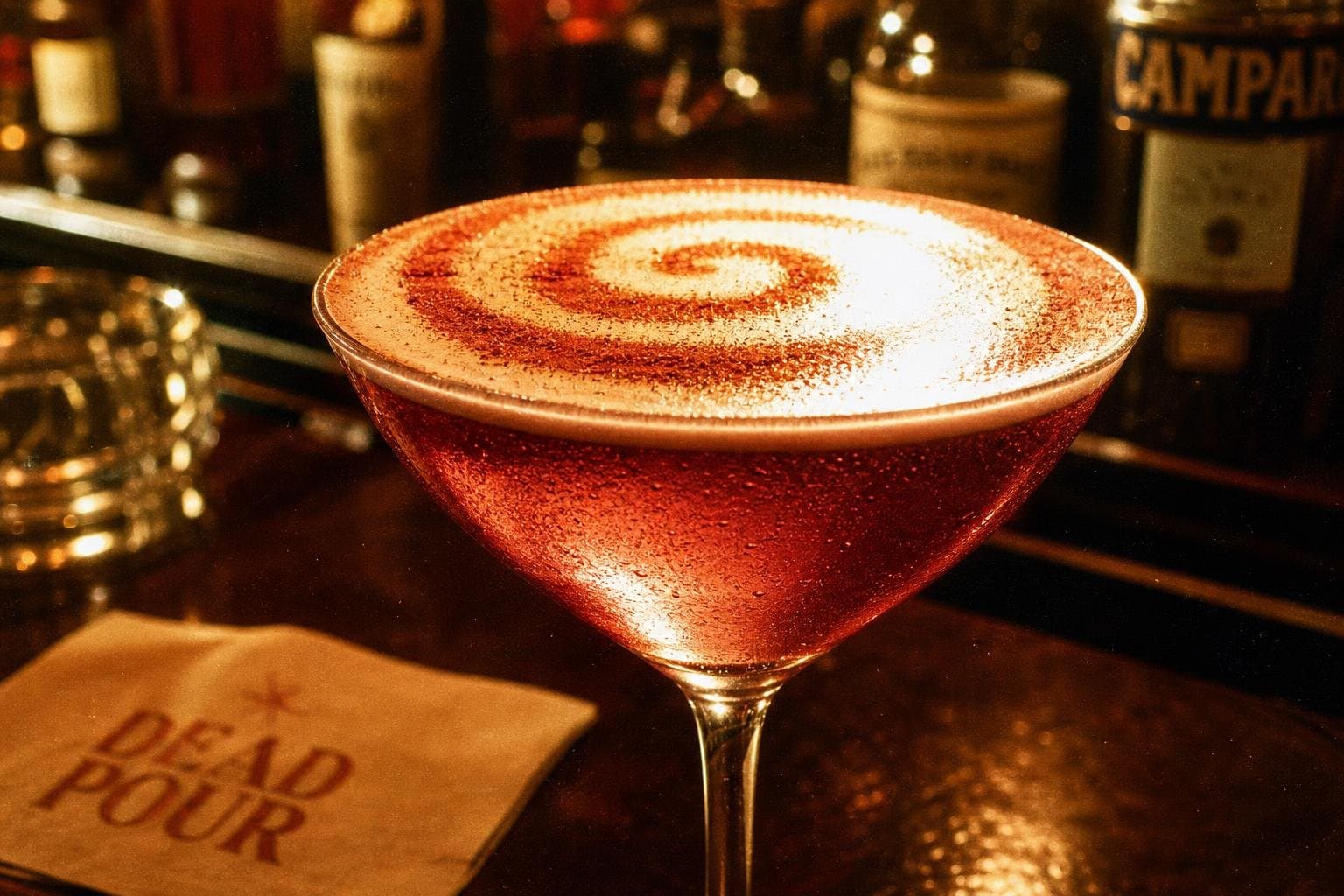
2. Bars rediscovered play, and the proof is a bucket of raspberry powder. Punch's writeup on Giacosa 1815 in Florence describes a garnish technique — layering colored powder onto a dry foam, then spinning the glass to fan it into a spiral — that bartender William Franci reportedly lifted from sand-art videos he saw on his day off. It's genuinely clever, and genuinely a garnish with zero flavor contribution. That's fine. Not every trick needs to be an excavation project. But it's worth noticing the contrast with item one: the industry that spent a decade rehabilitating vodka's reputation as a "serious" base spirit is now happily spinning dyed sand onto a Negroni riff for the Instagram reaction shot. Both things can be true. Craft and spectacle aren't enemies. They're just rarely the same skill.
3. Fewer people are actually in the room for any of this. The sober-curious shift isn't a vibe, it's a measured decline. Beverage Information Group's 2026-27 trends report cites a Gallup poll showing the share of Americans who drink alcohol at all sitting at 54% for a second straight year — the lowest figure in Gallup's tracking since 1939. The same report notes that among people who do drink, the average weekly count has fallen to 3.2 drinks, down from roughly 3.9 over the prior five years of surveying. Put those two trend lines next to the garnish spiral and the vodka t-shirts and you get a strange picture: the bar world is having its most playful, least self-serious decade in twenty years, for an audience that's shrinking and drinking less when it shows up. The spiral garnish and the NA 'Rita are, weirdly, products of the same moment.
4. The old guard keeps proving the bench holds up without the theater. Punch's Bénédictine roundup is a reminder that a 1510 monastery liqueur — reconstructed and commercialized by Alexandre Le Grand in 1863, per the liqueur's own disputed history — never needed the Edison-bulb era to earn its keep in a Vieux Carré or a Manhattan. It just needed someone to keep pouring it.
What to watch: Imbibe's November/December anniversary issue marks the magazine's 20th year with a retrospective angle on the industry's own mythology — including another look back at the fun-versus-serious pendulum. Twenty years is long enough for an industry to start writing its own history before it's finished living it. Worth noticing which version sticks.
The lesson here isn't that fun won or moderation won. It's that both are happening in the same bars, often to the same customer, and nobody's written the drink list that accounts for it yet.