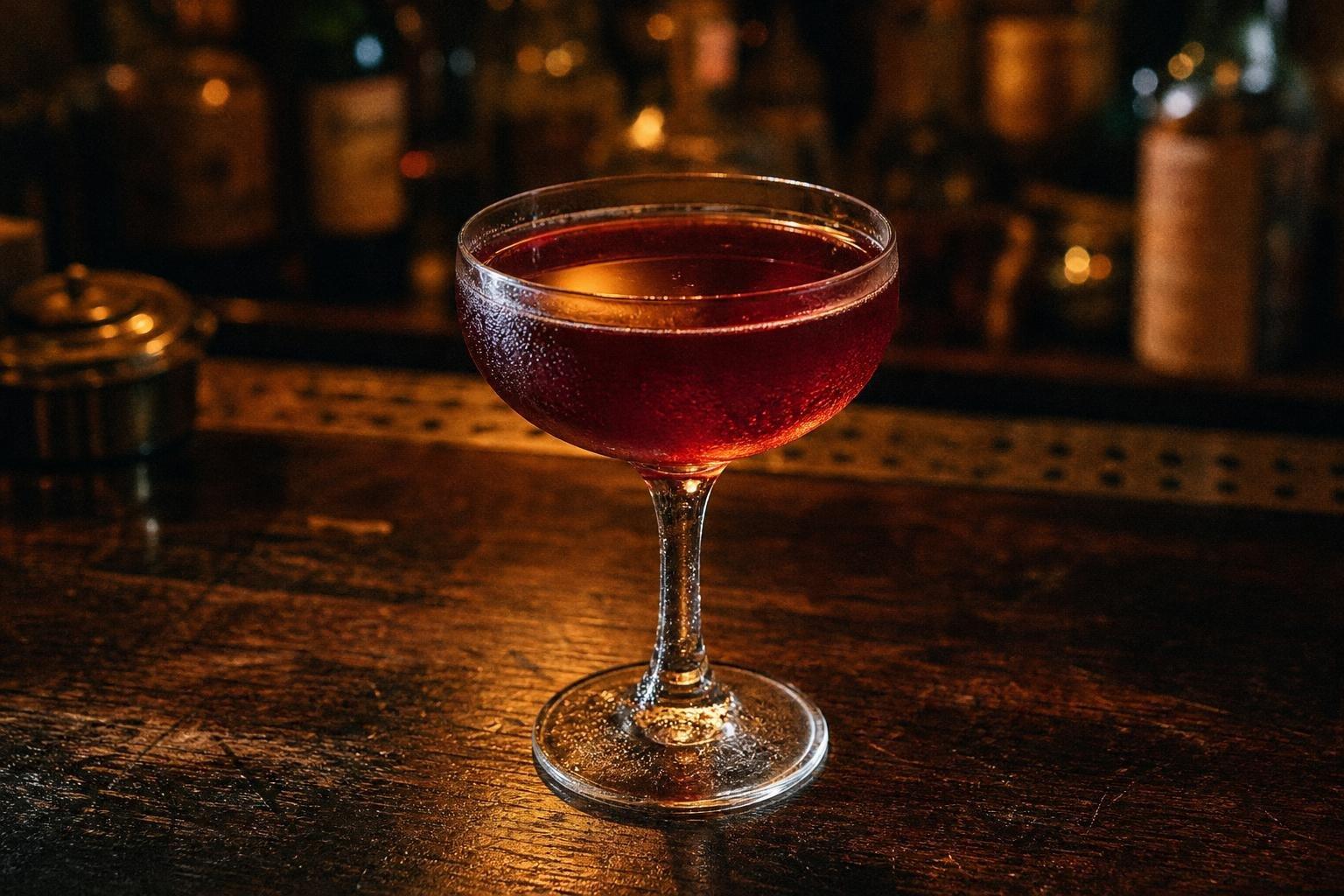

Ask a bartender to name America's original spirit and you'll get bourbon nine times out of ten. Ask a historian and you might get a different answer. Colonists were freezing hard cider into something stronger a full century before anyone in Kentucky had figured out what to do with surplus corn. The spirit was applejack, and its disappearance from the modern back bar has less to do with quality and more to do with what happens when a product category stops explaining itself.
The Jacking Process Was a Workaround, Not an Invention
Here's the part that gets flattened in every retelling: applejack wasn't distilled, originally. It was concentrated. Colonists left barrels of hard cider outside through the winter, let the water freeze, and skimmed off the ice — leaving behind a smaller volume of stronger, boozier liquid. This technique, called "jacking," goes back to the 17th century, well before anyone was running a proper still on this side of the Atlantic, according to Britannica. It's a crude method. You're not purifying anything, just removing water and concentrating whatever was already in the cider — including some of the less pleasant byproducts that true distillation leaves behind. Modern licensed producers don't use it anymore; what's sold as applejack today is apple brandy made by fermenting cider and running it through an actual still, usually followed by oak aging, per Sourland Spirits. That's an important distinction for anyone shopping by label: the "jack" in applejack describes a 17th-century farmhouse technique that no commercial bottle on shelves today actually uses.
William Laird, a New Jersey resident, started producing his own version of the spirit in 1698, and his company is generally credited as the first licensed commercial distillery in the United States, a claim that traces back to Britannica. Worth separating here: Laird didn't invent applejack. Freeze-concentrated cider was a widespread colonial practice, something households up and down New England and New Jersey were already doing in their own yards. What Laird did was commercialize and license it first — a meaningful distinction, and one the historical record actually supports, unlike a lot of cocktail lore. The oft-repeated detail that George Washington personally requested Laird's recipe belongs in a different category. It's the kind of specific, flattering anecdote that tends to originate from a company's own promotional materials rather than a contemporaneous document, and it should be read with the same skepticism that a sourcing review of nine other cocktail legends applies to stories like the Manhattan's supposed Jennie Jerome origin or the Sazerac's Antoine Peychaud creation myth — charming stories that don't hold up well against the paper trail, as laid out by Food & Drink Life. None of that erases Laird's real, documented role as an early commercial producer. It just means the Washington anecdote belongs in the folklore column, not the footnote column.
Still in Business Doesn't Mean Easy to Find
The company Laird founded is still operating today, per Britannica — which matters, because "applejack disappeared" and "applejack is out of production" are not the same claim, and conflating them is how a spirit gets written off twice. What actually happened is distribution contraction, not discontinuation. Modern applejack bottles vary enormously in what's actually in the glass: some are straight apple brandy aged several years with real baked-apple and caramel character, while others are blends of apple brandy cut with neutral grain spirit, a distinction that only shows up if you read the label carefully, according to Sourland Spirits. That blended category is the one doing the most damage to applejack's reputation. A cheap, mostly-neutral "applejack" tastes like a weak suggestion of apple, and it's the version most casual drinkers have actually encountered, if they've encountered the category at all.
Calvados, the French cousin, offers a useful contrast in how regulation protects a category from exactly this kind of dilution. Calvados AOC rules split into tiers — the broad AOC designation, the more restrictive Pays d'Auge requiring double pot distillation, and Domfrontais with its higher pear content — and that tiered system is precisely why Calvados at a given price point tends to deliver what the label promises, per Liquor Geeks. Applejack has no equivalent appellation system. There's no legal floor under what "applejack" has to contain, which means the bottle that built a reputation for the whole category a century ago now shares shelf space with versions that would have embarrassed the original. If you're shopping for either, check the proof and the label copy before the name on the front — a true aged apple brandy and a neutral-cut applejack can sit next to each other at the same specialty spirits shop and tell you nothing about which is which just by the word on the label.
The Drinks That Kept the Category Alive
Applejack's cocktail footprint is small but real, and it survived almost entirely through a handful of pre-Prohibition and early-20th-century recipes rather than any sustained bar-menu presence. The Jack Rose — apple brandy, lemon or lime juice, grenadine — is the best known, a classic dating to the early 1900s, along with the Widow's Kiss and the Corpse Reviver No. 1, both built around the same base spirit, as cataloged by Sourland Spirits. These are good drinks, not museum pieces. The Jack Rose in particular does something whiskey sours and daiquiris can't: it carries real orchard fruit without tipping into dessert territory, assuming you're using an honest apple brandy rather than the neutral-cut version.
More recent recipes have tried to put applejack in conversation with whiskey directly rather than substituting for it. The American Trilogy splits its base evenly between bonded applejack and rye, stirred as an Old Fashioned variation — baked apple and brown sugar up front, peppery rye underneath, with orange oil tying it together, according to DrinkLab. Sources agree the drink traces to Little Branch in New York in 2007, though credit for the exact recipe is split between a shared bar effort and a single bartender depending on which account you read — a small but telling instance of the same provenance murkiness that runs through almost every modern classic, per DrinkLab. It's a smart drink regardless of who gets the byline: putting applejack in equal proportion with rye, rather than as a minor flavoring note, forces the apple brandy to do real structural work instead of hiding behind citrus and grenadine.
Seasonal cocktail writing keeps circling back to apple spirits every autumn, usually pairing hot cider with Calvados rather than applejack proper — a hot toddy built on cider, Calvados, and a touch of Bénédictine shows up in recent bartender roundups as a go-to cold-weather drink, per VinePair. That's worth noting because it's a small tell about the category's reputation: when bartenders reach for an apple brandy cocktail, they reach for the French bottle first, even in an American magazine, even for an American-coded drink style. Calvados gets treated as the serious choice. Applejack gets treated as the nostalgic one.
Why Whiskey Ate Applejack's Lunch
The short version is regulatory prestige plus marketing consistency. Bourbon has Congressional recognition as a "distinctive product of the United States," a designation that gave the category a federal seal of authenticity that applejack never received, per Britannica. Bourbon also benefited from a century of consistent branding — Kentucky, charred oak, a single clear story repeated until it became national identity. Applejack never got that treatment. It's regional (New Jersey, New England), its production method shifted from folk practice to industrial distillation without anyone rewriting the story for consumers, and its modern bottlings range so widely in quality that newcomers can't trust the name on the label the way they can trust "Kentucky Straight Bourbon."
None of that is a quality problem. It's a storytelling and labeling problem, and those are exactly the kinds of problems that get fixed by curious drinkers who read labels and bartenders willing to put a real apple brandy next to a rye rather than treat it as a seasonal garnish. The spirit that outlasted actual Prohibition shouldn't lose to a shelf-stocking decision.


