



There's a Dutch tax ordinance from 1606 that names genever explicitly — a regulated commercial product, already widely sold, already generating enough revenue to be worth taxing. By the time English soldiers were drinking it in the Low Countries during the Thirty Years' War, the spirit was already a generation old. The English didn't discover genever. They inherited it, brought it home, and then spent the next three centuries slowly replacing it with something else entirely.
That replacement is the story. And it's worth understanding, because what got lost in the transition wasn't just a style — it was a whole philosophy of what a grain spirit could be.
The English Took the Name and Left the Character Behind
When William of Orange's accession cut off England's French brandy supply, Parliament loosened distilling laws to encourage domestic production. Some 1,500 stills sprang up in London, and what they were making bore the name "geneva" — a corruption of genever, the Dutch original. But the resemblance ended there. The Dutch spirit was malt-wine based, aged, botanically complex, closer in spirit to a flavored whiskey than anything we'd recognize as gin today. What London's dramshops were selling was raw grain spirit with juniper thrown at it. Cheap, harsh, and wildly popular for all the wrong reasons.
The Gin Acts eventually brought the craze under control, but the damage to genever's identity was done. The English had taken the name, stripped the character, and built an entirely different tradition around it. By the time London Dry emerged as a category in the 19th century — cleaner, drier, juniper-forward, built on neutral spirit — it had essentially nothing in common with the Dutch original except the botanical anchor. And London Dry was what crossed the Atlantic.
America Got the Simplified Version
American cocktail culture inherited London Dry as its default. The classic canon — Martinis, Gimlets, Tom Collins — was built around a spirit that's essentially a blank canvas with juniper. That's not a criticism; London Dry's neutrality is precisely what makes it so useful in a shaker. But it meant that genever, with its malty weight and herbal complexity, never got a foothold in the American bar.
This matters more than it sounds. Several of the drinks that defined the pre-Prohibition American bar were almost certainly built on genever or something closer to it than modern London Dry. The Difford's Guide entry on the Algonquin and other period classics gestures at how different the ingredient base was — rye, vermouth, bitters, spirits with actual flavor and weight. Early gin cocktails would have had that same weight. When bartenders revived those recipes in the craft era, they reached for what was on the shelf: London Dry. The drinks came out thinner than the originals, and nobody quite knew why.
The craft cocktail renaissance documented by Imbibe was genuinely rigorous about historical recovery — bringing back the Last Word, the Jungle Bird, the Brooklyn — but it largely worked within the London Dry paradigm. Genever remained a curiosity, something bars stocked to explain to customers rather than to actually use.
The Identity Problem Is Structural
Here's what makes genever's American situation different from, say, crème de violette's: violette disappeared from production and came back. Genever never left. It's still made in the Netherlands and Belgium, still available at specialty shops in most major American cities, still produced by houses with centuries of history behind them. I've written about this before — the distribution problem is real, but it's not the whole story.
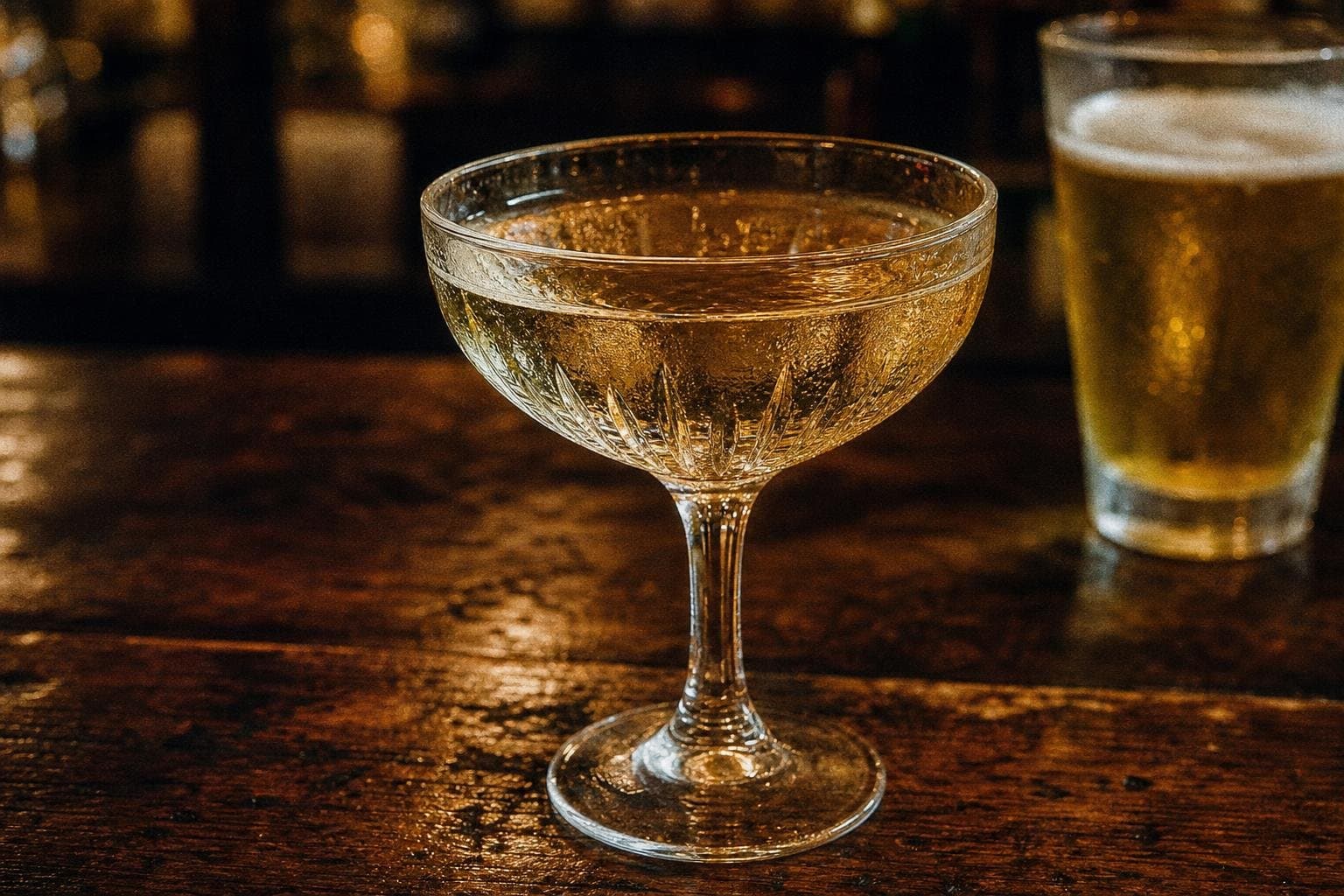
The deeper problem is categorical. Bars that stock genever file it next to gin, which is where customers expect to find it, and where it makes no sense. It drinks nothing like London Dry. It's heavier, maltier, less botanical-forward. Ordering it in a Martini and expecting a Martini is a reliable way to be confused. The spirit needs its own context — the Dutch tradition of drinking it neat, cold, alongside a beer; the older cocktail recipes that were built around its weight rather than despite it.
What London Dry won in America wasn't a competition. There was never a competition. Genever simply didn't have a distribution network, a marketing apparatus, or a category identity that made sense to American drinkers. London Dry did. The result looks like a defeat, but it was more like an absence.
The drinks that would benefit most from genever — anything with aged character, weight, and botanical complexity — are sitting in the canon right now, being made with the wrong spirit. That's not a trend problem. It's a sourcing problem with a straightforward solution, if you can find the bottle.
(Genever is still in production — not out of print. Look for Bols Genever or Rutte at specialty spirits shops; expect to pay roughly $30–45 and plan on calling ahead.)