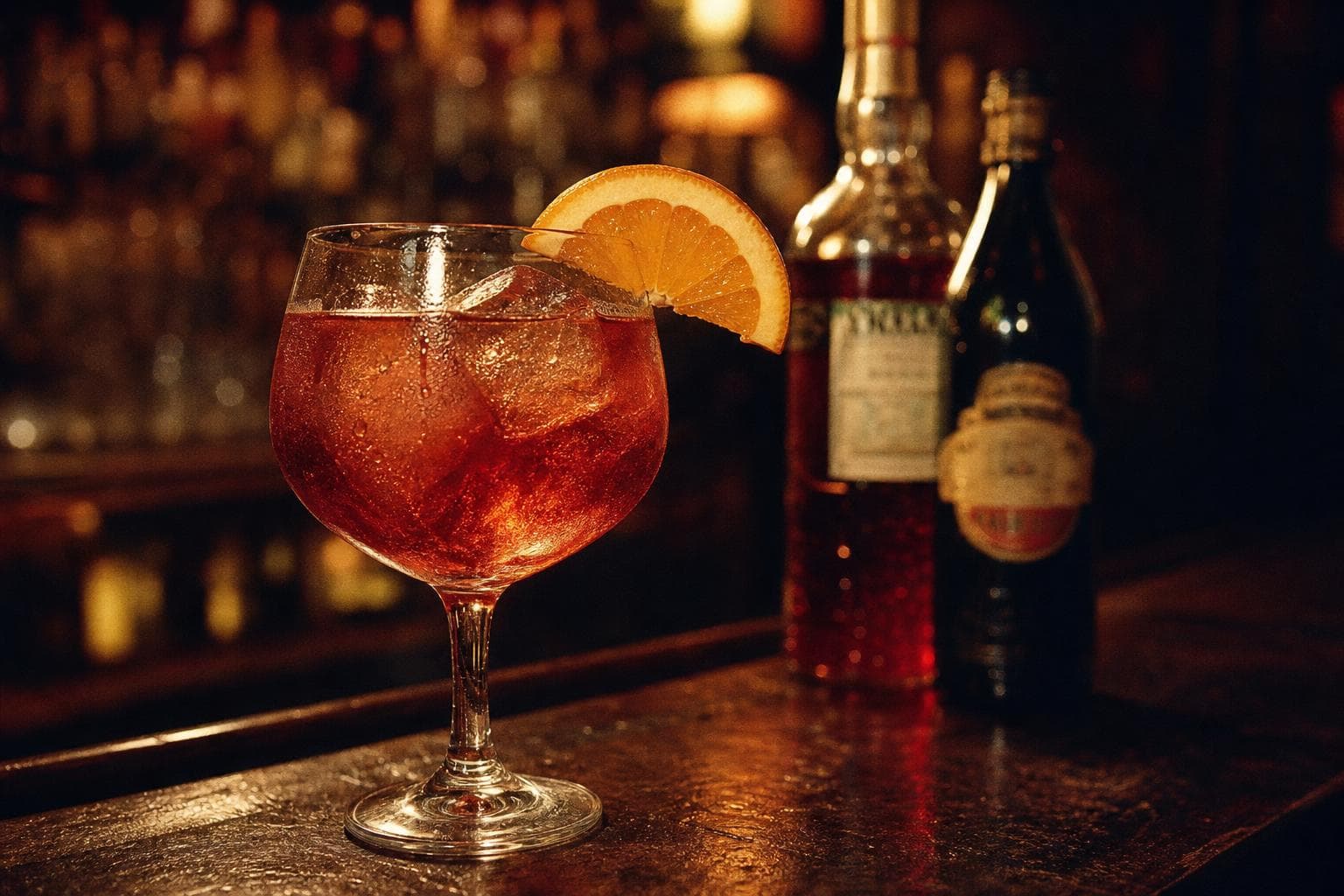

There's a bar in the East Village that almost didn't exist. In 2011, Ravi DeRossi and Sother Teague opened Amor y Amargo as a six-month pop-up — a bitters-and-amari concept they figured would run its course and close. It didn't close. It became a permanent brick-and-mortar and, according to VinePair's coverage, is now recognized as the first bar in the United States dedicated to bitters and amaro. A concept that was supposed to last half a year has been pouring for over a decade and is credited with sparking an industry-wide trend.
That story contains everything you need to understand the amaro moment: the category didn't explode because marketers decided it should. It exploded because bartenders were already drinking it, already building menus around it, already treating it as the most interesting shelf in the room. The Instagram darling narrative gets the causality backwards.
The Category That Was Always There, Waiting
Amaro — the Italian word for "bitter" — is less a single spirit than a philosophy of production. Herbs, roots, citrus peel, bark, flowers, and botanicals macerated in a base spirit, sweetened, aged in some cases, bottled at varying strengths. The category runs from the approachable (Aperol, Campari) to the genuinely challenging (Fernet-Branca, Braulio) to the obscure (regional Italian digestifs that barely leave their home province). What unites them is bitterness as a feature rather than a flaw.
That bitterness is precisely why amaro spent decades in the grandmother's cabinet. American palates, trained on sweet cocktails and sweeter sodas, didn't know what to do with a spirit that tasted like medicine and meant it. The category existed in the U.S. — Italian-American communities kept it alive — but it existed on the margins. Fernet-Branca arrived in the United States with a major wave of Italian immigration in the late 1800s, according to SevenFifty Daily's coverage citing Edoardo Branca of Branca USA. For most of the twentieth century, it stayed in that immigrant-community context, a taste memory rather than a trend.
What changed wasn't the product. The product is the same. What changed was the audience — specifically, the professional bartenders who started drinking Fernet as an end-of-shift ritual and discovered, in the process, that bitterness was a flavor worth building around.
The Bartender's Handshake Built the Category
The mechanism by which amaro crossed over from digestif curiosity to cocktail-bar staple is worth examining carefully, because it wasn't advertising. Campari's art history is genuinely interesting — the brand has a long tradition of commissioning serious poster art — but Campari didn't teach American bartenders to love amaro. Bartenders taught each other.
The Fernet-Branca story is instructive. SevenFifty Daily describes the spirit as "the unofficial industry drink," known as the "bartender's handshake" for its role as a communal end-of-shift ritual. Nick Kosevich of Earl Giles Drinks Emporium in Minneapolis puts it plainly: "You don't order fernet to relax; you order it to close the loop on a night. You don't debate it, you just pour it, and move on together."
That's not a marketing story. That's a trade culture story. Fernet became the handshake because it was the drink that separated people who worked in bars from people who drank in them. It was a shibboleth. And because bartenders are the primary vector through which new spirits reach consumers — they recommend, they build menus, they explain — the amaro category got a distribution network that no ad campaign could have purchased.
Amor y Amargo formalized what was already happening informally. The bar became known for being the first spot dedicated to bitters and amaro in the U.S., a focus that sparked an industry-wide trend that many others continue to follow. The significance isn't just the bar itself — it's the proof of concept. A bar could be built entirely around bitter spirits and survive. More than survive: become celebrated.
Once that proof existed, the category had permission to expand.
What "Explosion" Actually Means (and What It Doesn't)
Here's where the trend narrative requires some skepticism. The amaro explosion is real, but it's been uneven in ways that matter.
The accessible end of the category — Aperol, Campari, the Spritz-friendly bottles — genuinely went mainstream. The Aperol Spritz became the drink of the 2010s in a way that no one predicted and that the brand's marketing team probably still can't fully explain. That's a real cultural moment. But it's also, in some ways, the least interesting part of the amaro story. Aperol at 11% ABV, served over ice with Prosecco and soda, is barely a digestif. It's a gateway drug, not the destination.
The more interesting expansion happened at the other end: the genuinely bitter, genuinely complex amari that started appearing on serious cocktail menus. Cynar, the artichoke-based amaro that I wrote about in a previous issue, went from obscure Italian import to back-bar staple at craft cocktail bars. Averna, Nonino, Montenegro — bottles that had been gathering dust in Italian specialty shops started moving. And the category began attracting American producers who wanted to make their own versions, using local botanicals and regional flavor profiles.
The non-alcoholic category has been watching this closely. St. Agrestis's Phony Negroni — built around the Negroni's Campari-bitter profile — sold one million bottles in 2023, two million in 2024, and reached 2.6 million in 2025, according to The Food Stack's reporting on The Wine Group's acquisition. A non-alcoholic product that mimics the flavor profile of an amaro-based cocktail scaling to that volume tells you something about how deeply the bitter-aperitivo flavor profile has penetrated American consumer taste. The Wine Group — the second-largest wine supplier in the United States — acquired St. Agrestis's non-alcoholic portfolio because they saw structural demand, not a fad.
That's a meaningful data point. But it also illustrates the risk in the "explosion" framing: when a flavor profile becomes popular enough to anchor a non-alcoholic product line, it has crossed from bartender culture into mass-market territory. That's not inherently bad, but it changes what the category means.
The Authenticity Problem the Category Can't Escape
Every amaro that makes it onto a mainstream menu carries a story, and most of those stories have been polished by marketing departments. This is the part where the grandmother's cabinet framing becomes a liability rather than an asset.
The origin myths of Italian amari are genuinely murky. Many brands claim centuries of history, secret recipes, monastic origins. Some of those claims have documentary support. Many don't. SevenFifty Daily notes that Fernet-Branca's origins trace to herbalist Bernardino Branca, who developed the formula in response to a cholera epidemic in Milan in the mid-1800s — but that account comes from the brand's own family history, via a sixth-generation family member. That doesn't make it false, but it means the story has been curated. The Oxford Companion to Spirits & Cocktails, cited in the same piece, calls fernet "an ill-defined style of Italian bitter digestive." That's the honest framing.
The problem compounds when American craft producers enter the category. A domestic amaro made with Pacific Northwest botanicals and aged in bourbon barrels is a legitimate and often interesting product. But when it's marketed with the same "ancient tradition" language as an Italian regional digestif, something dishonest is happening. The category's authenticity appeal — the sense that you're drinking something real, something that predates cocktail trends — is being borrowed by products that don't have that history.
This is the amaro explosion's central tension: the very qualities that made the category interesting to bartenders (depth, complexity, genuine bitterness, historical weight) are the qualities that get flattened when the category scales. The Aperol Spritz is a fine drink. It is not what Sother Teague was thinking about when he opened a bar dedicated to bitters.
What Survives the Trend Cycle
The useful question isn't whether amaro is overhyped — it is, in places — but which parts of the category will outlast the hype.
The answer, I'd argue, is the same as it always is: the stuff that was good before anyone was paying attention. Fernet-Branca survived decades of American indifference because it's genuinely useful — as a digestif, as a bartender's ritual, as a cocktail modifier that adds depth without sweetness. Cynar survived because nothing else tastes quite like it. Campari survived because the Negroni is a perfect drink and Campari is load-bearing in that structure.
The amari that will still be on serious back bars in twenty years are the ones that earn their place by being irreplaceable in a recipe, not by being photogenic in a Spritz.
Build This: The Bicicletta — the drink that proves Campari doesn't need a trend
2 oz dry white wine (something crisp and unoaked — Pinot Grigio works) 1 oz Campari (~$25, widely available) Splash of soda water Orange slice to garnish
Build in a wine glass over ice. Add white wine, then Campari, top with soda. Stir once. Garnish with orange.
This is the drink Italians were making before the Aperol Spritz existed, and it's better: drier, more bitter, more interesting. Campari at full strength rather than diluted into approachability. The white wine carries the acidity that soda water can't. It looks like nothing on Instagram. It tastes like the point.
On substitutions: If you want to explore the bitter end of the category without committing to a full bottle of Fernet, Cynar (
$25, specialty shops and some well-stocked liquor stores) is the more forgiving entry point — lower ABV, artichoke-forward bitterness that plays well with citrus. Averna ($30, widely available) is the gateway amaro for people who think they don't like amaro: caramel, citrus, herbs, with bitterness that arrives late and leaves clean.
The amaro explosion happened because bartenders were right about something. Bitterness is a flavor worth building around. The category has depth that most trend drinks don't. The grandmother's cabinet wasn't wrong — it was just waiting for the right audience.
The Instagram moment will pass. The Bicicletta will still be there.


