
Democrats just won a historic midterm sweep, and within hours the storyline wrote itself: relief in Kyiv, hope for restored aid, a check on Trump finally arriving. The Washington Post and New York Times both ran versions of this piece — officials in Kyiv cautiously hopeful, a possible shift in the war's trajectory now that Trump's party has been humbled at the ballot box.
It's a comforting story. It also skips over what actually happened 48 hours after the votes were counted.
The President Met With Putin's Envoy, Not Ukraine's
While Washington's editorial pages were drafting their "checks and balances restored" narratives, Trump sat down with Kirill Dmitriev — the sanctioned CEO of Russia's sovereign wealth fund and a top envoy for Vladimir Putin — and came out teasing what he called a "big, beautiful" European security deal. As CNN reported, Trump offered no specifics beyond insisting it would "involve more than Ukraine" and "might involve all of Europe." No Ukrainian officials were in the room.
Jared Kushner, Trump's son-in-law and co-envoy, posted the outline on X the same day, calling for a "broader European security architecture" built on "greater military transparency" and "reciprocal measures to reduce escalation risks" between Russia and Europe. What he didn't mention, as CNN's own reporting noted, was who invaded whom. European officials contacted about the plan told CNN they had no idea what Kushner or Trump were actually describing.
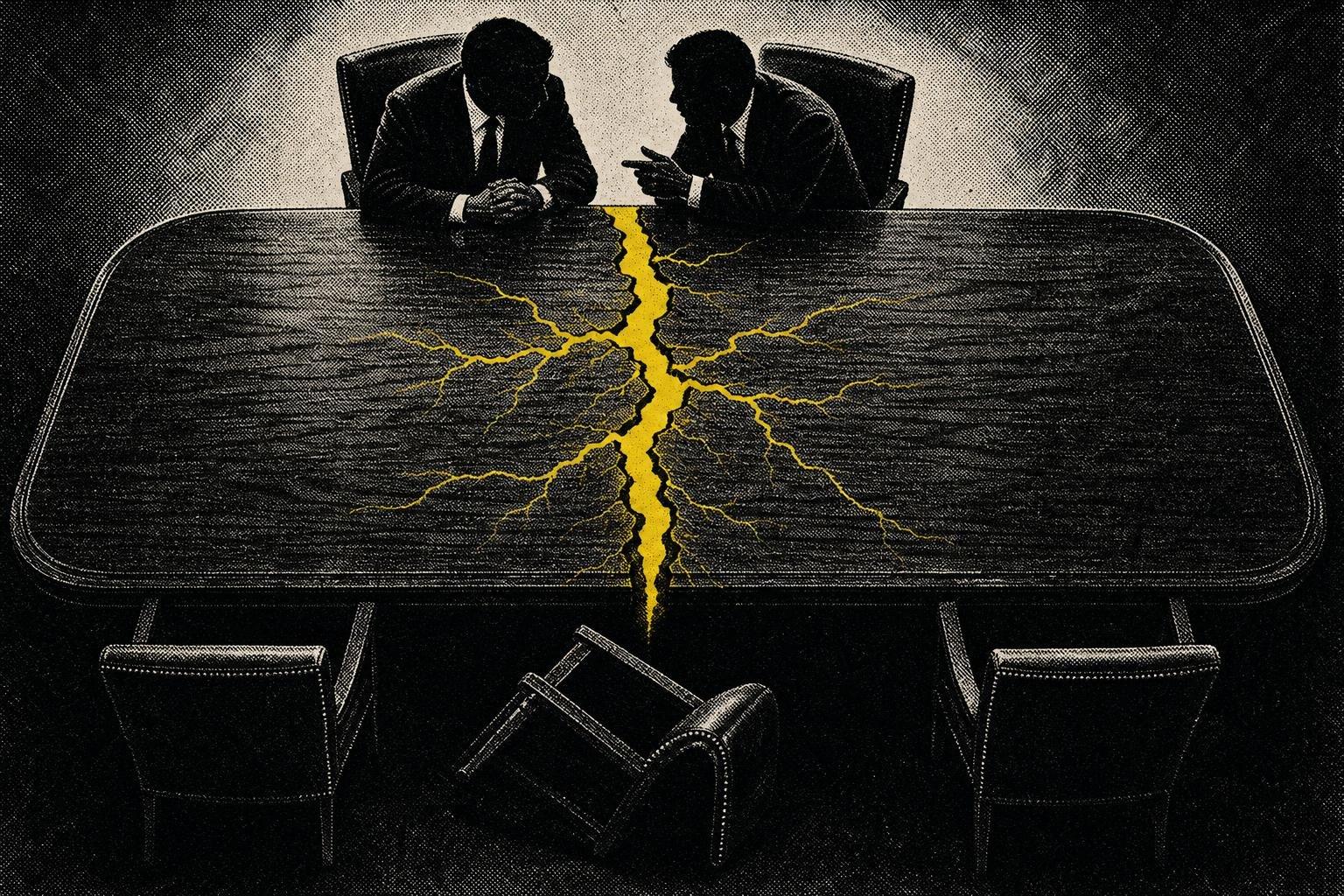
This is the detail the midterm-hope stories bury: the architecture of this war's endgame is being drafted by two real-estate guys and a sanctioned Russian financier, not by the incoming Democratic majority. Congress can hold hearings. It cannot un-invite itself from the fact that the executive branch negotiates foreign policy, and this executive has shown zero interest in including the people whose country is actually being fought over.
A Sweep in the House Doesn't Touch a War in the Black Sea
The second problem with the "relief is coming" framing is that it treats the war as a political variable in Washington rather than a shooting war still escalating on the ground. Attacks on commercial shipping off NATO members Romania and Bulgaria have surged in recent weeks — a string of drone strikes on cargo vessels that has killed crew members, sunk ships, and left dozens missing, according to a Reuters tally running from early October through late October. These aren't skirmishes at the front. They're strikes inside the territorial and economic waters of NATO member states, the exact scenario alliance planners spend decades trying to avoid.
None of that stopped when American voters went to the polls. The Associated Press reported Russia and Ukraine traded fresh airstrikes even as U.S. envoy Jared Kushner was publicly describing the renewed talks as "productive." Productive for whom is the part nobody in the optimism camp wants to sit with.
Who the "Deal" Actually Leaves Out
CNN dubbed the emerging framework the "Shell Bay format" — named, fittingly, for a golf-and-residential complex owned by envoy Steve Witkoff — and pointed out that months of talks across Miami, Abu Dhabi, Alaska, Istanbul, and Geneva have proven exactly one thing: Moscow wants its war goals satisfied before it ends the war. The next round is scheduled for Abu Dhabi, with Russia sending Vladimir Medinsky, a negotiator whose appointment many read as a signal the Kremlin wants to drag talks back to where they stood in May 2025.
Meanwhile, back in Washington, Democrats are reportedly bracing for what Politico described as an oversight pileup — the unglamorous, slow-moving machinery of subpoenas and committee hearings that the new majority inherits. That machinery can embarrass an administration. It has never once stopped one from cutting a deal with a foreign adversary.
So the "cautious hope" framing isn't wrong that Kyiv wants it to be true. It's wrong about the mechanism. Restoring Ukraine aid requires Congress to pass something and the president to sign it, or to override a veto — a heavier lift than a single House flip suggests, especially with a president who has shown he'd rather freelance a grand bargain with Putin's money men than wait on legislators he's already written off.
Watch Abu Dhabi next week. Watch whether Medinsky's delegation produces anything beyond another round of talking-points theater. And watch whether any actual Ukrainian official gets a seat at the table before the "big, beautiful" deal gets any bigger. That's the signal that matters — not who won in November.


