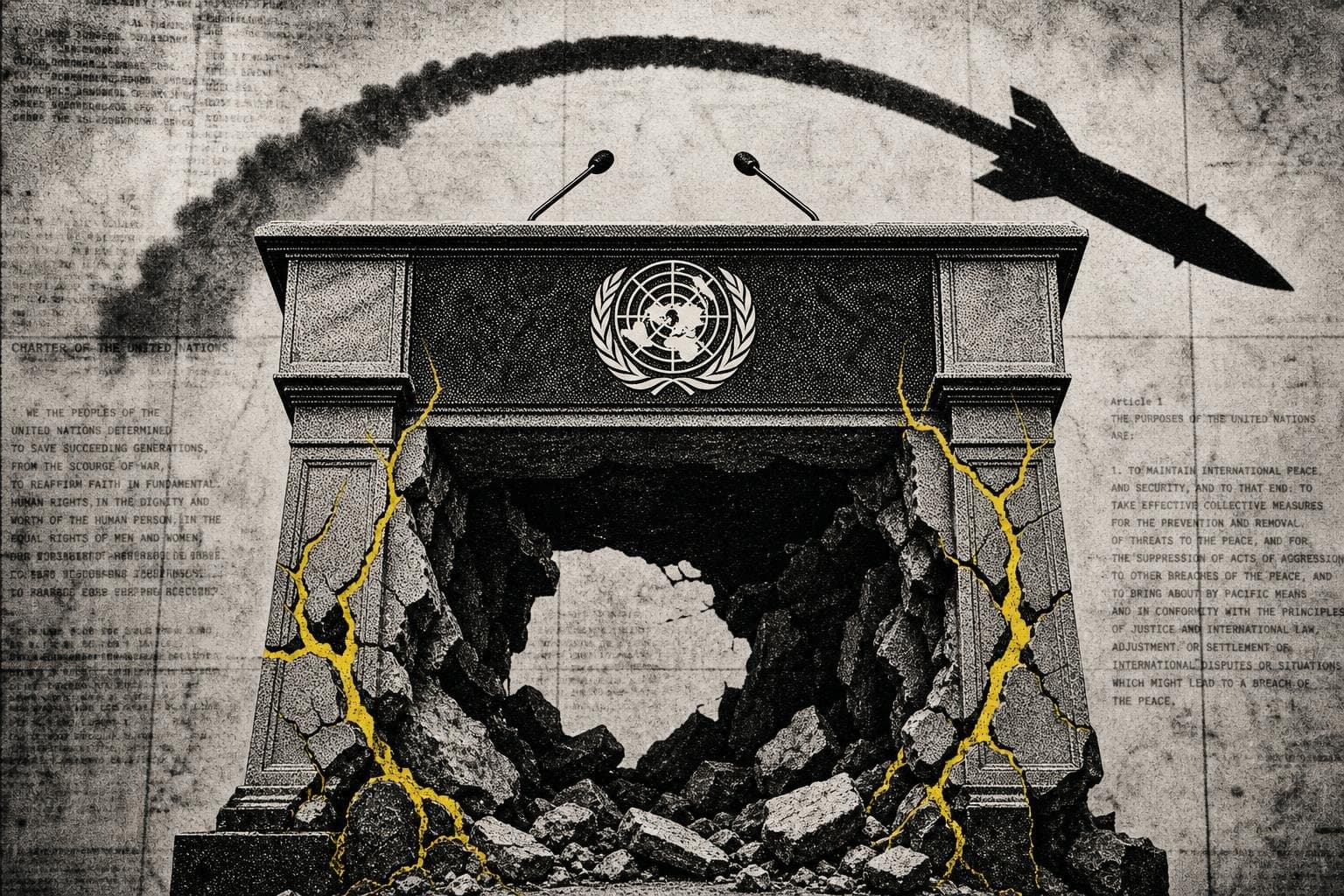

The envoys landed. The meetings were "substantive." Trump told reporters Putin "is wanting to make a deal." And then, hours after Jared Kushner and Steve Witkoff left Kyiv, Russia ended its three-day pause on strikes and killed five people in a new missile and drone barrage on the capital.
That sequence — diplomatic theater, warm words, resumed bombardment — is the whole story. But the mainstream media consensus has spent the week treating it as a genuine inflection point, debating whether Trump's renewed engagement represents a real shift in American foreign policy. The more honest read: Putin is running the same play he's run for four years, and Washington's envoys are providing him cover to do it.
The "Pause" Was Never a Concession
The conventional framing, visible across NYT Ukraine coverage and Washington Post analysis, treats Russia's brief halt to strikes during the Kyiv visit as a meaningful gesture — evidence that Moscow is at least willing to signal good faith. But consider what that "concession" actually cost Putin: nothing. He paused attacks on a city while American envoys were physically present in it, then resumed the moment they left. That's not diplomacy. That's stage management.
The same week, a Russian drone breached Moldovan airspace and delayed a plane carrying Zelensky to Norway. Moldova's U.S. ambassador told CNN the incursion was "likely not an accident." So while Kushner and Witkoff were describing their Moscow meetings as highlights they'd remember in retirement, Russia was probing NATO's eastern flank with surveillance drones and demonstrating that no airspace near Ukraine is truly safe.
The load-bearing assumption in the optimistic coverage is that Putin's participation in talks signals genuine interest in ending the war. The evidence on the ground suggests the opposite: he's interested in managing American attention while continuing to grind.
What 40,000 Troops a Month Actually Means
Here's the data point that keeps getting buried under the diplomatic headlines: Western intelligence agencies estimate Russia is losing roughly 40,000 troops per month. Read that again. That's not a typo, and it's not a Ukrainian propaganda figure — it's what Western intelligence is telling CNN.
A military absorbing those losses and still refusing to negotiate seriously is not a military looking for an exit. It's a military that has decided the cost is acceptable, or that the alternative — a negotiated settlement that doesn't deliver territorial gains — is worse than the bleeding. The mainstream consensus treats the peace talks as a process that might work if the right pressure is applied. But the casualty rate suggests Putin has already done the math and concluded he can outlast the pressure.
This is the assumption everyone glosses over: that Russia's willingness to sit across a table from American envoys reflects a genuine desire for resolution rather than a desire to manage the optics of the conflict while continuing to prosecute it. Those are very different things, and the diplomatic coverage consistently conflates them.
Witkoff's Retirement Comments Are the Tell
The Washington Post's war coverage and CNN's analysis both noted Witkoff's effusive, deferential comments to Putin — describing their meetings as something he'd cherish in retirement. The polite media framing is that this was "off-key." The less polite framing is that it reveals exactly how these envoys understand their role.
A negotiator who tells an adversary that meeting him is a career highlight has already surrendered the psychological leverage that makes negotiation possible. Putin has spent four years reading Western interlocutors. He knows the difference between someone who came to extract concessions and someone who came to be in the room. Witkoff's comments suggest the latter.
David Ignatius at the Washington Post framed the broader problem in a September 3rd column: a congressional war game set in 2028 found that a Ukraine stalemate creates the conditions for Russian adventurism against Moldova — and potentially a NATO confrontation. The scenario isn't hypothetical anymore. A Russian drone just violated Moldovan airspace this week.
The Real Question Nobody Is Asking
The media consensus frames this as a question of whether the Trump administration's Ukraine push is "real" — sincere versus performative. That's the wrong question. The right question is whether sincerity matters when the structural incentives haven't changed.
Putin is losing 40,000 soldiers a month and still bombing Kyiv the moment American envoys board their planes home. That's not the behavior of a leader who needs a deal. That's the behavior of a leader who needs the appearance of one — just enough to keep Washington engaged, European unity strained, and the pressure manageable.
The peace process isn't failing because Kushner and Witkoff aren't trying hard enough. It's failing because one party to the conflict has decided that the war, at its current cost, is preferable to any settlement on offer. Until that calculation changes — through military pressure, economic pain, or some shift in Russian domestic politics — no amount of shuttle diplomacy will move it. Watch whether the next round of strikes escalates or holds. That's Putin's actual answer to the peace push, and it's more honest than anything said in those Moscow meetings.


