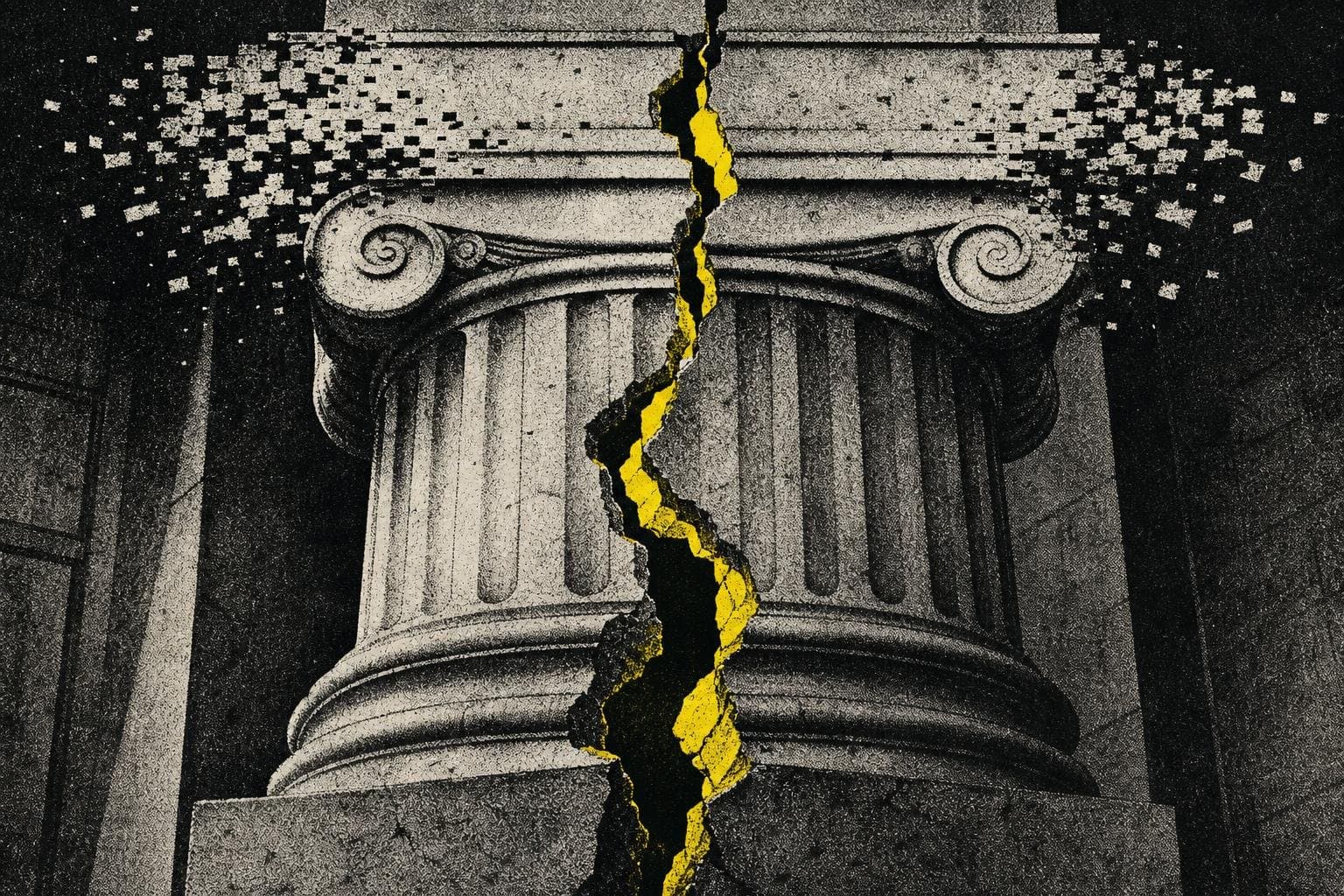

The Supreme Court's current term has been, by any measure, a stress test for American immigration law. And with the final rulings expected before the end of June, the mainstream consensus is settling into a familiar groove: the Court is either heroically checking executive overreach or shamefully enabling it, depending on which editorial board you read. Both framings miss what's actually happening.
The Court isn't resolving the immigration crisis. It's handing both sides just enough to keep fighting indefinitely.
The Detention Case Reveals Who Actually Wins These Rulings
Take the prolonged detention question the justices are currently weighing. Reuters reports that the administration appealed a lower court ruling finding that the Constitution's due process clause bars "unreasonably prolonged" detention without a hearing for non-citizens facing deportation after criminal convictions. The administration wants that protection gone.
Politico's summary of the Court's prior reasoning in a related case is instructive: the justices concluded that detention is "presumptively reasonable" for about six months while deportation is being arranged, but that detainees can seek release if they can show deportation isn't actually happening. That sounds like a compromise. In practice, it's a procedural maze that requires detained people — often without lawyers, often in remote facilities — to prove a negative about bureaucratic timelines.
The mainstream coverage frames this as a binary: either the Court protects immigrants or it doesn't. The more uncomfortable truth is that the Court has constructed a system where the right technically exists but the mechanism to exercise it is nearly inaccessible. That's not a protection. It's a paper protection, and there's a difference.
The Haiti TPS Emails Are the Story Everyone Is Underreading
The more revealing story this week is the internal DHS emails obtained by The New York Times. The documents suggest that when DHS moved to terminate Temporary Protected Status for more than 350,000 Haitians last year, it did so without obtaining the required input from the State Department — a consultation the law explicitly mandates before ending TPS based on conditions in a foreign country.
This matters for a reason that goes beyond the Haiti case. The TPS termination is now before the Supreme Court, with a ruling expected before the end of the month. Lawyers for the Haitians have taken the unusual step of asking the justices to dismiss the case and send it back to lower courts for further proceedings — presumably because the newly surfaced emails change the factual record underneath the legal question.
Here's what the consensus coverage is glossing over: if the Court rules before fully accounting for evidence that the administration may have skipped a legally required procedural step, it isn't just deciding the Haiti case. It's setting a precedent for how much procedural corner-cutting the executive branch can get away with in immigration enforcement. The ruling could affect roughly a million migrants from more than a dozen countries whose TPS the administration has sought to terminate, per the Times.
The editorial boards are debating whether TPS should exist at all. The more load-bearing question is whether the administration followed the law it was operating under. Those are not the same debate.
The Pattern the Term Reveals
Step back and look at what the NYT's Supreme Court tracker shows across this term: a Court that struck down Trump's sweeping tariffs in February, issued mixed rulings on voting rights and gerrymandering, and is now navigating immigration cases where the administration's procedural conduct is itself under scrutiny. The through-line isn't a Court that's uniformly pro-Trump or uniformly resistant. It's a Court that keeps issuing rulings narrow enough to require immediate follow-on litigation.
Meanwhile, on the ground, the Washington Post reported that Trump officials only agreed to resume asylum processing after a federal judge explicitly rebuked U.S. Citizenship and Immigration Services for not immediately complying with a court order finding the administration's policy unlawful. The administration's posture, consistently, is to comply minimally and only under direct judicial pressure.
That posture is the actual story. The Supreme Court can issue rulings, but if the implementing agencies treat compliance as optional until a judge shows up to enforce it, the rulings are only as strong as the enforcement capacity of the federal judiciary — which is finite, slow, and already overwhelmed.
The consensus wants a clean narrative: the Court as hero or villain, the administration winning or losing. What's actually unfolding is a system where legal rights exist on paper, procedural violations surface months after the fact, and the people most affected spend years in limbo while institutions argue about process.
Watch for the TPS ruling before June 30. Not for the headline outcome, but for whether the Court addresses the procedural record at all — or simply decides the case as if those emails don't exist.


