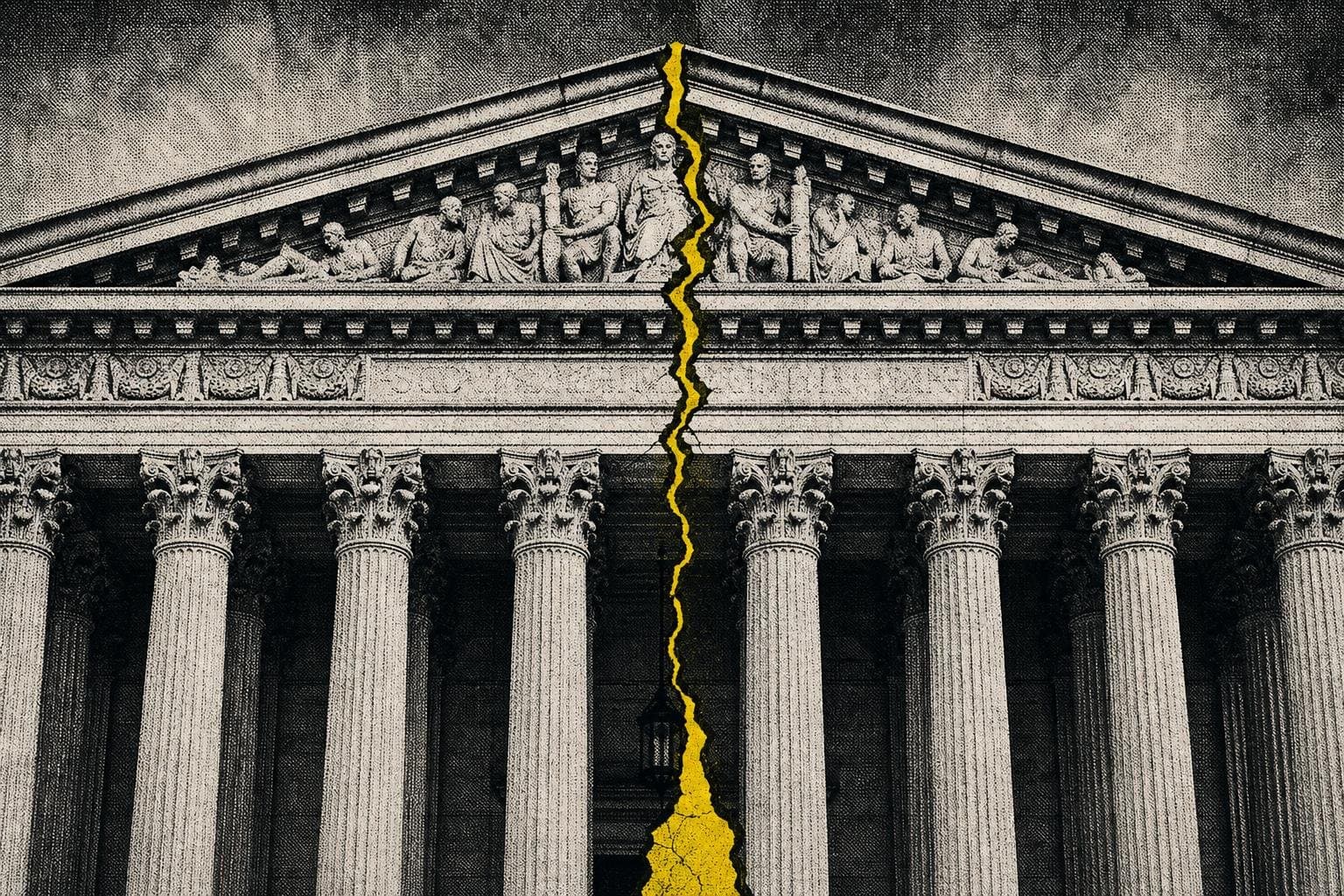

The conventional media read on the Supreme Court's just-concluded term is roughly this: a sweeping conservative victory, with a few notable limits on Trump's power thrown in to prove the court isn't a rubber stamp. The birthright citizenship defeat gets framed as the headline check — proof that even a 6-3 conservative supermajority has its limits.
That framing has the story almost exactly backwards.
The "Limits" Story Flatters the Court More Than It Informs the Reader
Reuters summarized the term as "wins for conservatives, some Trump limits" — a formulation that implies rough balance. The birthright citizenship ruling, the Federal Reserve protection, the tariff restrictions: these get cited as evidence of judicial independence.
But look at what actually happened on immigration, which is where the administration's most consequential second-term project lives. The court cleared the path for potential deportation of 350,000 Haitians and 6,100 Syrians by gutting Temporary Protected Status protections — a 6-3 ruling divided cleanly along ideological lines. The court backed Trump's restrictive policies on both legal and illegal immigration across multiple cases. The administration's core project — reshaping who lives in America and under what conditions — advanced substantially.
The birthright citizenship loss is real. But birthright citizenship is a constitutional provision so deeply embedded that even conservative justices couldn't find the thread to pull. Blocking that particular move doesn't constrain the administration's deportation machinery at all. It's a loss on the one front where the administration was always least likely to win.
The Real Story Is in the Nursing Home Staffing Shortage
The mainstream coverage of the TPS ruling has been appropriately grim on the human stakes. But it's been slower to develop the economic argument — the one that might actually move the political needle.
The Washington Post reported that nursing home leaders are warning of fewer available beds if health aides are forced to leave the country. Factory owners are calculating how many days they can continue employing workers whose legal status is now set to expire. Immigrants themselves are making plans to sell homes, secure bank accounts, and sort out child custody arrangements.
This is the part of the story that the "constitutional limits on Trump" framing obscures. The TPS ruling doesn't just affect immigrants — it lands directly on the industries that have spent years arguing, often successfully, that they cannot function without this workforce. The nursing home sector is not a fringe interest group. It is a critical piece of elder care infrastructure in a country with an aging population.
The consensus media narrative has been organized around the civil liberties and humanitarian dimensions of immigration enforcement, which are real and serious. But that framing has consistently allowed the administration's supporters to dismiss the coverage as ideologically motivated. The economic disruption argument — the one that hits employers, not just immigrants — is the weakest link in the pro-enforcement coalition, and it's getting underplayed.
What the "Judicial Independence" Story Is Actually Doing
Here's the assumption worth interrogating: that the court's occasional limits on Trump represent genuine independence rather than strategic credibility management.
The NYT's term tracker shows the pattern clearly. The court weakened independent agencies, backed electoral map redraws to bolster Republican prospects, handed conservatives clean wins on transgender athletes and gun rights, and delivered the TPS ruling. The losses for Trump came on the Federal Reserve (a 5-4 ruling that still leaves the underlying fight unresolved), tariffs (struck down in February), and birthright citizenship.
Notice what the "losses" have in common: they're the cases where the administration's legal theory was most aggressive and where the economic or institutional stakes were highest for constituencies — financial markets, the business community — that are not natural opponents of the conservative legal project. The court didn't limit Trump because it's independent. It limited him where the costs of not doing so would have been too high for the institutions the conservative legal movement actually cares about.
The TPS ruling, by contrast, costs those constituencies very little in the short term — even if nursing homes and factory floors are about to find out otherwise.
AP reported that fear has gripped Haitian communities following the ruling. That fear is justified. But the political story that follows it won't be driven by humanitarian concern — it will be driven by which employers start screaming loudest when the workers don't show up. Watch the nursing home industry associations and the agricultural lobbies over the next 60 days. If they go quiet, the enforcement proceeds. If they don't, that's where the real pressure on the administration will come from — not from the "judicial independence" narrative that the mainstream press is currently celebrating.


