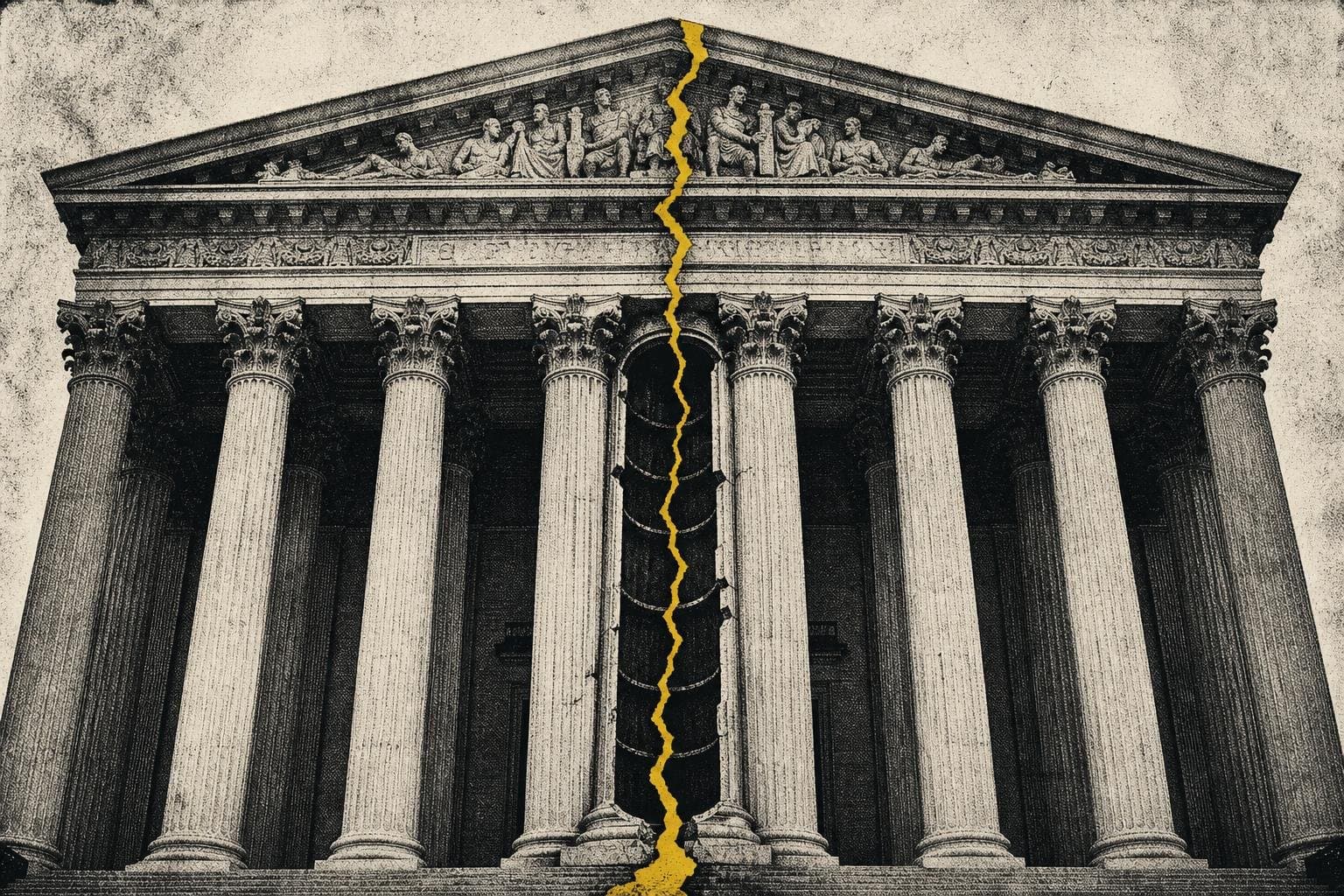

The number that keeps appearing in coverage of Thursday's Supreme Court decisions is 350,000 — the Haitians who could now face deportation after the court's 6-3 ruling on Temporary Protected Status. Add the 6,100 Syrians also stripped of protections, and the potential ripple to TPS holders from roughly a dozen other countries, and you're looking at a decision that touches well over a million people. The mainstream coverage has focused, reasonably enough, on those human stakes — the nursing home workers, the factory floor employees, the families now calculating how many days they have left before their legal status expires.
But the humanitarian framing, however warranted, is doing something else: it's obscuring the more durable question the court actually answered. This wasn't primarily a ruling about Haiti or Syria. It was a ruling about whether courts can review executive decisions at all — and the answer the conservative majority gave should unsettle people well beyond the immigration debate.
The Weakest Link Isn't the Policy. It's the Reasoning.
Justice Samuel Alito's majority opinion rests on a specific and striking claim: Congress stripped courts of the power to enforce the legal requirements for TPS. Not that the administration followed those requirements. Not that the process was sound. That judges simply can't look.
Alito acknowledged this creates obvious problems. What if a future administration extended TPS for half a century on a whim? His answer, per Politico's reporting, was essentially: Congress can fix it through appropriations. Which is a polite way of saying the judiciary has exited the building and left a note pointing to a legislature that has spent years demonstrating its inability to pass immigration legislation of any kind.
Justice Elena Kagan's dissent called this a "very strange" reading of the law — one that dramatically expanded what's excluded from judicial review. She argued courts retain authority to require compliance with procedural steps the law mandates. The majority disagreed. And that disagreement is the load-bearing crack in this decision that the deportation numbers are covering over.
Immigrant rights advocates noted that then-Secretary Kristi Noem's consultations with the State Department — legally required before any TPS determination — were, in their description, comically cursory. The majority's response was, in effect: doesn't matter, can't review it. That's not deference to executive expertise. That's abdication.
The Pattern the Term Reveals
This ruling didn't arrive in isolation. The court's current term has been a sustained stress test of how much power one branch can accumulate before the other two push back — and the answer, increasingly, is: quite a lot. Reuters' overview of the term catalogs a docket that includes presidential powers, independent agency firings, Federal Reserve independence, and birthright citizenship — a term-long argument about the architecture of American government, not just its immigration policy.
The TPS ruling fits that pattern precisely. The Washington Post's framing — "major victories on his immigration agenda" — is accurate but incomplete. The more precise description is that the court handed the executive branch a procedural shield: act fast enough, invoke the right statutory language, and judicial review evaporates. The policy outcome (deportations) is the visible consequence. The structural outcome (unreviewable executive discretion) is the one that outlasts this administration.
The NYT's major cases tracker notes the court still has rulings pending on firing independent agency leaders and Federal Reserve independence. Those cases will tell us whether Thursday's logic — executive discretion, minimal judicial oversight — travels beyond immigration or stays contained to a domain where the court has historically given presidents wide latitude.
What to Watch Before the Term Closes
The conventional media narrative frames Thursday as an immigration story, full stop. That's not wrong — the human consequences are real and immediate, as employers and families scramble to respond. But the more consequential question is whether the court's remaining decisions on independent agencies and the Fed extend the same logic: that statutory language can quietly strip courts of review authority, and that the remedy for executive overreach is political, not judicial.
If the answer is yes, the TPS ruling looks less like an immigration decision and more like the first chapter of something larger. Watch for the independent agency rulings in the next few days — they'll tell you whether Thursday was a one-off or a template.


