


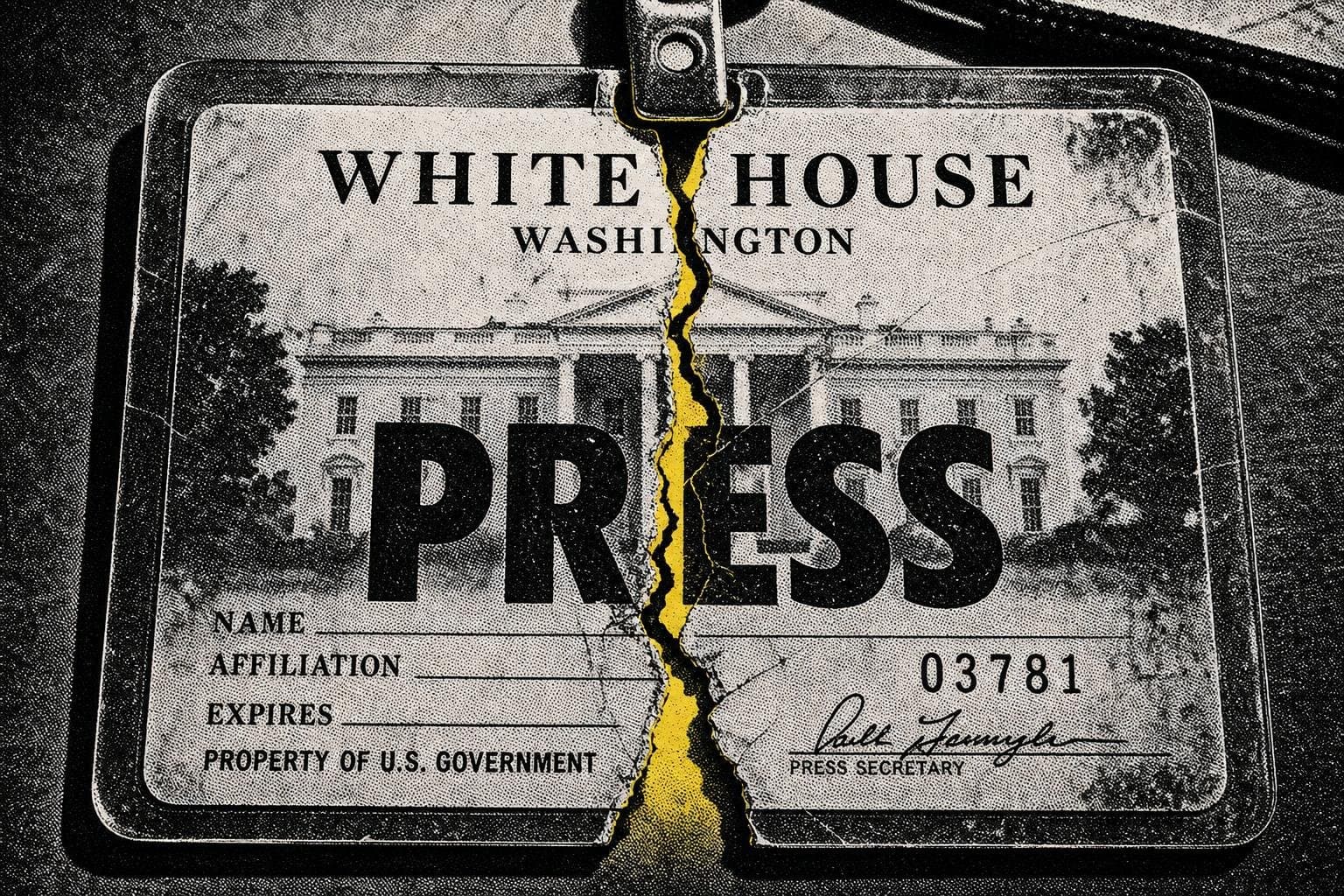

Watch what happens when the institution being wronged is also the institution telling the story. When President Trump barred CNN, Politico and MS NOW from the White House grounds, the editorial consensus assembled within days. Fifty-plus outlets signed an amicus brief calling the ban "constitutionally repugnant." The Washington Post's editorial board declared it a remarkable show of solidarity, scolding conservatives for cheering a move it called shortsighted. Every major network agreed to freeze pool coverage until CNN's badge came back on.
The story being told is simple: this is a clean, unambiguous First Amendment violation, the industry response is principled, and the outcome in court is basically a formality. I'd push back on all three parts of that.
"Access Is a Privilege, Not a Right" Is a Weaker Argument to Dismiss Than the Coverage Suggests
The Justice Department's actual court filing doesn't rest on "Trump doesn't like your coverage, so tough." It argues that access to the White House is a privilege, not a right, and that the government can restrict entry to sensitive areas — the Oval Office among them — even for reasons that look viewpoint-based, when national security is genuinely implicated. The letters sent to the three outlets specifically cite their reporting on the East Wing ballroom construction and on the Iran war.
Mainstream coverage treats this as an obvious pretext, and it may well be. Trump's own Truth Social post about "Fake News" that has "grown like Cancer" doesn't exactly read like a national-security memo. But the legal theory DOJ is presenting to Judge Timothy Kelly isn't the same document as Trump's post, and courts don't rule on vibes. The press's framing collapses the political motive and the legal argument into one story — "he did this because he's mad, therefore he loses" — when the actual fight, per the AP's coverage of the hearing, is happening on narrower terrain: whether due process required notice before badges got switched off, not whether the president can ever restrict access to sensitive spaces for any reason.
Federal courts in DC have sided with journalists on access questions before, and the outlets are betting heavily on that trend continuing. That's a reasonable bet. It's not the sure thing the editorial pages are selling.
The Solidarity Story Skips Whose Business Model Just Got Disrupted
Here's the part I find funniest, in a bleak way. The Post's own editorial explains the networks' motive with total candor: suspending pool coverage matters because it means "less attention: the lifeblood of this presidency." True. But attention is also the lifeblood of CNN, Politico, and every network that just linked arms with them. Access to the briefing room and the Oval Office isn't an abstract civic good for these organizations — it's inventory. The pool system that's now suspended, a rotation dating back to the Eisenhower era, exists because hundreds of reporters can't physically crowd into the West Wing. Losing a seat in that rotation is a real commercial loss, not just a symbolic one.
None of that makes Trump's move defensible. Cutting off outlets because you dislike their coverage is exactly the kind of viewpoint discrimination the First Amendment exists to police, and the DOJ's own letters — citing specific stories about the ballroom and Iran — make the retaliatory motive harder to dress up as neutral security policy. But when fifty-two newsrooms sign a brief calling this "constitutionally repugnant," they're also defending the access model their entire White House business depends on. That's not hypocrisy. It's just worth naming instead of letting "remarkable solidarity" stand in for disinterested principle.
What to Watch
Judge Kelly heard arguments without ruling immediately, per the AP — the timing and scope of that ruling will tell you more than any editorial board has so far. Watch specifically whether the court rules on due-process grounds (narrow, procedural, doesn't settle the broader access question) or squarely on viewpoint discrimination (broad, and the outcome the press coalition actually needs). Also worth tracking: whether the pool-coverage boycott holds if the ban drags past a few news cycles, since that's the moment the outlets' stated principle collides with their commercial interest in being back in the room.