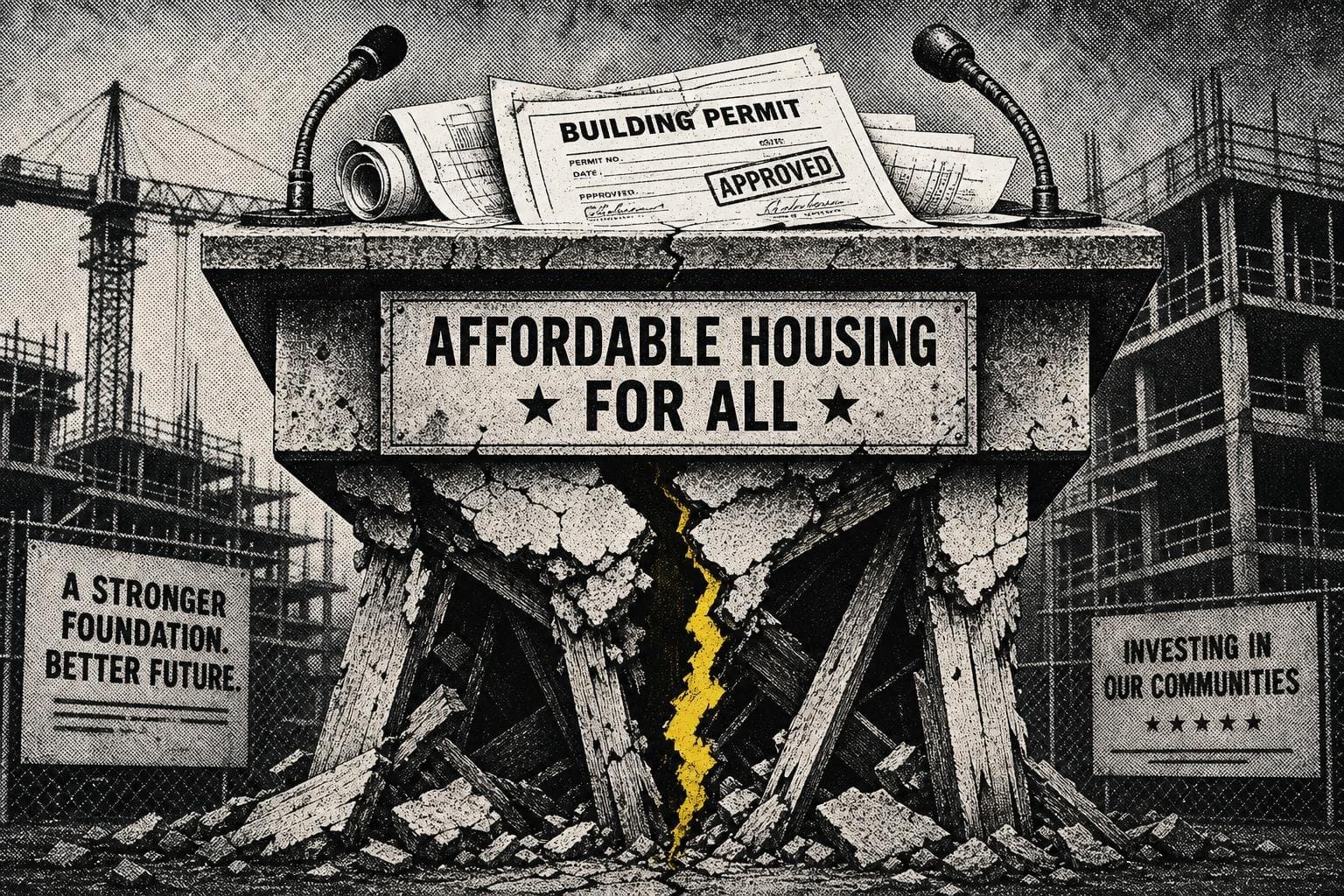

The mainstream media consensus on Trump's immigration enforcement is by now familiar: it's cruel, it's chaotic, and it's politically popular. All three things may be true. But the coverage keeps missing the more interesting story — the one where the policy is actively undermining the economic promises that made it popular in the first place.
That contradiction is now impossible to ignore.
The Labor Market Problem Everyone Pretended Wasn't Coming
Construction, agriculture, meatpacking, hospitality — these industries have spent years running on a workforce that includes a substantial undocumented component. This wasn't a secret. It wasn't even controversial in industry circles. It was simply the reality of how large parts of the American economy operated, and everyone from trade associations to Republican-leaning business owners knew it.
Now the bill is coming due. CNN reports that industry groups ranging from construction to agriculture are taking their concerns directly to the departments of Homeland Security, Labor, and Agriculture, as well as the White House itself — arguing that the crackdown is "undercutting President Donald Trump's agenda and weakening the economy." The recent push to end deportation protections for 1.3 million people who had been legally working in the US has made an already tight labor market significantly worse.
Jim Tobin, president and CEO of the National Association of Home Builders, put the contradiction plainly: "He ran on creating more housing supply. These two things might be working against each other at the moment."
That's not a fringe complaint. That's one of the country's largest trade organizations telling the White House that two of its signature promises are in direct conflict. The respectable press has covered this as a political tension — a messaging problem, a coalition management challenge. It's actually a policy failure hiding in plain sight.
Mullin Is the Symptom, Not the Problem
The media has been fascinated this week by Homeland Security Secretary Markwayne Mullin's stumble at the National Governors Association meeting, where he suggested that employment visa changes should be on the table to address labor shortages — and promptly got torched by MAGA voices for it. He walked it back within hours, posting that there would be "NO amnesty for illegal aliens. Ever."
The coverage treats this as a story about Mullin's political dexterity, or lack thereof. But the real story is that he said the quiet part out loud, got punished for it, and then had to pretend he hadn't noticed the problem he'd just described. The internal disagreements CNN describes — including one source calling the back-and-forth "a bit manic" — aren't a communications failure. They're what happens when a policy built on political symbolism collides with economic arithmetic.
The consensus framing asks: can Mullin survive politically? The better question is whether the administration can sustain mass deportation at scale without triggering the kind of supply-side economic damage that shows up in housing costs, food prices, and construction timelines — the exact metrics Trump's voters care about most.
The Pressure Tactics That Reveal the Strategy
Meanwhile, the enforcement side of the ledger keeps escalating in ways that deserve more scrutiny than they're getting. The New York Times reports that ICE has begun hand-delivering letters to the elected sheriffs of Hennepin County (Minneapolis) and Cook County (Chicago), threatening criminal prosecution for witness tampering if they don't grant immigration agents broad access to inmates. Legal experts quoted in the piece say the charge would be nearly impossible to prove — which means the threats aren't really about prosecution. They're about pressure.
Separately, the Justice Department is distributing up to $3 billion in grants — branded, with characteristic subtlety, as "BIDEN" grants — available only to jurisdictions that cooperate with federal immigration enforcement. Carrot and stick, running simultaneously.
The mainstream read on these tactics focuses on the culture-war theater: the naming, the threats, the spectacle. What gets less attention is the structural logic. The administration is building a two-tier system where local governments that cooperate get federal money and those that don't face legal harassment. That's a durable architecture, not just a news cycle. Federal judges in Illinois and Minnesota have already dismissed lawsuits targeting Sheriffs Witt and Dart, ruling that states and cities have constitutional authority to decline participation in immigration enforcement — but the pressure campaign continues regardless of the legal outcomes.
The Contradiction That Won't Resolve Itself
The AP-NORC polling confirms that immigration remains one of Trump's strongest issues with Republicans. That political durability is real. But political popularity and policy coherence are different things, and the press keeps treating the former as evidence of the latter.
The administration is simultaneously trying to deport the workforce that builds houses, threatening the local officials who might otherwise be quiet partners in enforcement, and distributing billions in grants structured to punish non-compliance. The industry groups lobbying for relief aren't going away. The labor shortages aren't going away. And the housing costs that were supposed to come down aren't coming down either.
Watch for whether the administration quietly expands guest worker programs through regulatory action — the kind of move that doesn't require a press conference and doesn't give MAGA influencers a clean target. That's the pressure valve. Whether they reach for it, and when, will tell you more about where this policy actually goes than anything Mullin says at a governors' meeting.


