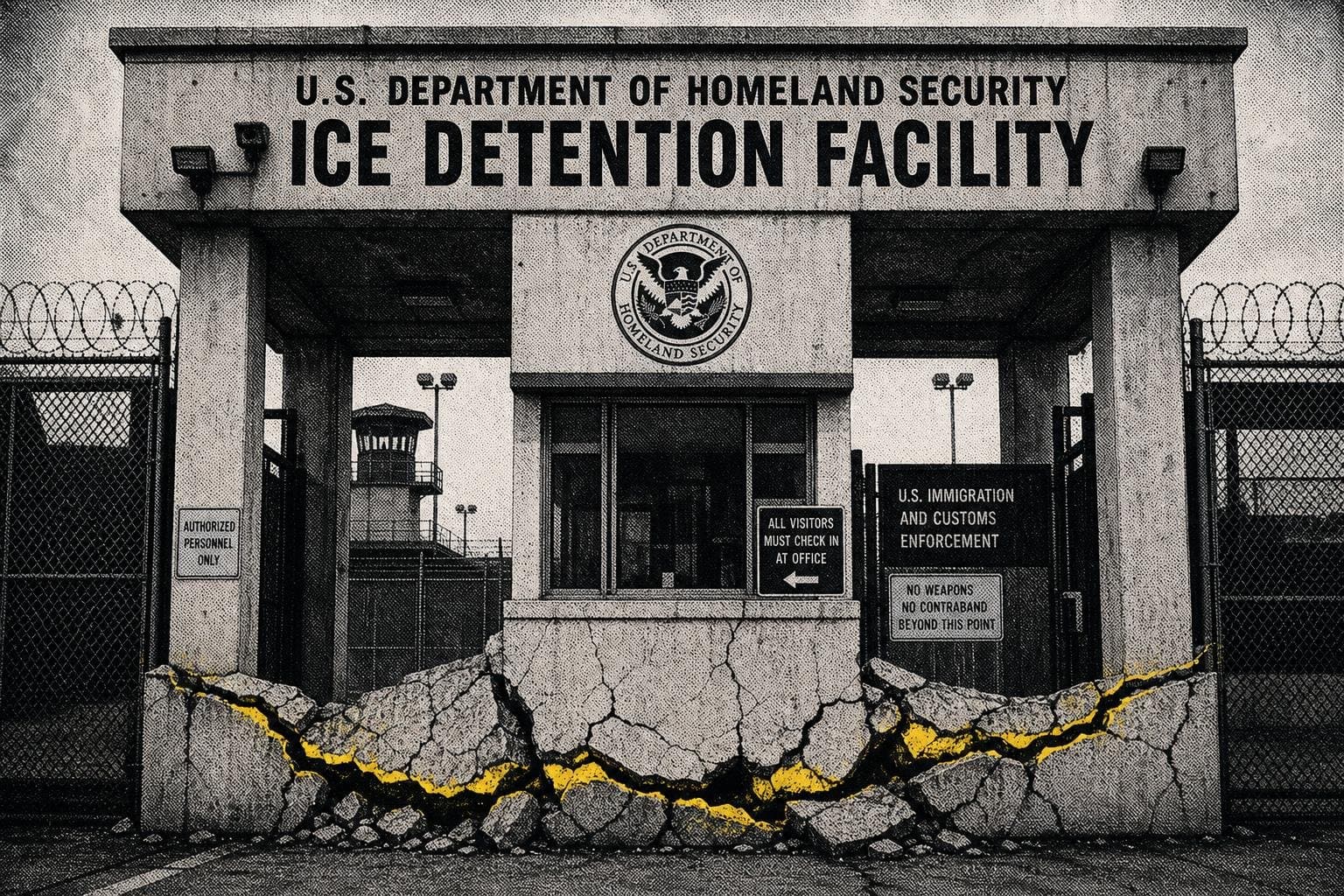

The mainstream media frame on the current immigration enforcement surge is essentially: Trump is going big, critics are alarmed, and the politics are complicated. That's not wrong. It's just not the interesting part.
What's actually happening is a deliberate pivot — one that the consensus coverage keeps describing while somehow missing its significance. The administration has figured out that the visibility of enforcement was the liability, not the enforcement itself.
The Quiet Blitz Nobody Is Framing Correctly
The New York Times reported that ICE detained more than 10,000 people in five days, with arrest numbers roughly doubling from the approximately 1,000 per day earlier this year. Agency leaders ordered top officials to focus officers on pickups, and the White House communicated a new standard: 2,000 arrests a day. That's a significant operational escalation.
But here's what the coverage buries: this surge happened without the fanfare of last year's high-profile city operations. No advance announcements. No cameras rolling as officers poured into Chicago and Los Angeles. The administration learned from the Minnesota disaster — where federal officers killed two U.S. citizens during a monthlong operation — and adjusted.
Politico reported that DHS Secretary Markwayne Mullin has intentionally gone "quieter and smarter" about the crackdown, with large-scale detentions now happening less in public and more in coordination with state and local law enforcement. There are no plans for another city-targeting surge before the midterms. When protests flared at Delaney Hall in New Jersey this spring, the administration sent Tom Homan to lower tensions — not more agents.
The press keeps covering the numbers as the story. The numbers are not the story. The method change is the story.
What the Consensus Gets Wrong About the Politics
The standard editorial take — from the Times to CNN — treats the immigration crackdown as a political liability that Trump is pushing through anyway because of ideological commitment and base pressure. The evidence suggests something more calculated.
The administration faced a genuine problem: high-profile, chaotic enforcement operations were generating exactly the kind of footage that moved public opinion against them. The Minnesota operation became a political crisis. The warehouse detention center plans got abandoned. Rapid-training programs for new ICE agents were scaled back. These aren't signs of an administration doubling down recklessly — they're signs of one that reads its own polling.
Politico noted that many Americans had soured on Trump's handling of immigration even as he retained high marks for calming border crossings. A less public but accelerating crackdown threads that needle: the base sees rising deportation numbers, the persuadable middle doesn't see the footage that generates backlash. It's not a retreat. It's a rebranding of the same policy.
The consensus framing — "Trump faces political headwinds on immigration" — misses that the administration has already internalized those headwinds and restructured operations around them.
The Collateral Damage Nobody Is Connecting
Here's the crack in the load-bearing wall that mainstream coverage keeps walking past: the resources being redirected toward immigration enforcement are coming from somewhere.
A Washington Post report on a House Democrats report found that DHS misused FEMA resources by diverting dozens of staff to help with immigration enforcement — with lawmakers describing the deployments as evidence that the Trump administration has hindered FEMA's ability to prepare for and respond to disasters.
This is the trade-off the enforcement-surge coverage almost never surfaces. Every ICE officer redeployed from other duties, every FEMA staffer redirected, every federal resource pulled toward the arrest-rate target represents capacity subtracted from something else. The administration is making a deliberate prioritization choice — and that choice has costs that won't show up in the arrest numbers.
Meanwhile, CNN reported that federal officers visited a Rochester, New York, man's home after he sent a critical email to the acting ICE director following the Minneapolis killings — a visit that prompted a First Amendment lawsuit. Officers also entered a Syracuse polling location to deliver a warning letter to a woman over a social media post. These aren't enforcement stories. They're stories about what happens to the institutional culture of an agency when it's running at 2,000 arrests a day and operating under pressure from the White House.
The Number That Actually Matters
The Supreme Court's recent Temporary Protected Status decision — which Politico flagged could add hundreds of thousands of Haitians to the pool of immigrants eligible for deportation — is the real multiplier here. The current surge is operating against a relatively fixed target pool. That decision expands the pool dramatically, which means the "quieter and smarter" enforcement model is about to face a much larger operational challenge.
Watch whether the administration can sustain the low-visibility approach as the eligible-deportation population grows. The pressure from the right to show numbers will intensify. The temptation to return to high-profile operations will grow. That tension — between the political lesson of Minnesota and the political demands of the base — is the actual story of the next six months of immigration enforcement. The arrest totals are just the scoreboard.


