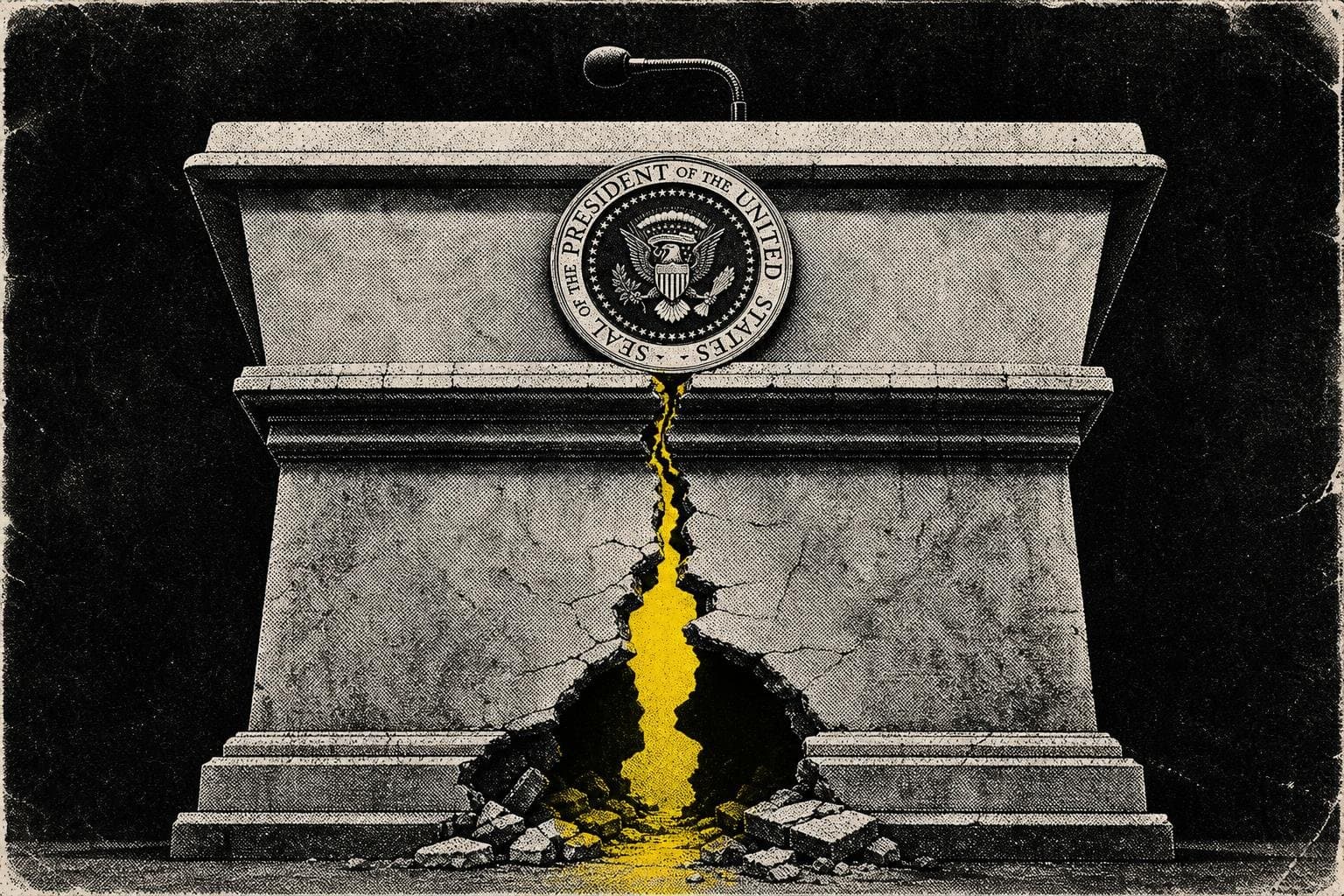

The Trump administration's immigration operation has a contradiction baked into its foundation, and it just blew up in the face of the man hired to paper over it.
Markwayne Mullin, installed as DHS secretary to "normalize the department" and drive deportation numbers higher, suggested at the National Governors Association meeting that more employment visas for certain industries should be on the table to fill labor market gaps. The MAGA internet erupted. Tomi Lahren accused him of wanting to "appease liberal media and big labor." An anonymous administration official told Politico that Mullin was pushing "Jeb Bush immigration policies that were rejected back in 2016."
Here's what the mainstream consensus is missing: Mullin wasn't wrong. He was just saying out loud what the administration's own economic agenda requires — and getting punished for it.
The Contradiction the Press Keeps Calling a "Gaffe"
The coverage frames this as a communications failure, an unforced error, a secretary who can't stay on message. That's the wrong read. Mullin's comments weren't a slip. They were an accurate description of the bind the administration is actually in.
Politico's own reporting notes that "there's a massive and very vocal and powerful financial faction in the West Wing that's pushing Trump and Mullin in this one direction, and then you have the base that's pushing Trump in the other direction." That's not a messaging problem. That's a structural policy contradiction — one that no amount of "NO amnesty for illegal aliens. EVER." posting can resolve.
The press treats each flare-up as a drama about internal White House dynamics. But the real story is simpler and more durable: you cannot simultaneously run the most aggressive deportation operation in modern American history and keep the industries that depend on immigrant labor happy. Those goals are in direct conflict, and the administration has chosen to pretend otherwise.
What the 1920s Comparison Gets Wrong
The NYT's historical framing — comparing Trump's immigration crackdown to the restrictionist wave of the 1920s — is useful up to a point. The 1924 Immigration Act did set strict quotas, effectively barred Asian immigration, and reflected the same anxieties about crime, demographics, and economic displacement that animate today's politics.
But the comparison obscures a crucial difference that the piece itself acknowledges: Congress passed the 1924 law. Trump is doing this through executive action, administrative rulemaking, and Supreme Court-backed authority. That's not a minor procedural footnote. It means the current crackdown is structurally fragile in a way the 1924 law wasn't — dependent on a single administration's will, reversible by the next one, and vulnerable to litigation in ways that statutory law is not.
The mainstream consensus treats the scale of the crackdown as the story. The mechanism is the more important one. An executive-driven immigration transformation, however sweeping in the moment, doesn't have the institutional durability of legislation. The 1924 quotas lasted until 1965. Whatever Trump builds on executive authority has a much shorter shelf life — which is precisely why the administration is moving so fast.
The Surveillance Story Nobody Is Connecting to the Deportation Story
While the Mullin drama played out, the New York Times reported that DHS conducted expansive surveillance of left-leaning organizations in Minnesota following the death of Alex Pretti — a 37-year-old government nurse fatally shot while filming immigration enforcement officers in late January. Investigators used administrative subpoenas to obtain years of financial records from the Sunrise Movement and the Communications Workers of America. Undercover agents infiltrated Signal group chats. The SEIU's wire transfers were scrutinized under a "domestic terrorist financing" inquiry.
The target of the investigation was not the Border Patrol agents who shot Pretti. It was the organizations that supported protesters.
This is the part of the immigration story that the Mullin-gaffe coverage is crowding out. The operational picture isn't just deportations and visa debates. It's an enforcement apparatus that, according to the Times, has crossed "the line that has traditionally stood between investigating criminal activity and political dissent." Meanwhile, ICE is rolling out body cameras to every field officer by the end of August — but, as the Washington Post notes, whether the public ever sees that footage remains largely up to ICE itself.
Accountability theater with an opt-out clause.
The Question the Administration Can't Answer
Mullin will survive this week's firestorm. He'll post something hard-line, the news cycle will move on, and the underlying contradiction will remain exactly where it was. The administration needs immigrant labor to keep the economy running while simultaneously promising to remove the people providing it. It's building an enforcement infrastructure with no external accountability mechanism. And it's doing all of this on executive authority that the next administration can dismantle in a weekend.
The mainstream press is covering the symptoms — the gaffes, the MAGA backlash, the historical parallels. Watch instead for when the labor shortage math becomes impossible to ignore, and whether Congress ever gets pulled back into a process it has been happy to outsource to the executive branch. That's when the contradictions stop being internal drama and start having real costs.


