


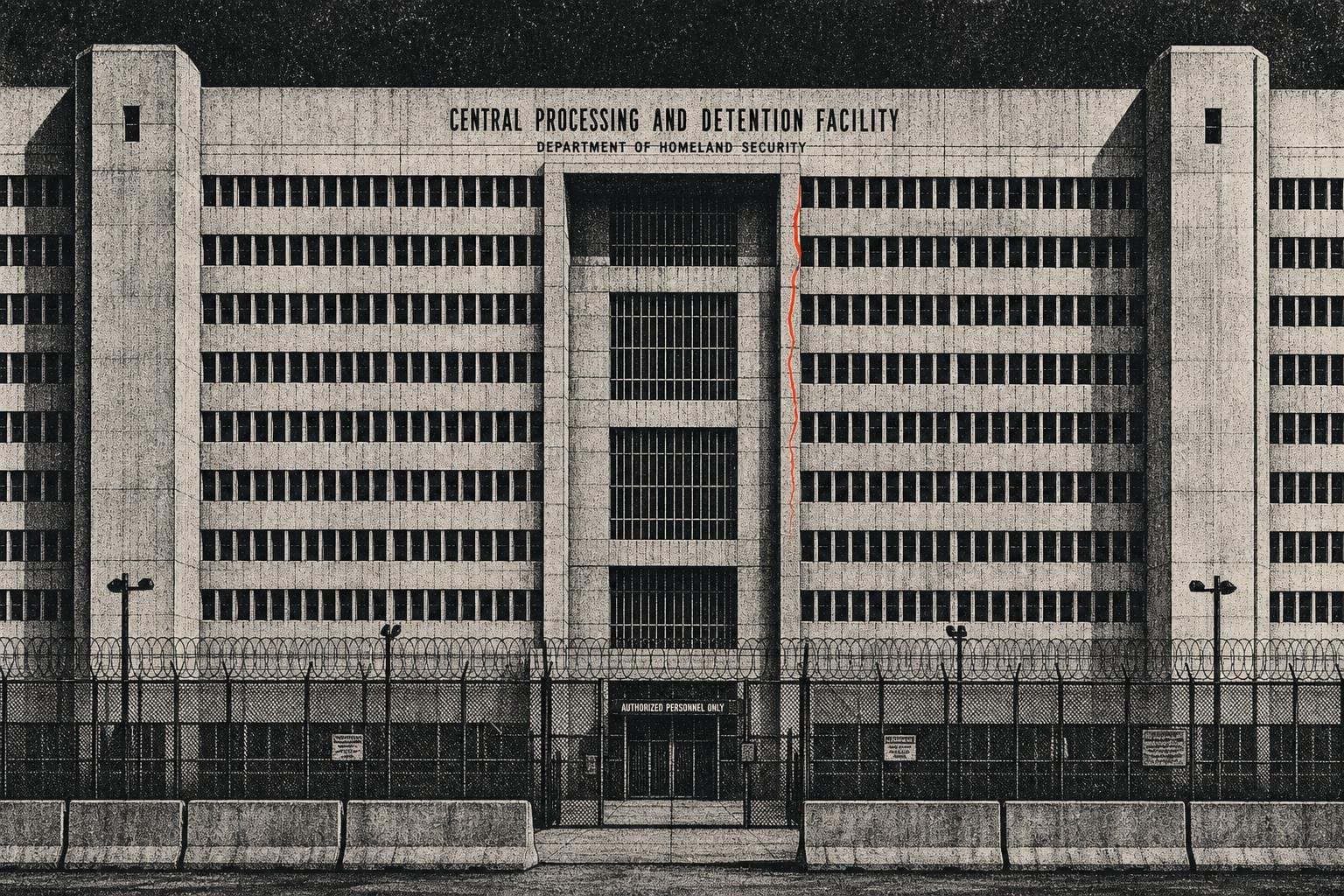

The mainstream media narrative on immigration enforcement has settled into a comfortable shape: the brutal spectacle of early 2026 — Operation Metro Surge, two American citizens killed in Minneapolis, federal agents flooding blue cities — gave way to political backlash, and the administration blinked. The story writes itself as a story of limits. Overreach, resistance, retreat.
That narrative is wrong. Or rather, it's describing the surface while missing what's happening underneath.
The Pullback Is a Tactical Adjustment, Not a Retreat
The New York Times opinion piece by David Wallace-Wells makes the essential point that most immigration coverage is glossing over: ICE arrests hit a new high in July. Deportations are on track to exceed last fiscal year. The number of immigrants held in detention has grown 75 percent since Trump returned to office. The administration didn't retreat from mass deportation — it rebranded it. Less spectacle, more throughput.
The Minneapolis confrontations were politically costly because they were visible. Federal agents in the streets, protesters routing them from the city, two American citizens dead — that's the kind of footage that moves poll numbers. So the administration shifted. Quieter operations. Airport stops. Highway checkpoints. The Washington Post's reporting on Trump's ICE nominee points to Oklahoma as a template: a state-level crackdown that was, by the Post's account, harsher than almost anywhere else in the country — and that generated a fraction of the national attention Minneapolis did.
The lesson the administration drew from Minneapolis was not "slow down." It was "stop making it easy to film."
The Infrastructure Is the Story
Here's what the visibility-focused coverage keeps missing: the operational expansion that happened while everyone was watching the protests.
ICE's budget went from under $10 billion in 2024 to an allocation of more than $70 billion in additional funding through Trump's signature legislation — including $45 billion specifically to expand detention capacity, per Wallace-Wells. ICE is now, by that account, the country's best-funded law enforcement agency. You don't build that infrastructure for a two-year sprint. Aaron Reichlin-Melnick of the American Immigration Council put it plainly: "This is a decade-plus-long operation as they are planning it."
Meanwhile, CNN reported that ICE is now pitching subsidized liability insurance to local police departments that participate in its 287(g) partnerships — covering up to $500,000 in personal liability, with officers reimbursed up to $250 annually for the cost. Nearly 1,600 agencies in 32 states already have agreements to participate in ICE's task force model. The insurance proposal is designed to remove one of the last remaining friction points for local departments that have been reluctant to join. David Bier of the Cato Institute called it "going above and beyond to guarantee law enforcement does not have even the slightest risk of liability for violating Americans' rights."
This is not a crackdown winding down. It's a crackdown being franchised.
The Polling Tells You What the Coverage Won't
Politico's polling shows that half of Americans — including nearly a quarter of Trump's own 2024 voters — still say the deportation campaign is too aggressive. That number is virtually unchanged from January and April. The administration has tried to keep ICE out of the headlines, pulling back on high-profile raids in blue cities. The polls didn't move.
The conventional wisdom says the politics of immigration enforcement have shifted in the administration's favor because the protests died down. But stable opposition at 50 percent, with a quarter of your own coalition expressing discomfort, is not a political win — it's a managed stalemate. The administration is betting it can run out the clock to the midterms by keeping the machinery running quietly enough that the outrage doesn't crystallize again.
That bet might work. The 4th Circuit's ruling blocking enforcement near houses of worship affiliated with Quaker, Sikh, and Cooperative Baptist Fellowship congregations is a real legal constraint, and similar challenges are multiplying nationally. Courts are the one institution that has consistently slowed the pace. But litigation moves slowly, and detention capacity is expanding fast.
The story everyone is telling — overreach, backlash, moderation — is a story about optics. The story underneath it is about scale. Watch the detention numbers, not the headlines.